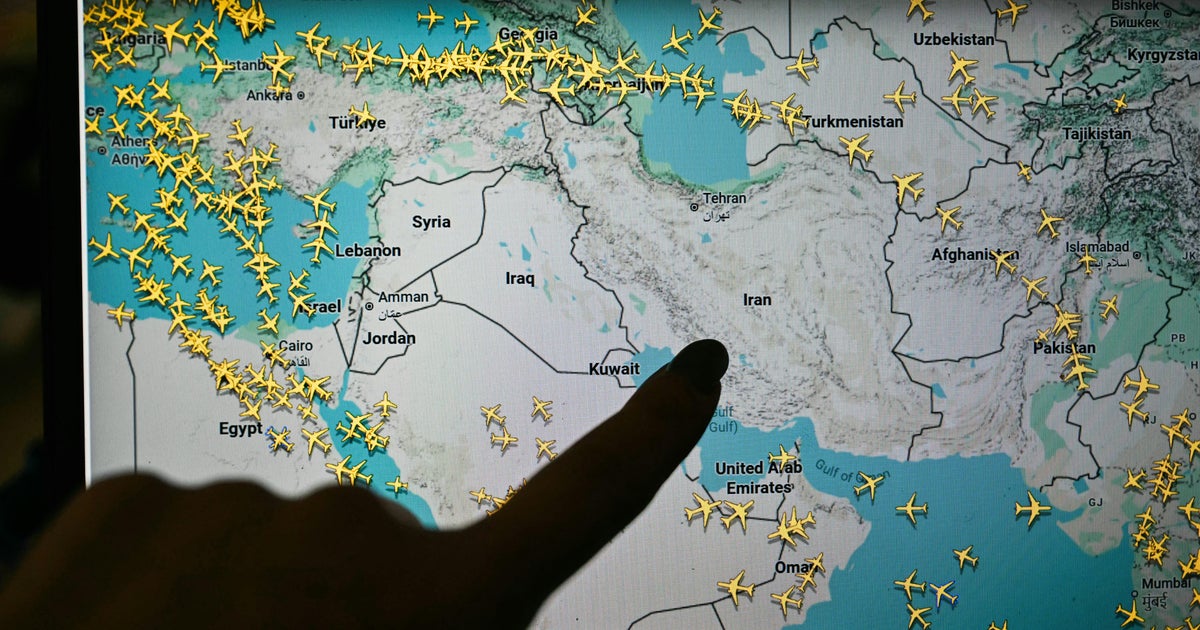
Major Middle East air hubs including Dubai, Abu Dhabi and Doha remain shut after Iranian strikes and U.S.-Israeli military action, leaving tens of thousands of travelers stranded (including ~58,000 Indonesians and ~30,000 Germans) and prompting airlines such as Emirates and Qatar Airways to suspend or severely curtail operations. Regional airspace closures have been extended in countries including Iraq and Jordan, governments are scrambling to assist nationals, and ongoing military activity — including U.S. casualties and statements signaling a multi-week operation — raises elevated regional risk premia that could disrupt travel, logistics and related markets.
Market structure: Immediate winners are defense contractors (Lockheed LMT, Raytheon RTX, Northrop NOC) and oil & energy producers (XOM, CVX, XLE) as regional supply/transit risk boosts crude and defense spending expectations; losers are airlines and travel operators (JETS ETF, AAL, UAL, LUV, EXPE) and airport-reliant tourism stocks (AENA.MC, LON:GLA notables) facing revenue loss and rerouting costs. Pricing power shifts to integrated energy majors and defense primes able to capture higher margins; smaller airlines and regional operators lack hedges and will suffer ticket cancellations and liquidity stress over 1–8 weeks.
Risk assessment: Tail risks include full prolonged closure of Gulf airspace (8+ weeks) or insurance/shipping embargoes leading to >$10–15/barrel incremental oil shock and systemic EM stress; credit spreads in leveraged leisure names could widen 200–400bps in weeks. Near-term (days–weeks) volatility and flight-to-quality will push USD and U.S. Treasuries up; medium-term (1–6 months) outcomes hinge on de-escalation talks or further strikes; long-term (quarters) depends on defense budgets and rerouting/infrastructure investments.
Trade implications: Tactical plays: short airline exposure for 2–8 weeks and buy defense/energy for 1–6 months; use options to cap cost—e.g., buy 1–3 month bear-put spreads on JETS or AAL and 3–6 month call spreads on RTX/LMT/XOM. Cross-asset: add 1–2% TLT/IEF if 10-yr yield falls >20bp and 1–2% GLD if gold >$2,100 or VIX+10 points; hedge EM FX and sovereigns via USD longs or short specific EM FX (TRY/EGP exposure screening).
Contrarian angles: Consensus may overprice permanent demand loss for long-haul travel—routes will normalize and well-hedged, low-cost carriers with healthy balance sheets (e.g., LUV) can rebound; avoid indiscriminate long-term shorts. Also, if Brent fails to breach $90 within 2 weeks, energy longs priced for escalation could be overstretched—scale size to triggers (e.g., Brent >$95 add, < $80 trim). Historical parallels (Gulf shocks 1990/2003) show short-term spikes then mean reversion in travel stocks within 3–6 months, so prefer time-limited option-based trades.
AI-powered research, real-time alerts, and portfolio analytics for institutional investors.
Request TrialOverall Sentiment
strongly negative
Sentiment Score
-0.65
