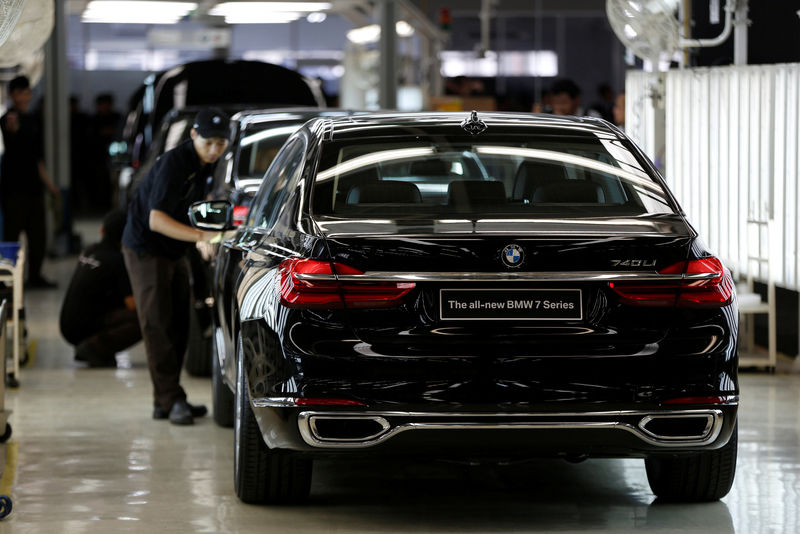
BMW’s Q1 2026 results slightly missed expectations, with EPS of 2.68 euros versus 2.70 euros consensus and revenue of 31 billion euros versus 32.8 billion euros expected. Shares fell 0.53% to 82.06 euros after the release, reflecting ongoing pressure from China, tariff uncertainty, and currency headwinds, partly offset by strong demand for the Neue Klasse and resilient Europe/U.S. performance. Management kept an upbeat tone on tariff negotiations and reiterated growth expectations into the second half of 2026.
The key read-through is not the modest earnings miss; it is that BMW is now using its global manufacturing footprint as a shock absorber against policy volatility. That matters because the marginal winner in autos over the next 12 months is the OEM that can reallocate mix across regions and powertrains fastest, not the one with the best single-product launch. BMW’s comments imply its U.S. and Europe mix can offset a softer China tape, but the real second-order effect is pressure on less diversified premium peers that are more exposed to one geography, one propulsion stack, or one tariff regime.
The tariff setup is the more actionable catalyst. If the current posture resolves into a credits/offset framework, BMW’s export-heavy model gains optionality and the market likely rerates the stock before any actual earnings benefit shows up. The timing matters: this is a days-to-weeks political headline risk, but the P&L impact compounds over months because even a partial tariff relief would mechanically lift margin on U.S.-bound units and reduce the need for inventory or price actions.
China looks less like a cyclical demand collapse and more like a competitive reset toward local incumbents plus policy distortion. BMW’s relative resilience suggests its premium buyer is still willing to pay for brand and product, but the risk is that this becomes a share-maintenance market rather than a growth market, which caps operating leverage. The bigger contrarian point is that the market may be too focused on headline China weakness and not enough on the fact that BMW’s capacity, order book, and product cadence give it more pricing discipline than the average European OEM.
The EV angle is also non-linear: higher energy prices and subsidy withdrawal can lift near-term BEV mix in Europe, but that is a demand-quality issue, not a pure volume story. If BMW sustains pre-orders into the iX3/i3 launch window, the stock can work even without macro help because the market will start capitalizing the Neue Klasse rollout as a margin bridge rather than an R&D expense. The near-term risk is that FX and tariff noise swamp the message for another quarter, creating an entry point rather than invalidating the thesis.
AI-powered research, real-time alerts, and portfolio analytics for institutional investors.
Request DemoOverall Sentiment
mildly negative
Sentiment Score
-0.15
Ticker Sentiment
