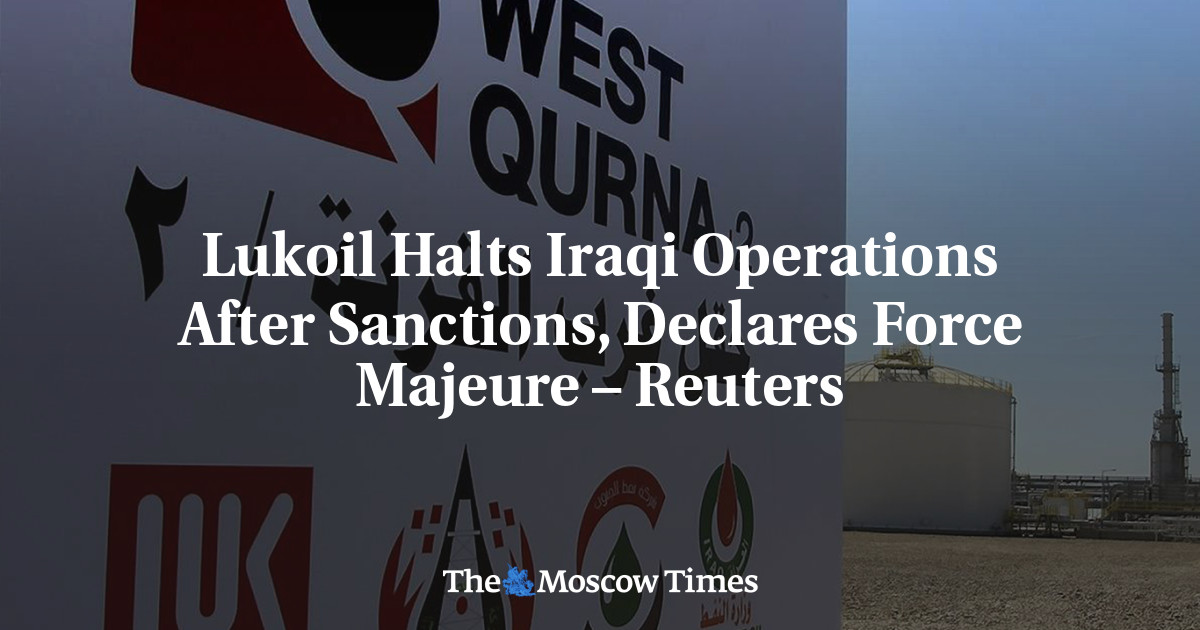
Lukoil has declared force majeure at Iraq's West Qurna-2 oilfield, which produces 480,000 bpd, citing disruptions from Western sanctions. Iraqi authorities have frozen cash and crude payments to Lukoil in compliance with US and UK sanctions, leading to the cancellation of 4 million barrels of crude shipments and the termination of foreign staff contracts. This critical development could compel Lukoil to exit its 75% stake in the project within six months if non-sanctioned payment intermediaries are not established, posing a significant risk to Iraq's oil output and Lukoil's substantial foreign asset.
Lukoil has declared force majeure at the West Qurna-2 oilfield in Iraq, a critical asset producing 480,000 barrels per day, which accounts for 9% of Iraq's total oil output. This declaration stems from disruptions caused by Western sanctions, leading Iraqi authorities to freeze all cash and crude payments to Lukoil in compliance with US and UK mandates. Approximately 4 million barrels of crude allocated to Lukoil for November have consequently been canceled.
The operational impact is significant, with Lukoil terminating contracts for foreign staff, leaving only Russian and Iraqi employees on site. Lukoil, holding a 75% stake in the project and having planned over $30 billion in investments, faces a potential complete shutdown and exit from West Qurna-2 within six months if non-sanctioned payment intermediaries are not established. The force majeure declaration provides Lukoil with legal protection from contractual penalties during this period.
This situation underscores the escalating geopolitical risks impacting global energy supply chains and the operational viability of major international oil projects. The potential removal of 480,000 bpd from the market, coupled with the uncertainty surrounding a key foreign asset for Russia's largest private oil company, introduces considerable volatility into energy markets. The inability to facilitate payments highlights the complex challenges faced by companies navigating stringent sanction regimes.
AI-powered research, real-time alerts, and portfolio analytics for institutional investors.
Overall Sentiment
strongly negative
Sentiment Score
-0.80
