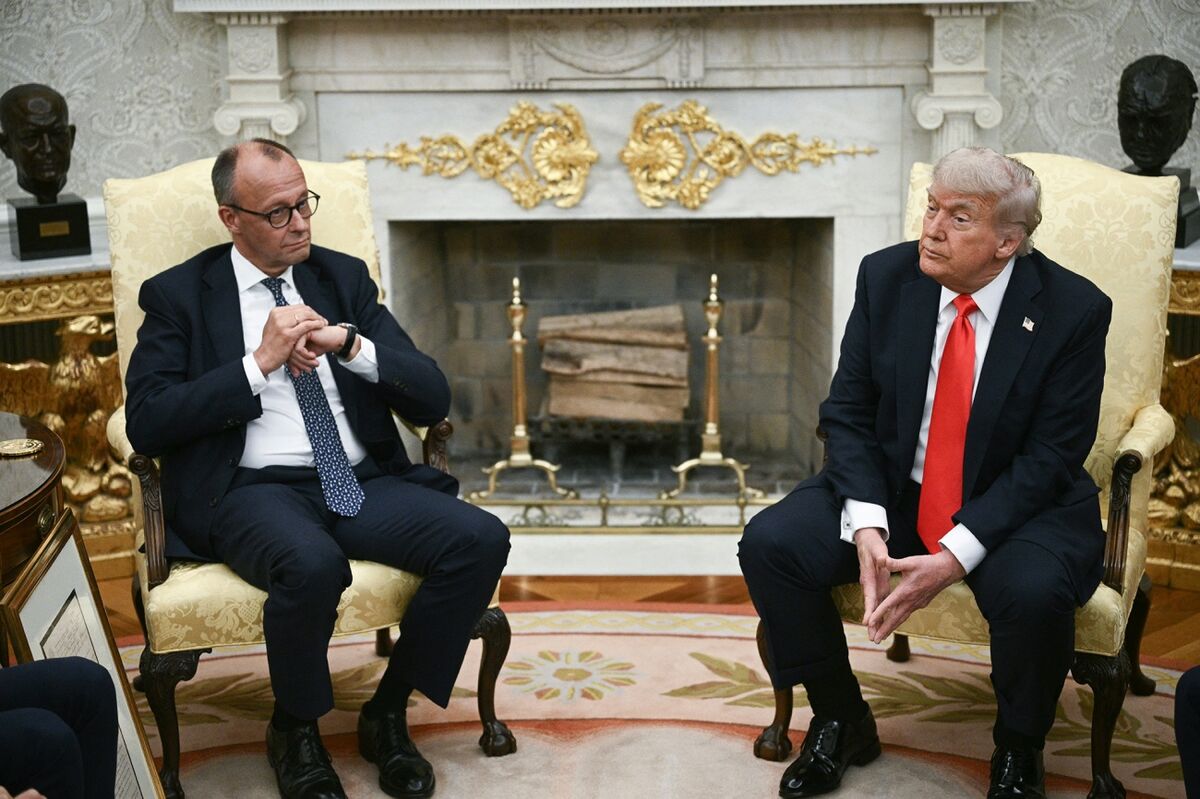
German Chancellor Friedrich Merz said the US is being "humiliated" in Iran talks as President Trump struggles to negotiate an end to the war. He described Tehran’s negotiators as highly skillful and questioned what strategic exit the Americans are choosing. The remarks are geopolitically notable but carry limited immediate market impact absent new policy or escalation.
The market implication is not the headline insult; it is the erosion of bargaining credibility. When the mediator is seen as losing control, counterparties typically extend talks, extract concessions, and force the other side to shoulder the costs of delay — which raises the probability of a messy, non-linear outcome rather than a clean diplomatic resolution. That tends to support a short-duration risk premium in defense, energy, and select industrials tied to munitions, logistics, and hardening infrastructure.
Second-order, the biggest loser is not necessarily the immediate belligerents but the bloc trying to price stability: European cyclicals with Middle East energy exposure, global airlines, and transport-heavy sectors face renewed headline risk without an immediate volume shock. If talks drift for weeks instead of days, the market usually underprices the operational drag from shipping insurance, rerouting, and inventory hoarding; those effects can show up before any actual supply disruption.
The tail risk is a credibility break that forces a more kinetic policy path, which can reprice oil, defense procurement, and cyber/air-defense spending quickly. Conversely, the downside to the risk premium is if the rhetoric is performative and produces a narrow ceasefire or sequencing deal within 1-3 weeks; in that case, the war premium bleeds out faster than consensus expects and crowded defense longs can underperform. The key is that the catalyst window is short: the next round of talks or public breakdown should matter more than the current noise.
Contrarian view: the market may be too focused on whether one side is 'winning' diplomacy and too little on whether both sides are gaining time. If talks are being used to reset military posture or domestic political optics, the eventual settlement value to markets is lower than implied by incremental headlines, so any relief rally in risk assets could be an opportunity to fade rather than chase.
AI-powered research, real-time alerts, and portfolio analytics for institutional investors.
Request DemoOverall Sentiment
mildly negative
Sentiment Score
-0.20
