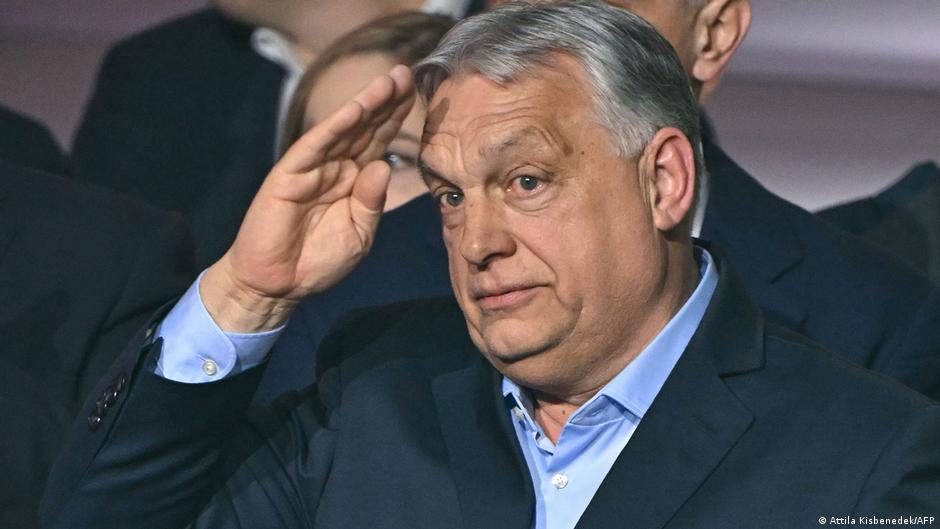
Peter Magyar's Tisza party won Hungary's election with 138 of 199 seats, securing a two-thirds parliamentary majority and ending Viktor Orban's 16-year uninterrupted rule. Orban conceded a "painful" defeat and Tisza is expected to pivot Hungary toward the EU, including efforts to unfreeze funding and align more closely with Brussels on Ukraine. The result is politically significant for Europe, but the direct market impact is likely limited outside Hungarian assets and EU policy expectations.
The cleanest second-order winner is not Hungarian risk assets per se, but the broader EU cohesion trade: a government in Budapest that is forced to normalize with Brussels should reduce recurring headline risk around sanctions, Ukraine aid, and budget disbursements. That matters because Hungary has been an outsized veto point; even a partial de-escalation can compress the “political risk premium” embedded in regional sovereign spreads and in any multinational with CEE exposure that has been marked down for governance contagion.
The near-term market reaction is likely to be asymmetric: local equities and HUF can rally on relief, but the move is vulnerable if the new leadership cannot deliver institutional resets quickly. The key sequencing risk is that supermajority optics create expectations of sweeping reform, while the operating reality is that courts, prosecutors, media, and bureaucratic capture take months to unwind. If the transition is noisy or if fiscal loosening is used to buy social peace, the initial pro-EU repricing can fade into a classic election euphoria trap.
The most interesting contrarian angle is that the market may be underestimating how much of the “change” trade is already crowded into anything with CEE beta. The bigger opportunity may be in losers from normalized governance: domestic-connected firms, opaque procurement beneficiaries, and lenders/exchanges tied to the old regime’s rent flows. Conversely, consensus may be overpricing the speed of EU fund normalization; Brussels can move faster on rhetoric than on actual cash, so a 1-3 month delay would cap the rerating of Hungarian risk assets.
For geopolitics, the immediate implication is a smaller tail risk of Hungary acting as a spoiler on Ukraine-related decisions, which is supportive for European defense and for any asset sensitive to EU cohesion. Over 3-6 months, that can translate into tighter CEE FX volatility and better carry economics, but only if the new government avoids a populist fiscal turn. The setup is therefore more about volatility compression than a straight-line growth reacceleration.
AI-powered research, real-time alerts, and portfolio analytics for institutional investors.
Request DemoOverall Sentiment
mildly positive
Sentiment Score
0.20
Ticker Sentiment
