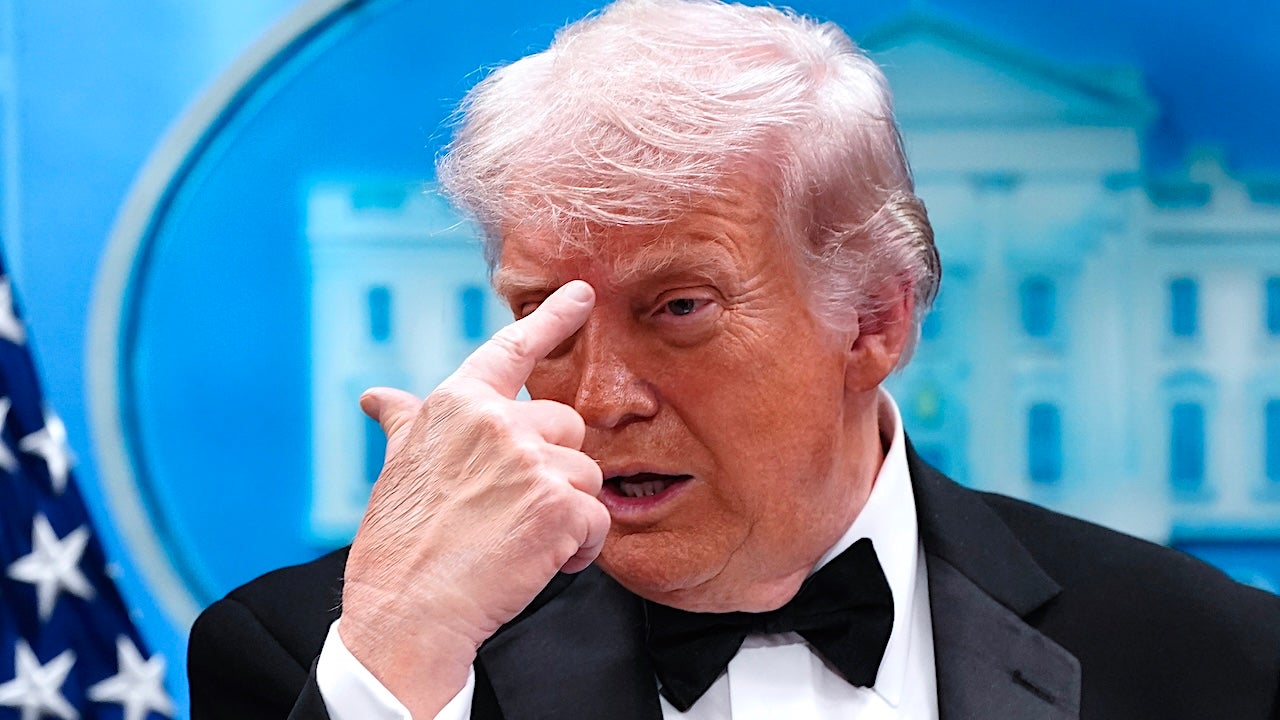
The article centers on escalating U.S.-Iran tensions, with Trump pressing Tehran to accept a nonnuclear deal while considering a longer blockade of the Strait of Hormuz as leverage. The IAEA says Iran still likely holds about 200 kilograms of 60%-enriched uranium at Isfahan, out of 440.9 kilograms total, leaving a sensitive nuclear stockpile unresolved. Hegseth is also set to defend Trump’s proposed $1.5 trillion defense budget, adding to the national security and market-risk backdrop.
The market implication is less about headline geopolitics than about the probability distribution of energy supply disruption. A prolonged Hormuz squeeze raises the odds of a self-reinforcing loop: higher freight and insurance costs lift delivered crude prices even if benchmark futures only move modestly, which then tightens refined product spreads and pressures global margins. In that setup, the beneficiaries are not just upstream producers but also U.S.-centric midstream and Gulf Coast infrastructure assets with insulated feedstock access and pricing power versus imported barrels.
The bigger second-order effect is policy acceleration. A sustained pressure campaign on Iran likely increases Washington’s tolerance for strategic petroleum interventions, export-control tightening, and defense outlays tied to munitions, ISR, and air/missile defense. That means the trade is not purely energy-beta; it bleeds into defense suppliers and select industrials with short-cycle replenishment demand, while airlines, chemical names, and import-dependent refiners face margin compression if the shock persists beyond a few weeks.
The unresolved uranium stockpile is the key tail risk because it raises the ceiling on escalation and lowers the odds of a quick diplomatic off-ramp. If inspectors remain blocked, the market will increasingly price a binary outcome: either a negotiated dilution/removal framework emerges, or the conflict drifts toward a more durable sanctions-and-sabotage regime that keeps spare capacity offline. The contrarian risk is that a ceasefire-plus-talks headline could hit energy longs hard, but any relief rally should fade unless verification access improves materially within 30-60 days.
Near term, the hearing matters as a catalyst for messaging discipline: if lawmakers force the administration to articulate a narrower war aim and a clearer exit path, risk assets can briefly de-risk. But if the administration doubles down on a long blockade, the market will likely reprice a months-long rather than days-long disruption regime, which is materially more bullish for U.S. energy infrastructure and defense than for broad equities.
AI-powered research, real-time alerts, and portfolio analytics for institutional investors.
Request DemoOverall Sentiment
moderately negative
Sentiment Score
-0.35
