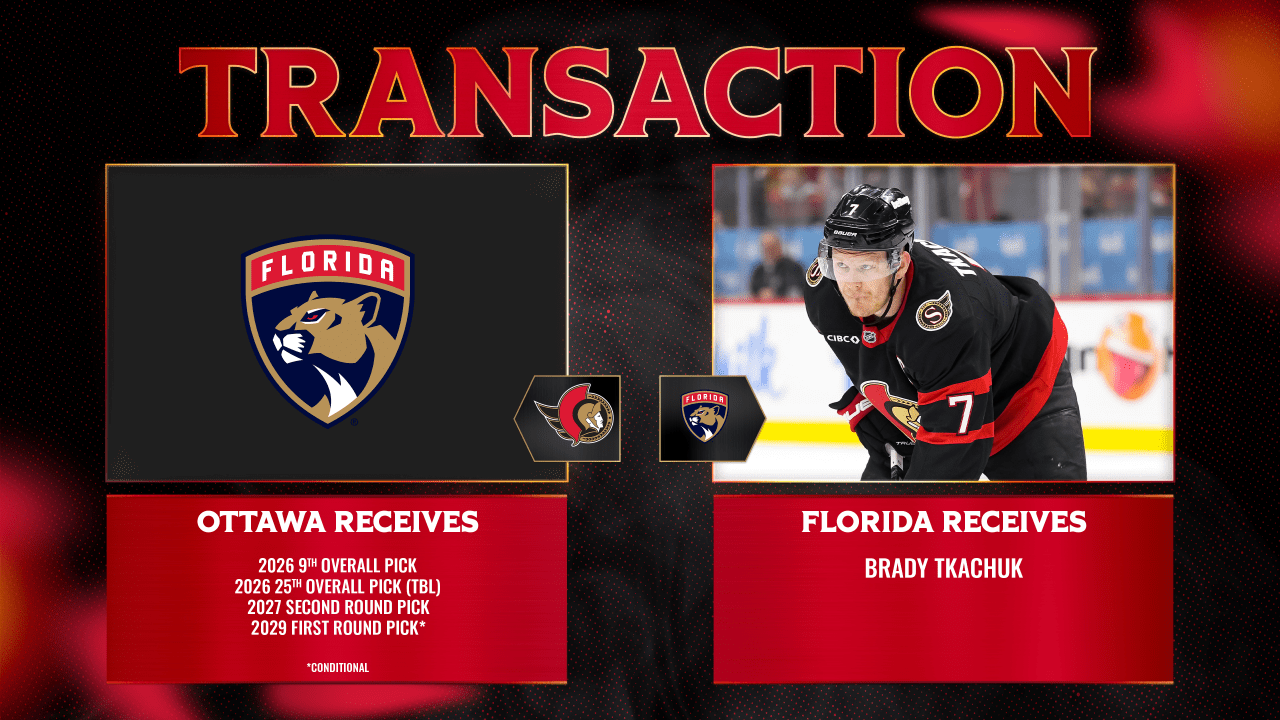
Ottawa traded Brady Tkachuk to Florida for three first-round picks and a second-round pick, including the 9th and 25th overall selections in the 2026 NHL Draft and a conditional 2029 first-round pick. The Senators said the move adds cap space and draft capital to support a long-term roster rebuild. The transaction is material for team construction but is routine from a market standpoint.
This is a classic “liquidity-for-ceiling” transaction: Ottawa is converting a single high-usage franchise player into multiple future shots on goal, which usually improves organizational optionality but worsens near-term competitive variance. The immediate loser is not just Ottawa’s 5-on-5 identity; it’s any stakeholder that depended on a stable, top-line draw, including ticketing, regional sponsorship, and the club’s ability to monetize a known star through merchandising.
The second-order effect is that the Panthers are effectively paying for a higher championship-probability path by sacrificing future asset density. That is rational only if management believes its current core has a 12-24 month window where incremental marginal wins are worth more than embedded draft value. In hockey terms, that tends to compress future flexibility: once the cap is allocated and the pick inventory is spent, there is less room to absorb injuries or underperformance, so the downside convexity rises quickly if the team regresses.
From a governance lens, this is a signal that Ottawa is prioritizing process over public sentiment, which can be positive if the draft capital is later used in a second-stage consolidation trade. The key catalyst is not the deal itself but what the acquired picks become; the market will reassess in months if Ottawa packages them for immediate help, while the real payoff from the first-round assets sits 2-4 years out. The contrarian take is that the headline may overstate Ottawa’s “rebuild” because premium picks in the late teens to 25 range have a materially lower probability of becoming top-quartile NHL value than a proven top-line player in his prime.
AI-powered research, real-time alerts, and portfolio analytics for institutional investors.
Overall Sentiment
neutral
Sentiment Score
0.12
