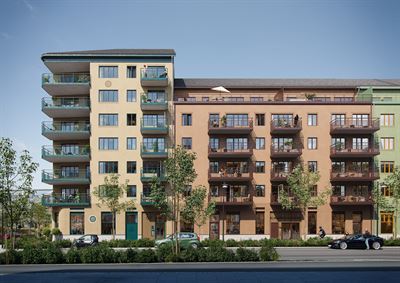
Skanska will invest about SEK 250 million in the third and final phase of a condominium project in the Närheten block, Kungsängen, Uppsala, comprising 66 apartments and three commercial premises; construction starts February 2026 with occupancy expected in fall 2027. The development emphasizes sustainability—concrete construction with lower climate impact, high-efficiency facades and windows, rooftop solar and waste heat exchangers—and will be Nordic Ecolabel certified. The project is a modest-sized residential investment relative to Skanska Group's 2024 revenue of SEK 177 billion and is unlikely to materially affect the company’s financials but reinforces its ESG-aligned development pipeline in the Nordics.
Market structure: This 66-apartment Skanska project is micro in absolute supply terms but signals persistent developer activity in high-demand university markets (Uppsala). Direct winners are Skanska (OMX:SKA-B), other Nordic residential developers (JM, BONAV-B) and suppliers of energy-efficient materials and solar installers; marginal losers are legacy commercial landlords with less ESG attrition. Expect modest pricing power for certified stock (+~3–5% price premium on new inventory) and a very small near-term upward pull on cement/steel demand locally.
Risk assessment: Immediate market impact is negligible (days) but short-term catalysts (pre-sales, cost inflation) matter over months; long-term (2026–2028) the ESG certification can support valuation multiples if mortgage rates remain stable. Tail risks: permit delays, input-cost spikes (cement/steel +10–20%), or a mortgage-rate shock of +200bp that could cut take-up >15–20%. Hidden dependency: presales rate and interest-rate path drive cashflow timing and margin realization.
Trade implications: Favor selective long exposure to SKA-B and high-quality residential developers into 2026 construction starts, short weak commercial REITs. Use small, time-limited options to lever positive binary events (presales, construction start Feb 2026) and rotate fixed-income duration out of long-dated Swedish RMBS into Nordic green bonds. Monitor presale rates, construction-cost CPI and Swedish 2y/10y swap moves as primary trading signals.
Contrarian view: Markets may underprice the persistent ESG/energy-cost saving premium for new certified housing (potentially +5–10% resale advantage over 3–5 years) but also risk overpaying today given higher capex. Historical parallel: post-2015 Nordic residential cycles rewarded developers with secured land + pre-sales; if presales are weak this time, margin compression could be rapid. Watch for regulatory scrutiny on 'climate-lower impact' claims that could increase warranty/recall risk.
AI-powered research, real-time alerts, and portfolio analytics for institutional investors.
Request DemoOverall Sentiment
mildly positive
Sentiment Score
0.28
