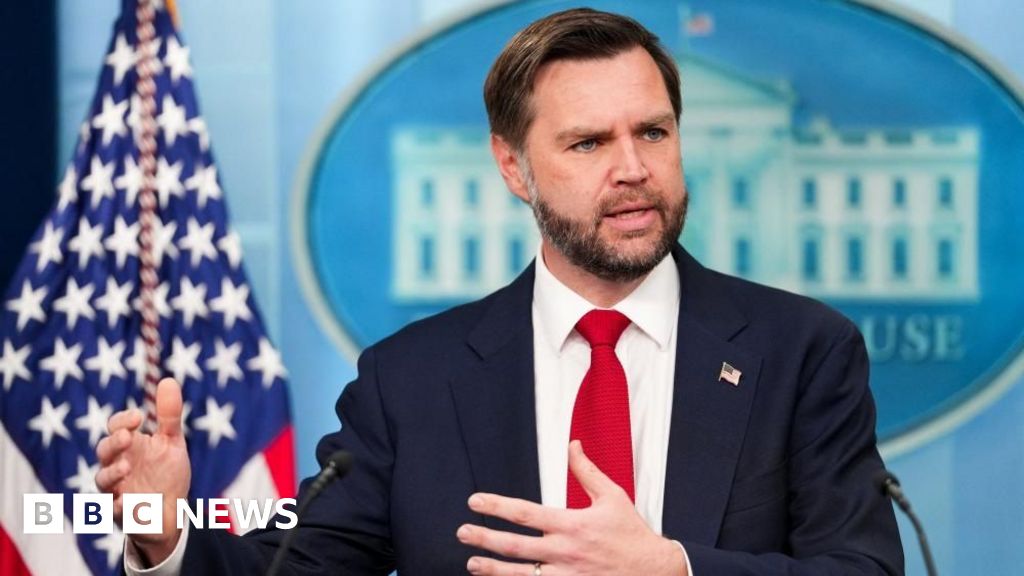
The White House is defending a US-Iran memorandum of understanding that includes a potential $300 billion reconstruction framework, but the deal remains unsettled on key technical issues over the next 60 days. Vice President JD Vance has become the public face of the negotiations while President Trump both amplified and undercut the effort, creating political risk within the Republican Party and uncertainty over the final outcome. Markets may react to the geopolitical implications, including Iranian nuclear constraints and the potential impact on petrol prices, but the agreement is not yet final.
This setup is less about the Iran deal itself than about how the administration is choosing to distribute blame and credit. By putting Vance in the visible role, Trump is effectively creating a political buffer: if the agreement stalls, the downside is concentrated on a single heir-apparent rather than the broader MAGA coalition. That raises the odds of near-term headline volatility but also makes the policy path more durable than a conventional bipartisan compromise, because the White House can absorb criticism without immediately reversing course.
The market implication is asymmetric for energy and defense. In the next 30-90 days, even partial de-escalation should suppress geopolitical risk premium in crude and especially in refined products, where the Strait of Hormuz threat matters more than headline Brent. But a “deal without details” is fragile: any sign that technical talks are bogging down could quickly reprice oil higher, and the bounce would likely be sharper in front-month contracts and tanker rates than in longer-dated crude.
The overlooked second-order effect is on Republican governance risk heading into 2028. Vance is being forced to own a politically divisive foreign-policy outcome while Rubio stays cleaner and Hegseth stays operationally adjacent; that shifts intra-party succession probability and could depress Vance-linked event trades if he is perceived as carrying the cost of an unpopular détente. Conversely, if the deal holds, it gives the White House a rare disinflationary tailwind via gasoline, which matters more for consumer-sensitive sectors than for the average geopolitical headline suggests.
Consensus seems too focused on whether the agreement is pro-Iran or anti-Iran; the more important question is whether it materially lowers the probability of a Hormuz disruption over the next quarter. If the answer is yes, the winners are airlines, transports, and select consumer discretionary names via input-cost relief; if not, this becomes a classic false-dawn trade where oil sells off first and rallies harder on disappointment. The market should treat this as a catalyst-driven spread trade, not a directional macro reset.
AI-powered research, real-time alerts, and portfolio analytics for institutional investors.
Request DemoOverall Sentiment
neutral
Sentiment Score
0.05
