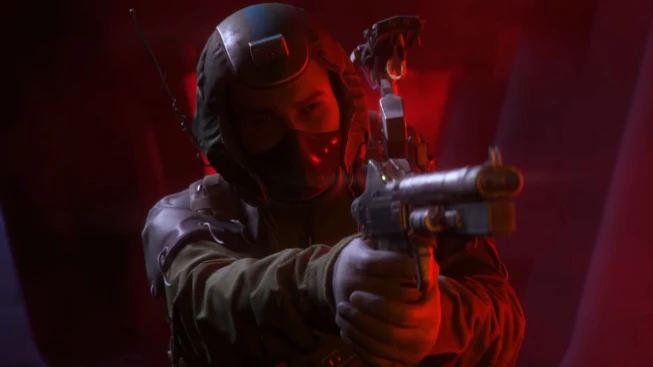
1047 Games’ new pre-alpha FPS, Empulse, is reportedly in development with Titanfall-style movement, grappling hooks, wall-running, boosts, and playable mechs equipped with weapons like Gatling guns and missiles. The article frames the title as a potential spiritual successor to Titanfall and suggests it could resonate strongly with movement-shooter fans if the gunplay, map design, and progression model hold up. Market impact appears limited for now because the game remains early and unannounced beyond leaks.
This is less a single-game story than a signal that a neglected FPS niche still has monetizable demand: high-mobility, skill-expressive shooters with strong spectator readability. If the concept lands, the second-order winners are not obvious game-companies so much as the ecosystem around creator-led discovery — Twitch/YouTube engagement, peripheral engagement, and PC hardware refresh cycles. The market is currently underpricing how much a credible Titanfall-like can re-activate lapsed FPS players who have been sitting out slower tactical shooters and battle royales.
The bigger strategic implication is competitive: a successful launch would pressure incumbents to reintroduce movement depth, which tends to be expensive to retrofit into existing maps and codebases. That creates an asymmetric risk for live-service shooters with declining novelty, because their churn problem is not solved by cosmetics or seasonal content if they cannot offer a meaningfully different feel. The opportunity window is 6-18 months, not days — sentiment can run ahead of fundamentals quickly, but real monetization depends on retention past the first content drop.
The contrarian read is that nostalgia is being mistaken for addressable demand. Players want the memory of a great movement shooter, but they will abandon a game fast if gunfeel, netcode, matchmaking, or progression feel even slightly off. The failure mode is familiar: a strong pre-launch narrative, a sharp opening month, then a collapse in concurrent users once the meta calcifies and the skill ceiling scares off casuals.
From a portfolio lens, the cleanest edge is in names leveraged to successful PC/console engagement rather than the studio itself, which is not publicly tradable. If this gains traction, the likely beneficiaries are engine/platform and content-distribution layers, while slower, more tactical FPS franchises face a modest but real share-of-time threat. The setup is best expressed as a relative-value bet on audience attention, not a standalone equity story.
AI-powered research, real-time alerts, and portfolio analytics for institutional investors.
Request DemoOverall Sentiment
mildly positive
Sentiment Score
0.35
