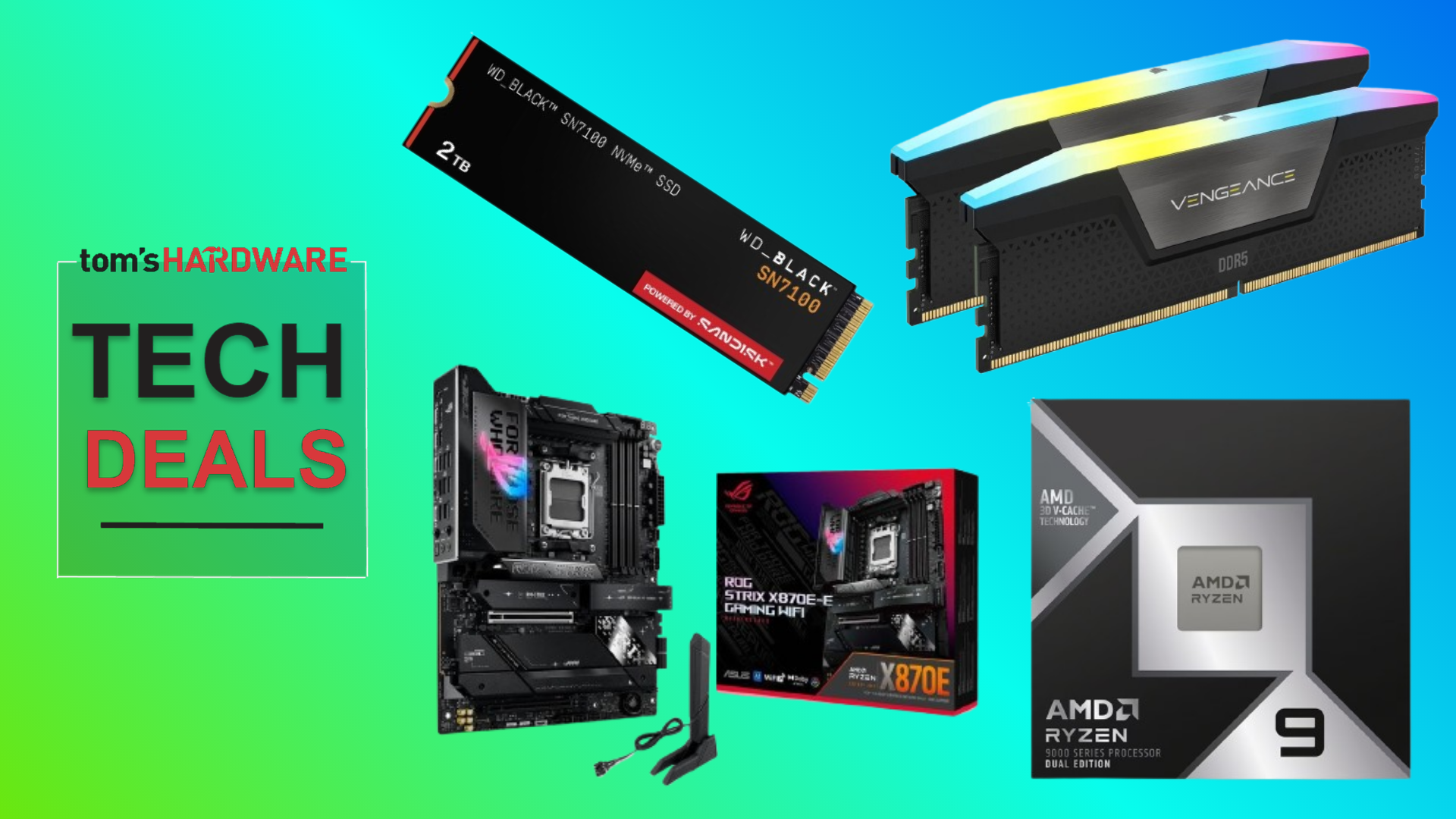
Newegg is selling an AMD Ryzen 9 9950X3D2 barebones PC kit for $1,704.99, a $413.98 discount versus buying the CPU, Asus X870E-E motherboard, 32GB Corsair DDR5-6400 RAM, and 2TB WD Black SN7100 SSD separately. The article highlights that the RAM is effectively priced at $56.01 and that the combo offers meaningful savings amid elevated component prices driven by AI-related demand. The deal is attractive for PC builders, but it is a retail promotion with limited broader market impact.
AMD’s real edge here is not the bundle discount; it is the signaling effect that a premium halo product can still anchor ecosystem demand when the buyer is chasing maximum performance-per-watt within a constrained platform window. That matters because high-end CPU launches are rarely about unit volume alone—they pull through motherboard, memory, and storage attach rates, which is where the margin pool often lives for the broader PC stack. The combo also hints that channel partners are willing to subsidize early adoption to avoid inventory overhang, which can temporarily mask weak end-user demand while preserving ASPs upstream.
The second-order winner is Newegg’s marketplace motion and, more broadly, AMZN as a distribution beneficiary: these bundles are demand-conversion tools, not just discounting. If AI-related component inflation persists, consumers will increasingly rationalize purchases via bundles rather than standalone parts, which favors retailers with tight supplier coordination and fast inventory turns. That dynamic can support near-term gross merchandise value even if PC replacement cycles remain sluggish.
The contrarian read is that this is less a sign of broad gaming-PC strength than a very narrow luxury upgrade market, where enthusiasts are willing to pay for marginal benchmark leadership. If the next few weeks show muted sell-through, the combo will likely be a channel-clearing exercise rather than evidence of durable end-market acceleration. The key risk to AMD is that halo demand does not translate into broader platform adoption if power, pricing, and motherboard requirements keep the total build cost above what most buyers will tolerate.
Over the next 1-3 months, the main catalyst is not the CPU itself but whether follow-on bundles expand or get pulled. If these offers disappear quickly, that supports the view that the channel is healthy; if discounts deepen, it suggests inventory pressure and could cap sentiment around the entire premium desktop complex.
AI-powered research, real-time alerts, and portfolio analytics for institutional investors.
Request DemoOverall Sentiment
moderately positive
Sentiment Score
0.45
Ticker Sentiment
