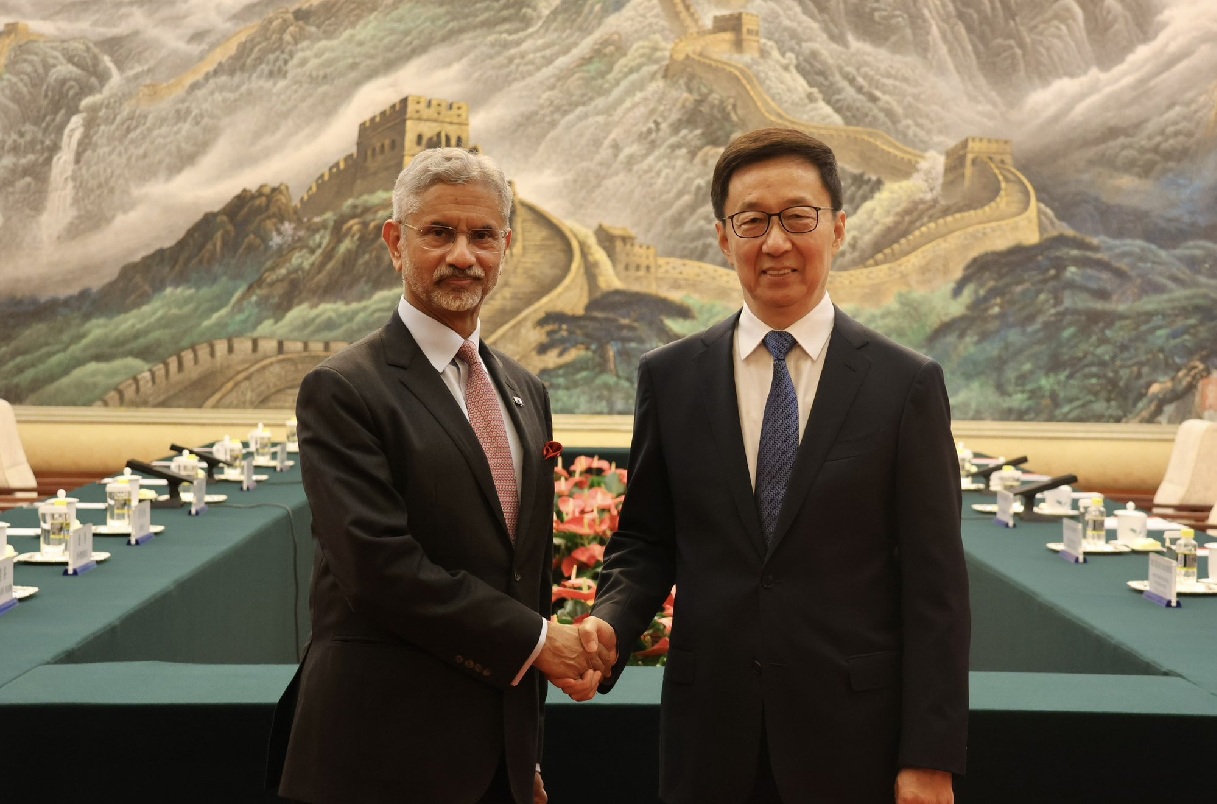
Indian Foreign Minister S. Jaishankar's recent visit to China, his first since 2019, aimed to de-escalate lingering border tensions and improve bilateral ties ahead of the SCO summit. While both nations conveyed a desire for a positive trajectory and "win-win" cooperation, Jaishankar specifically urged continued border de-escalation and warned against "restrictive trade measures." Despite these diplomatic overtures, experts highlight that significant geopolitical rivalry and the long-standing border dispute remain unresolved, indicating persistent underlying friction with potential implications for regional stability and trade.
Indian Foreign Minister S. Jaishankar's visit to Beijing, his first since 2019, signals a cautious attempt to stabilize Sino-Indian relations following the 2020 Galwan Valley clash. While diplomatic language from both sides projects a positive trajectory, with China's Vice President Han Zheng referencing a "dance of dragons and elephants," significant underlying friction persists. Jaishankar explicitly called for continued de-escalation along the 2,400-mile border and warned against "restrictive trade measures," indicating that normalization is conditional and fragile. This sentiment is reinforced by expert analysis within the report, which notes that the fundamental border dispute remains unresolved and that China's strategic alliance with Pakistan continues to be a primary security concern for India. The meeting, therefore, represents a fragile détente driven by diplomatic necessity ahead of the SCO summit, rather than a fundamental resolution of the deep-seated geopolitical and security rivalries.
AI-powered research, real-time alerts, and portfolio analytics for institutional investors.
Overall Sentiment
Mixed
Sentiment Score
0.00
