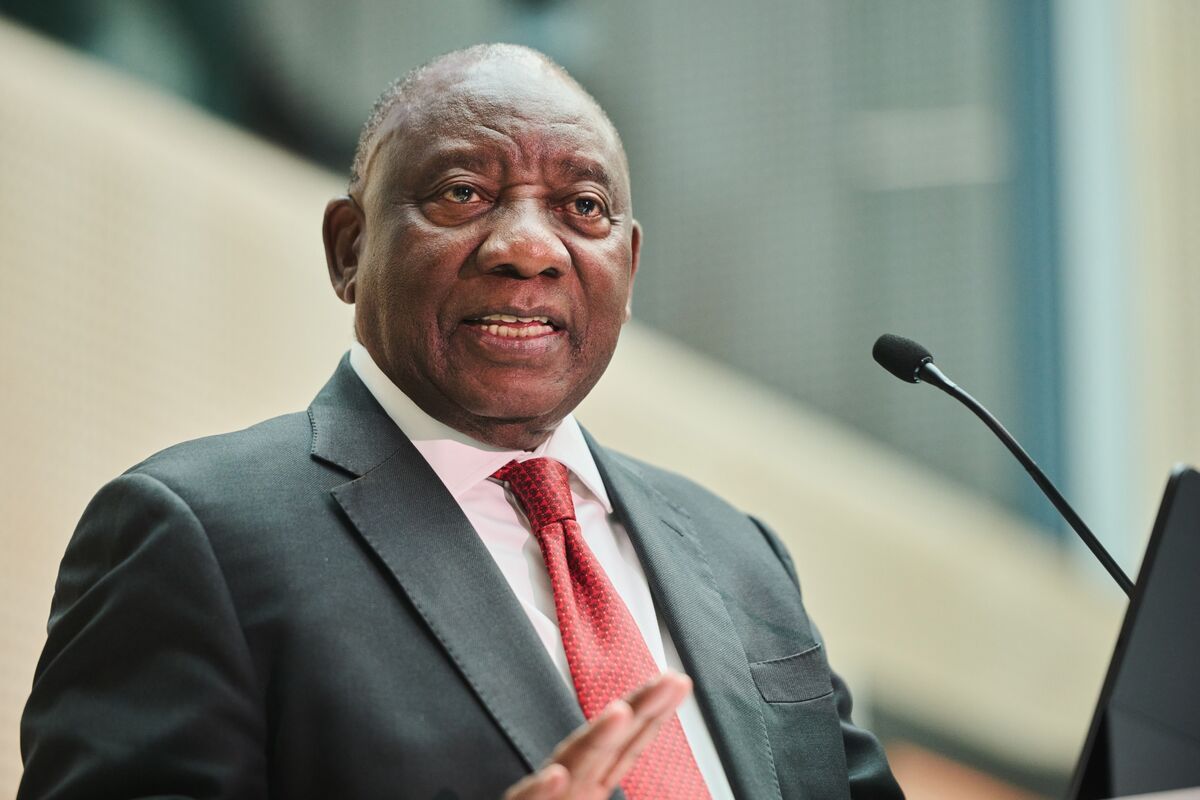
South African President Cyril Ramaphosa appointed former National Treasury budget chief Michael Sachs as his economic adviser, signaling an effort to strengthen fiscal policy expertise as the government pursues growth and reforms. Sachs previously led the Treasury budget office from 2015 to 2017 and is expected to take up the role in the coming weeks. The move is institutionally positive but remains a personnel appointment with limited immediate market impact.
This is less about a personnel change than about tightening the policy process at the margin. Bringing in a technocrat with budget credibility usually improves signaling to bondholders before it changes real growth, so the first-order market impact is through risk premium compression rather than faster GDP. In South Africa, that matters because the sovereign and banks trade as a reflexive macro complex: any credible move toward expenditure discipline or better revenue execution can widen the room for local duration and strengthen the currency even if nominal growth remains mediocre.
The second-order read is that Ramaphosa is likely trying to front-load reform credibility ahead of political noise, not after it. That creates a near-term asymmetry: the appointment can support sentiment in the next 1-3 months, but the hard part is implementation across labor, SOEs, and coalition constraints over 6-18 months. If this adviser role is used to coordinate budget messaging and constrain slippage, the beneficiaries are local banks, domestic cyclicals, and long-end ZAR rates; the losers are quasi-fiscal beneficiaries and any entity reliant on soft budget constraints.
The contrarian view is that the market may overestimate the signaling power of a single adviser. South African macro has repeatedly seen credible technocrats enter the process only to be diluted by politics and administrative bottlenecks, so the catalyst could fade quickly if there is no visible fiscal-action package in the next budget cycle. The real tell is not the appointment itself but whether wage growth, SOE transfers, and contingent liabilities are actually constrained; without that, any rally in ZAR assets is likely to be tactical rather than structural.
Risk-wise, the key tail event is reform disappointment combined with global risk-off, which would re-open the sovereign spread story and pressure banks through higher funding costs. The upside case is a sequence of small but verifiable wins over 2-4 quarters, which could re-rate South African equities modestly despite weak growth. Expect the market to price this as a credibility trade first, and only later as an earnings trade if policy follow-through emerges.
AI-powered research, real-time alerts, and portfolio analytics for institutional investors.
Request DemoOverall Sentiment
neutral
Sentiment Score
0.15
