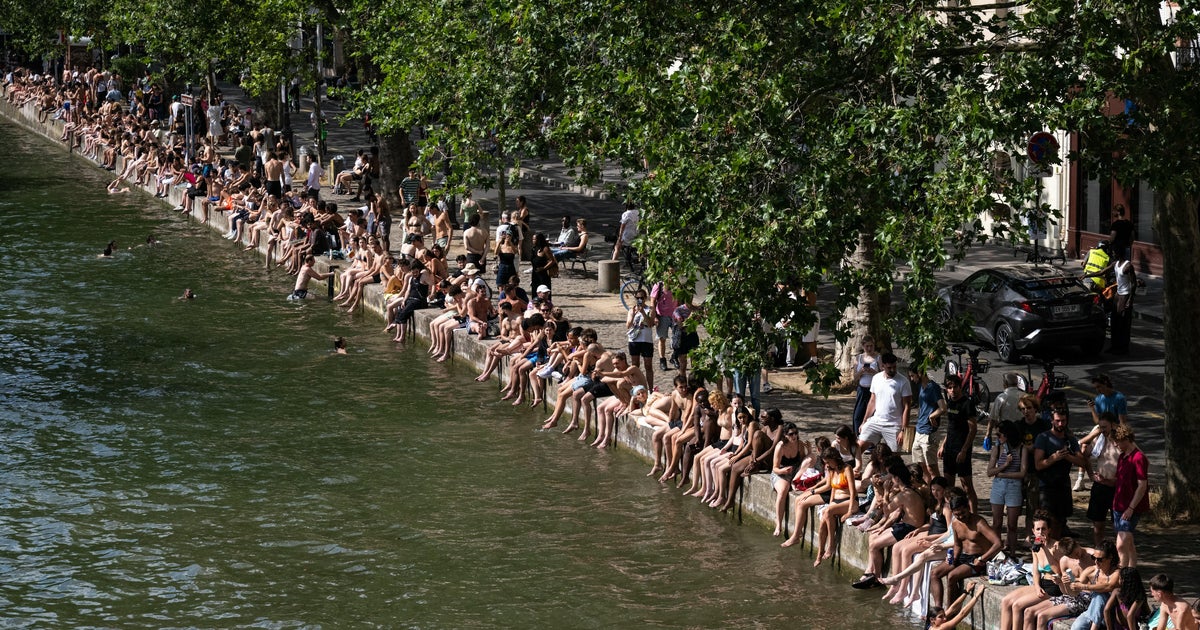
Paris has banned public alcohol consumption and take-home alcohol sales during an ongoing record heat wave to reduce hospital and emergency service strain, while France has recorded at least 55 drowning deaths in recent days. The Netherlands also issued its first-ever red heat alert, underscoring the severity of the weather across Western Europe. Scientists said the event was unequivocally driven by human-caused climate change and warned that rapid fossil-fuel phaseout is critical.
The immediate market read is not about the weather itself but about operating friction: emergency constraints, labor disruption, and lower discretionary activity in dense urban centers. Hospitality, beverage retail, ride-hailing, and last-mile delivery are the most exposed over the next 1-2 weeks because demand shifts from leisure consumption to essential travel while municipal restrictions reduce impulse alcohol purchases and nightlife throughput. A faster-than-expected cool-down would only partially unwind this because the operational losses from a multi-day heat shock are not fully recaptured.
The second-order beneficiary set is broader and more durable than the headline suggests. Utilities and grid-equipment vendors should see elevated peak-load demand and a stronger case for capex tied to cooling resilience, while insurers and reinsurers face a creeping underwriting problem as heat-related mortality, dehydration claims, and secondary accident risk become more frequent and less seasonal. Over a 6-24 month horizon, this strengthens the investment case for names tied to urban adaptation, HVAC efficiency, water infrastructure, and grid hardening rather than simple weather beta.
The contrarian angle is that the market may underprice how quickly policy responses can become structural once hospitals and municipalities are repeatedly stressed. If episodes like this continue, expect more restrictions on outdoor commerce, tighter building and cooling standards, and faster decarbonization policy, all of which are modestly negative for traditional consumer leisure but supportive for electrification and climate-adaptation capex. The biggest reversal risk is a rapid normalization in temperatures over the weekend, which would fade the tactical trade, but it would not fully negate the medium-term thesis that heat volatility is now a recurring operating cost.
For equities, the cleanest expression is to fade near-term consumer drag and own adaptation beneficiaries. The risk/reward is best in a short-duration trade on consumer discretionary names with high Paris/Europe exposure versus a basket of utilities and HVAC/efficiency beneficiaries, because the downside catalyst is immediate while the upside from resilience spending compounds over several quarters. Any pullback in the adaptation complex from a 'weather is temporary' mindset is an opportunity, not a disconfirming signal.
AI-powered research, real-time alerts, and portfolio analytics for institutional investors.
Request DemoOverall Sentiment
mildly negative
Sentiment Score
-0.35
