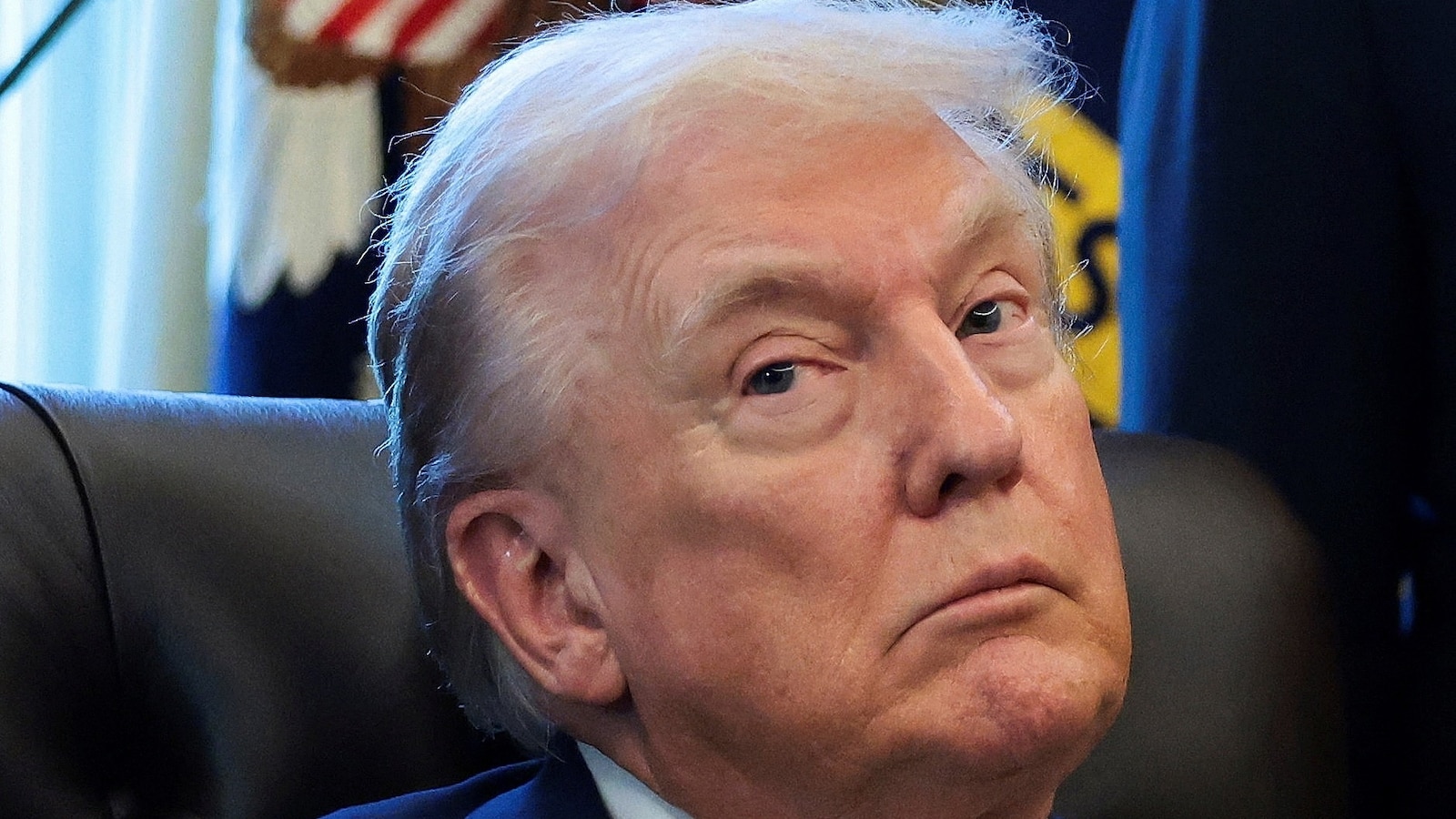
President Trump urged Republicans to 'take over' and 'nationalize' voting in an interview, repeating unfounded claims about noncitizen voting and criticizing state vote counts, while his office pointed to legislative proposals such as the SAVE Act to impose uniform photo ID rules and restrict mail-in voting. Senate Democrats condemned the remarks as unconstitutional and illegal, and the comments come amid continuing litigation over the 2020 election and recent FBI seizures of Georgia voting records — developments that raise political and legal uncertainty ahead of the 2026 midterms.
Market structure: Political rhetoric about “nationalizing” voting is a demand shock for election security, legal services, and federal contractors rather than consumer sectors; expect incremental procurement cycles to favor cybersecurity names (CRWD, PANW, FTNT) and defense contractors (LMT, NOC, GD) for 12–24 months as states/networks seek hardened infrastructure. Local governments and election vendors (many private) face revenue/contract uncertainty; muni credits tied to tourism/retail-exposed counties could widen spreads if unrest persists.
Risk assessment: Immediate (days) risk is headline-driven equity and FX volatility; short-term (weeks–months) the primary risks are litigation and targeted asset seizures that produce episodic drawdowns; long-term (quarters–years) is regulatory change if Congress advances the SAVE Act or federal election standards, which would reallocate $100sM–$1B in recurring IT spend. Tail risks include aggressive federalization proposals triggering nationwide litigation/civil unrest and a muni-credit shock; monitor muni-Treasury spread widening >30–50bp as a threshold.
Trade implications: Tactical allocation: overweight cyber/defense large-caps and buy volatility as hedge. Use pair trades to express safety preference (long CRWD or PANW 2–3% vs short IWM 2%). Options: buy 3-month 20–30-delta calls on CRWD/PANW (convex upside to procurement wins) and purchase 1% portfolio allocation to VIX-exposure (VXX/UVXY) as a 30–90 day event hedge.
Contrarian angles: Markets treat the rhetoric as noise, underpricing durable budget reallocation to security/IT — a 6–18 month re-rating is plausible for scalable cyber incumbents. Conversely, if SAVE Act fails or courts rebuff federal moves, cyber/defense names could pull back 5–15% on sentiment reversal; muni spread dislocations create tactical long opportunities when spreads retrace >50bp over baseline.
AI-powered research, real-time alerts, and portfolio analytics for institutional investors.
Request DemoOverall Sentiment
moderately negative
Sentiment Score
-0.30
