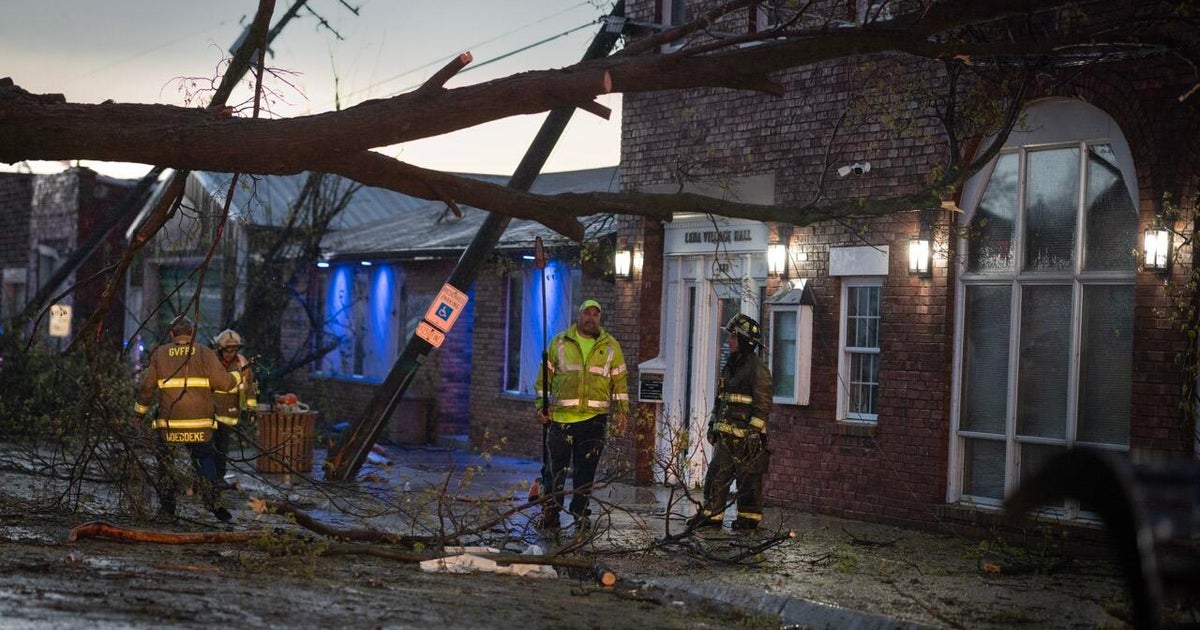
More than 70,000 customers across the Midwest and Great Lakes were without power after a night of tornadoes and severe storms, with additional thunderstorms forecast for Saturday night. Damage was reported in Rochester, Minnesota; Lena, Illinois; suburban Kansas City; and parts of Oklahoma, including downed trees, power lines, roof damage, and damaged homes, though no serious injuries or fatalities were reported. The main economic impact is localized property and infrastructure damage rather than a broad market event.
The immediate market impact is not the storm itself but the duration of utility restoration. A 70k-customer outage count is manageable for the grid, but the second-order hit is to small-business revenue, cold-chain spoilage, and construction/retail foot traffic over the next 3-10 days. That matters more for local economic activity than for national aggregates, but repeated severe-weather events can start to show up in regional utility operating costs and claims frequency.
The more investable read-through is to property and casualty insurers, roofing/construction labor, and electrical equipment suppliers. Severe convective storms create a high-volume, low-severity claims pattern that tends to pressure combined ratios before rates fully reprice, while also pulling forward demand for repairs, transformers, wire, and temporary generation. The cleanest winners are firms with exposure to residential reroofing and utility hardening rather than pure catastrophe reinsurers, because this is a broad-based infrastructure replacement cycle, not a single-loss-event spike.
Contrarian risk: the equity market often underestimates how quickly these events can compound when they occur in clusters across the same geography. If the pattern persists through spring, the issue shifts from one-off remediation to margin drag in regional utilities, higher claims inflation, and project delays in the Midwest industrial corridor. The near-term reversal catalyst is simple: if the next 1-2 storm systems miss population centers, the trade fades quickly; if outages and hail/tornado claims repeat, the market will reprice the frequency risk rather than the headline damage number.
AI-powered research, real-time alerts, and portfolio analytics for institutional investors.
Request TrialOverall Sentiment
moderately negative
Sentiment Score
-0.45
