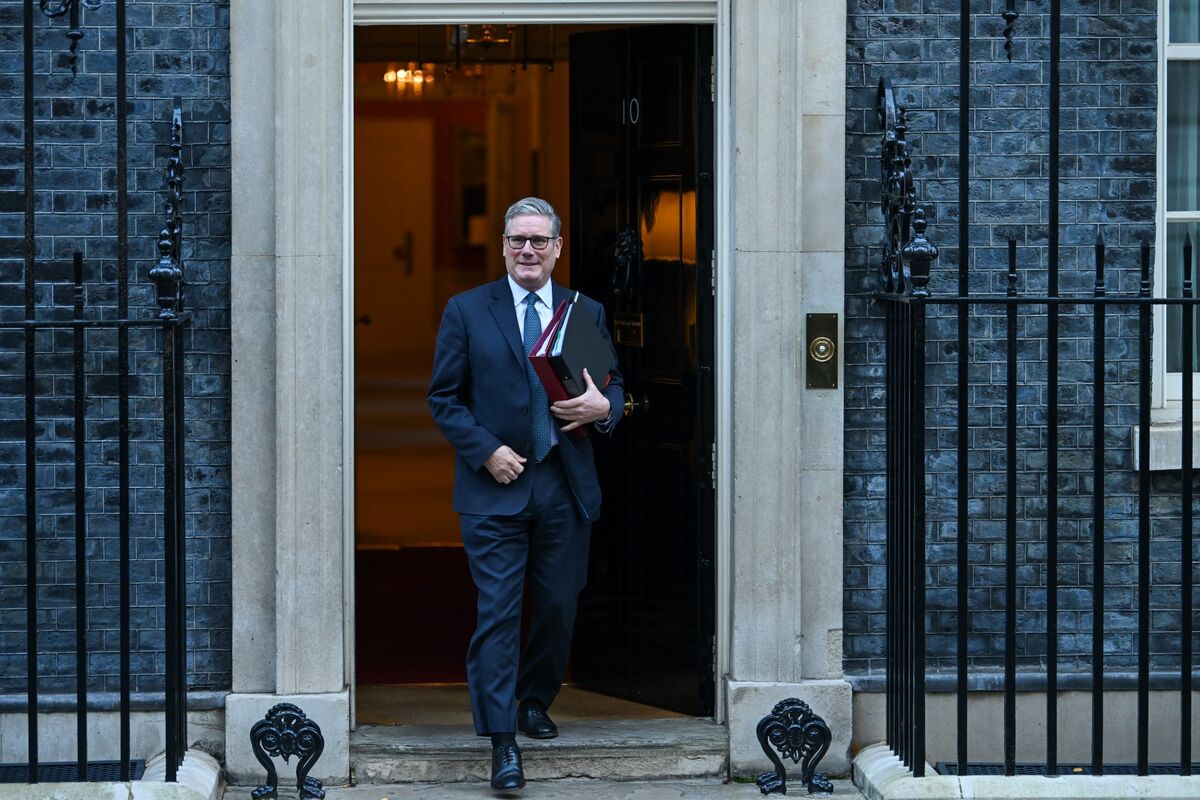
Prime Minister Keir Starmer has six months to restore confidence inside the Labour Party after plunging public support raised doubts about his ability to lead. He and Chancellor Rachel Reeves survived a recent budget statement that narrowly avoided a market or parliamentary reckoning, but ongoing voter defections and internal pressure create political uncertainty that could pressure UK markets and complicate fiscal policy over the coming months.
Market structure: Political instability in the UK raises risk premia on domestically‑exposed assets and pushes a relative bid toward large exporters and commodity names (FTSE 100) – expect a 1–3% reweighting into exporters over 1–3 months if GBP remains >1–2% weak. Gilts carry immediate vulnerability: leadership or fiscal uncertainty can lift 10y gilt yields by +30–50bp in stressed weeks, pressuring duration-heavy portfolios and pension LDI setups. FX and equity volatility should rise 20–40% around headline events (party votes, conferences) in the next 30–90 days.
Risk assessment: Tail risks include a snap election or a leadership change triggering capital outflows and a >50bp jump in 10y yields within days; alternatively a decisive pro‑market pivot could compress spreads fast. Time horizons: immediate (days) – volatility spikes around polling and budget follow‑ups; short (weeks–months) – positioning changes and corporate guidance revisions; long (quarters) – policy direction affects capex and consumer confidence. Hidden dependencies: mortgage repricing, UK bank CET1 dilution risk, and pension LDI forced selling could amplify moves.
Trade implications: Favor relative long exporters/commodities and short domestic cyclicals and long‑rate protection. Use size limits: 1–4% portfolio per idea, add on trigger moves (GBPUSD down 2% or 10y gilt +30bp). Options and futures are preferred to control tail exposure: buy GBP volatility and payer swaptions on UK rates; trim nominal gilt exposure now. Rebalance after 30–90 days depending on political calendar and polling trajectories.
Contrarian angles: Markets often overshoot political headlines; if Starmer stabilizes support within 3 months, sterling could rally 3–5% and gilts rally as risk premia compress — a fast mean reversion trade exists. Domestic names may be oversold by 10–25% versus fundamentals (housing, retail) and offer pair‑trade shorts vs exporters. Watch for unintended BoE tightening pressure from a weaker GBP that would keep yields elevated even with political calm.
AI-powered research, real-time alerts, and portfolio analytics for institutional investors.
Request DemoOverall Sentiment
moderately negative
Sentiment Score
-0.40
