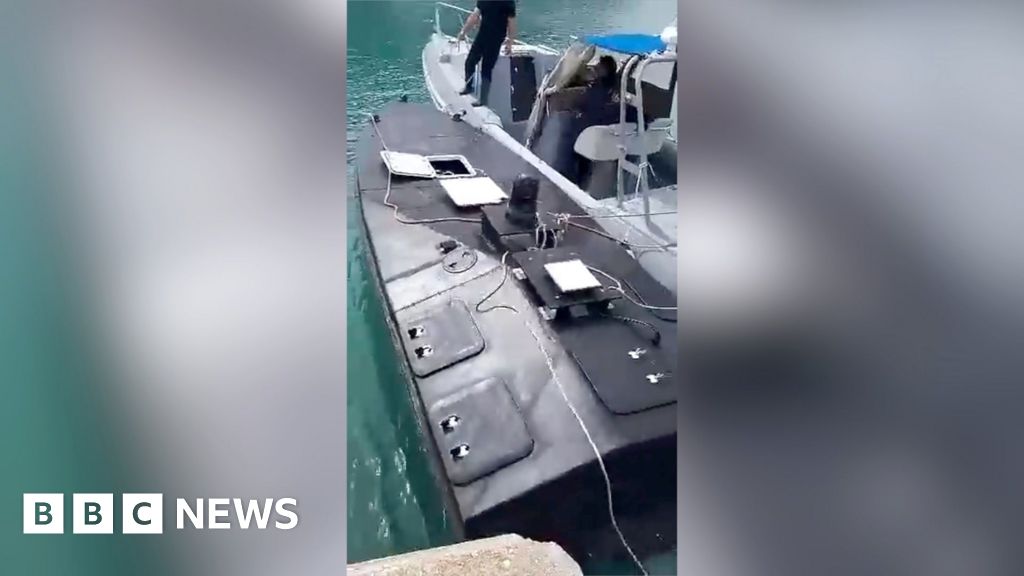
Greek authorities rendered safe a naval drone carrying roughly 100kg of explosives after it was found in the Ionian Sea near Lefkada, then carried out a controlled blast near Astakos. The incident highlights Greece's maritime security vulnerabilities and the growing use of naval drones in the Russia-Ukraine war, while also raising scrutiny of the Greece-Ukraine drone cooperation deal. The event is geopolitically sensitive but likely a limited direct market mover.
This is less about the isolated device and more about the market repricing of the drone threat from a theater-specific nuisance into a transferable maritime-security problem. The immediate second-order effect is a policy premium for defense primes with anti-drone, ISR, EW, and coastal surveillance exposure: ministries now have a concrete domestic incident to justify procurement acceleration rather than slow-burn budget debates. That matters because the buying cycle for point defenses is usually compressed after a live demonstration, and the fastest beneficiaries are the vendors already embedded in NATO procurement frameworks.
The more interesting read-through is on Ukraine’s industrial leverage. If Kyiv is indeed exporting operational know-how on naval drones, this supports a broader thesis that its asymmetric warfare stack is becoming a tradable product, not just a battlefield capability. That can be constructive for partners and co-producers over 6-18 months, but it also increases political friction: any perceived spillover into NATO waters raises the probability of tighter end-use restrictions, which could slow commercialization and add veto rights into joint programs.
From a risk perspective, the tail is not the single drone; it is a near-miss that could trigger an incident involving commercial shipping or an ally’s territory, which would force a hard reset on rules of engagement. Near term, the headline may fade in days, but procurement and domestic political consequences can persist for quarters. The contrarian view is that the episode may actually accelerate European autonomous-maritime spending because it reveals a low-cost threat that legacy navies are not sized to absorb cheaply.
For KYIV, the event is mildly negative in the short run because it highlights operational spillover risk and may invite partner scrutiny, but it should not impair the broader defense-tech narrative unless evidence emerges of intentional misuse in the Mediterranean. The bigger medium-term upside remains any formalized co-production pipeline that monetizes Ukraine’s battlefield IP into allied procurement budgets.
AI-powered research, real-time alerts, and portfolio analytics for institutional investors.
Request DemoOverall Sentiment
mildly negative
Sentiment Score
-0.15
Ticker Sentiment
