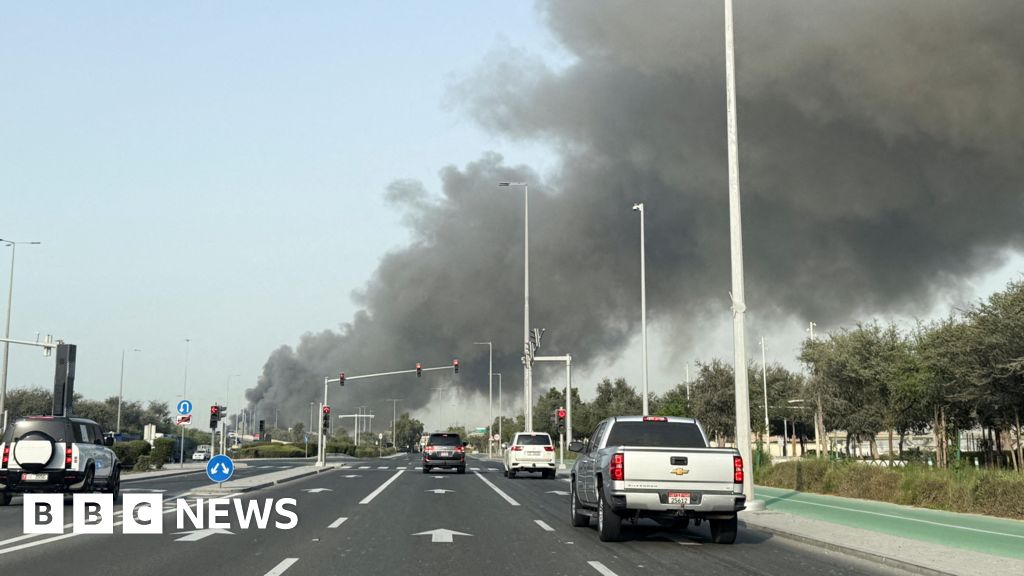
Iran launched a sustained strike campaign across the Gulf that Gulf states report has involved hundreds of weapons — the UAE said it had 'dealt with' 165 ballistic missiles, two cruise missiles and 541 drones — with attacks and debris striking airports, hotels, ports and other civilian infrastructure in the UAE, Bahrain, Oman and Saudi Arabia. The strikes and the risk of escalation threaten regional stability and could drive oil-price volatility, travel and logistics disruption, higher insurance and security costs, and shift investor positioning in Gulf assets, defense suppliers and related commodities as markets reassess supply-risk and sovereign risk premia.
Market structure: Immediate winners are defence primes and suppliers of air-defence, surveillance and munitions (L3/RTX/LMT/NOC) and short-dated oil/energy producers; losers are aviation, airports, hospitality and Gulf sovereign credit. Pricing power shifts to suppliers of surge military kit and to reinsurers/insurers who will raise premiums; airlines and airport operators face route closures and demand loss that can compress margins by mid-teens percent over months.
Risk assessment: Tail risks include escalation that disrupts tanker routes (Suez/Gulf chokepoints) producing oil spikes >30% and rapid Gulf sovereign stress (Bahrain/BDS spreads widening +100–300bp). Immediate (days): volatility spikes across FX/commods/equities; short-term (weeks–months): oil +10–30% and regional CDS widening; long-term (quarters–years): structurally higher defence budgets and insurance re-rating. Hidden dependencies: insurance/reinsurance capacity, spare OPEC capacity, and US air-defence attrition rates — monitor these as second-order drivers.
Trade implications: Favor 1–3% conviction long positions in large-cap defence names and tactical long call-spreads on Brent/WTI for 3–6 months; short airline exposure (JETS or individual carriers) and underweight Gulf sovereigns; buy gold/USD as tail hedges. Use options to express asymmetric views (buy call spreads on Brent, buy puts/long vol on JETS) and avoid outright long EM Gulf local-currency risk until CDS normalizes.
Contrarian angles: Consensus assumes protracted energy shock; that may be overdone if US/Israel rapidly degrade Iranian launch capacity — defence names could sell off on a ceasefire and oil reverse. Historical parallel: 2019 Abqaiq spike reversed within months once supply restored, so layer entries on pullbacks and use tight stop-losses against binary geopolitical outcomes.
AI-powered research, real-time alerts, and portfolio analytics for institutional investors.
Request TrialOverall Sentiment
strongly negative
Sentiment Score
-0.65
