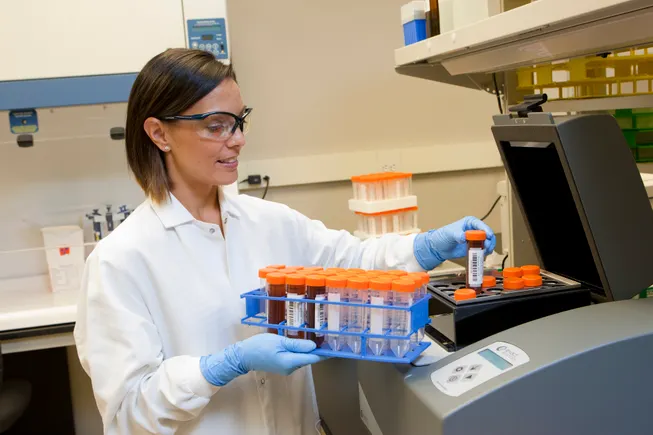
Abbott is set to close its $21 billion acquisition of Exact Sciences on Monday after receiving all required regulatory clearances. Abbott expects the deal to add about $3 billion in incremental sales in 2026, will operate Exact as a subsidiary, and cites a roughly $60 billion cancer screening and diagnostics market opportunity. Abbott reported $44.33 billion in revenue in 2025 while Exact reported $3.25 billion last year; analysts note Abbott can accelerate Exact's international growth and innovation initiatives.
The strategic buyer’s global commercial footprint will act as an accelerant for adoption curves that previously depended on a smaller, lab-centric go-to-market. Expect meaningful revenue mix shift toward international and point-of-care channels within 12–24 months, with operating leverage appearing in 18–36 months as fixed lab and R&D costs are spread across a larger volume base.
Second-order demand shifts will cascade through the procedure ecosystem: fewer invasive-screening procedures compress revenue pools for hospital endoscopy services, anesthesia providers, and capital-equipment vendors, while platform and reagent suppliers that can integrate into high-throughput screening pathways gain share. Pure-play liquid-biopsy and MCED specialists face margin and market-share pressure as distribution, payer negotiation power, and bundled contracting favor larger incumbents.
Key binary catalysts are payer coverage and guideline endorsements; these are 6–36 month events that will determine whether uptake is volume-driven or remains niche. Integration execution (commercial harmonization, lab footprint rationalization, and R&D prioritization) is the primary operational risk and can push breakeven multiples out by several years if mishandled.
Market reaction should be judged against three buckets: near-term multiple re-rating on headline synergy optimism, medium-term realization risk tied to reimbursement, and long-term structural wins if adoption scales internationally. Position sizing should reflect a multi-year outcome distribution rather than a near-term event trade.
AI-powered research, real-time alerts, and portfolio analytics for institutional investors.
Request DemoOverall Sentiment
strongly positive
Sentiment Score
0.70
Ticker Sentiment
