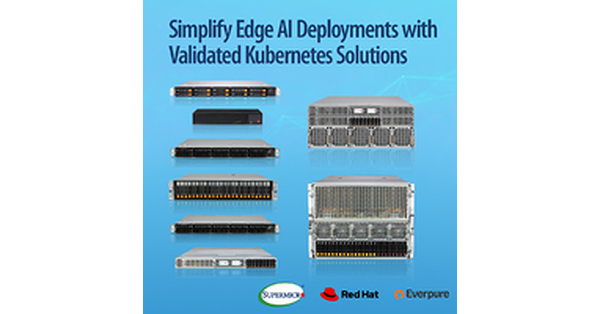
Supermicro (SMCI) lanceert Kubernetes Edge AI-appliances als een gevalideerde full-stack edge-oplossing, geïntegreerd met Red Hat OpenShift en Portworx by Everpure voor AI-opslag/data-beheer aan de edge. De aanpak positioneert zichzelf als het verkorten van de time-to-revenue door vooraf geïnstalleerde hardware/software en als het mogelijk maken van enterprise datadiensten met veerkrachtig, zelfherstellend dataplatform tijdens netwerkuitval. Vooralsnog is het nieuws product-/platformgericht en impliciet (geen financiële guidance), dus het is beperkt tot een matige impact op de marktverwachtingen.
This is more important as a distribution/channel signal than as near-term financial content. For SMCI, the economic value is in becoming the default “integration layer” for fragmented edge deployments, but the first-order revenue contribution is likely small and low-margin until management proves repeatable volume. The market should care more about whether this improves attach rates, order visibility, and mix than about the announcement itself.
Second-order winners are the ecosystem players that reduce deployment friction: Red Hat gets deeper penetration into industrial and retail edge estates, while NVDA benefits only indirectly because edge inference expands unit count but not the high-dollar training-rack intensity. The more interesting loser is traditional array storage and legacy edge appliance vendors: if software-defined storage becomes the default, vendors like NTAP and, to a lesser extent, HPE/DELL lose some wallet share at the branch/location level even if they still win the core datacenter.
The contrarian view is that consensus tends to overprice partnership PR and underprice operational complexity. Thousands of distributed sites sound sticky, but they also create long implementation cycles, channel conflict, and support costs; if SMCI cannot show sequential backlog or margin accretion, this is just narrative, not earnings power. In the next 1-3 months, watch for commentary on design wins and gross margin; over 6-18 months, the thesis is falsified if edge AI remains pilot-heavy or if hyperscaler-managed edge stacks absorb demand away from on-prem appliances.
AI-powered research, real-time alerts, and portfolio analytics for institutional investors.
Request DemoOverall Sentiment
mildly positive
Sentiment Score
0.15
Ticker Sentiment
