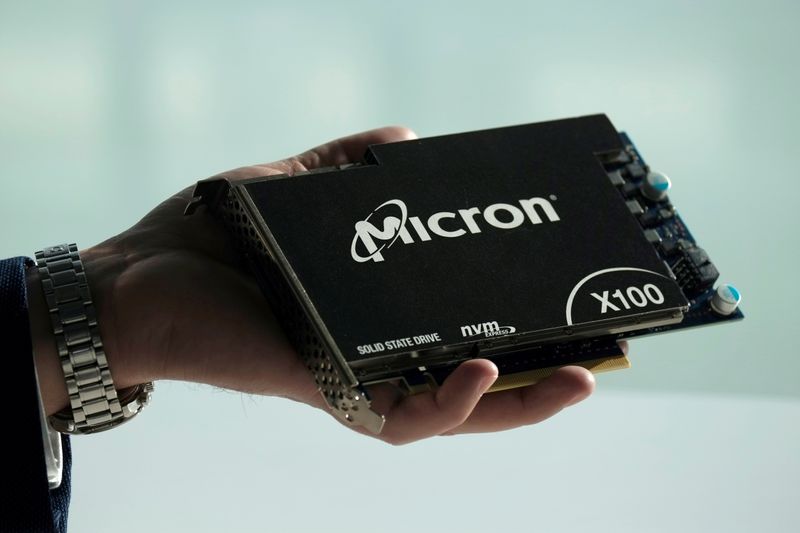
Wolfe Research raised Micron's price target to $550 (from $500) and lifted CY2027 EPS to $108 vs consensus $61 after the company guided May-quarter revenue of $9B (38% ahead of consensus) and gross margins of 81% (up from 57% in Nov 2025). Micron expects ~$14B in free cash flow next quarter, began HBM4 volume shipments for Nvidia, and benefits from multi-year strategic customer deals; several other firms raised price targets (RBC $525, MS $520, Raymond James $530, Needham $500). Wolfe also warned industry capacity needs—six new 100k-wafer DRAM fabs by end-2027—while Micron has ~1.5 fabs coming online by FY2028, supporting a materially stronger AI-driven memory cycle.
The structural pivot in demand from generic cloud workloads to accelerator-heavy AI deployments is creating a multi-year DRAM tightness window because building new fab capacity is capex- and time-intensive; that creates a multi-quarter stretch where pricing power and FCF conversion can outpace the rest of the semiconductor cycle. Equipment, materials and construction contractors (and firms selling HBM-optimized process IP) will see lead indicators of sustained demand well before end customers report revenue, so watch WFE order flow and long-lead component bookings as a 3–9 month advance signal.
Second-order winners include hyperscalers that secure multi-year supply agreements — they gain margin optionality and procurement leverage later in the cycle, while smaller server OEMs and spot-market buyers face outsized inventory and repricing risk. Conversely, any rapid acceleration of fab builds or government-subsidized capacity could flip the cycle; because fabs have 18–36 month build and qualification timelines, oversupply risk is concentrated in the 2027–2029 window if multiple greenfield projects run on parallel schedules.
Catalysts to move this trade are discrete and trackable: large multi-year customer agreements, consecutive quarter ASP and gross-margin beats, and capital expenditure pacing from peers. Near-term reversal triggers include a meaningful step-up in industry wafer starts (visible in equipment demand and supplier cadence), a marked slowdown in accelerator orders from the largest customers, or policy shifts that change where fabs can be built. Given current sentiment, positioning should emphasize convex, time-limited exposure rather than unhedged multi-year longs to guard against a fast mean reversion.
AI-powered research, real-time alerts, and portfolio analytics for institutional investors.
Request DemoOverall Sentiment
strongly positive
Sentiment Score
0.75
Ticker Sentiment
