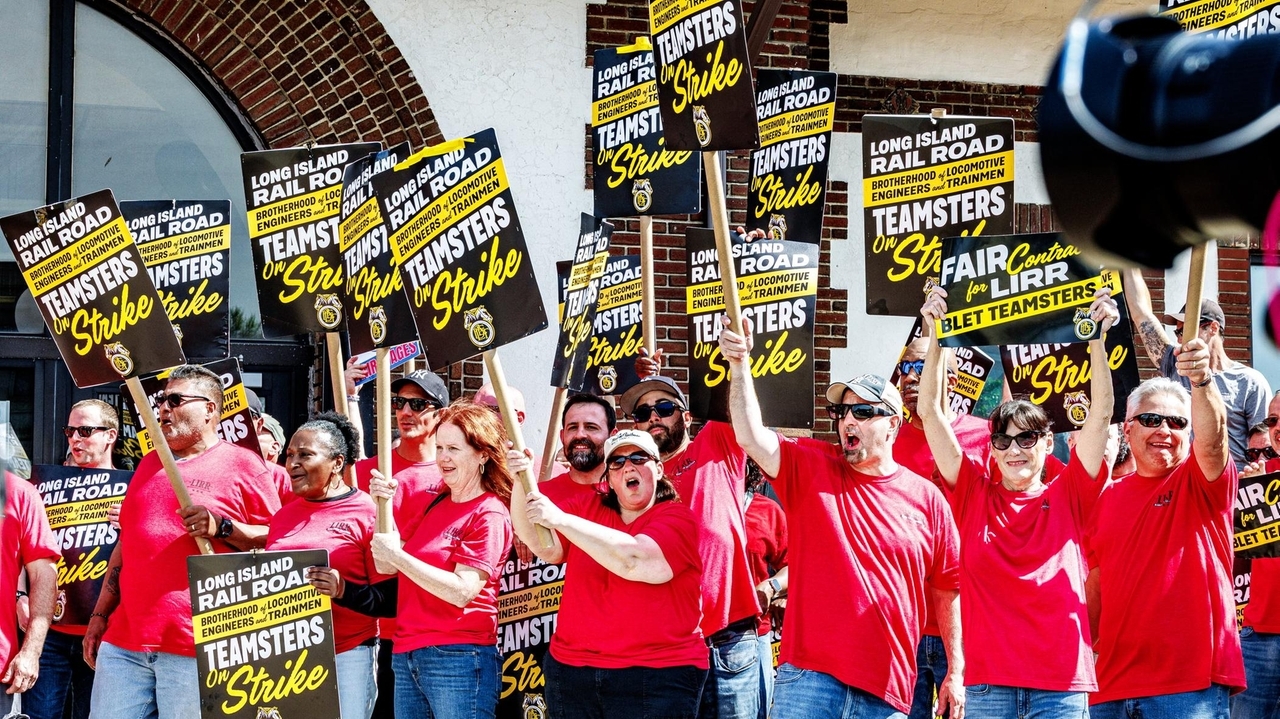
The Long Island Rail Road strike entered Sunday night talks after negotiations broke down Friday, leaving roughly 7,000 workers off the job and threatening the first weekday rush hour without LIRR service. The MTA says it has offered raises close to 5% in the final year, while unions want a 5% increase in 2026 and dispute the MTA's claim that their demands would force up to an 8% fare increase and tax hikes. The stoppage is already disrupting commuting and travel across Long Island and could affect the broader MTA workforce if it sets a precedent.
The immediate market read is less about one labor dispute and more about the MTA’s willingness to absorb recurring wage inflation without passing it through to riders. If the authority caves near the unions’ anchor, the larger risk is not the strike itself but the signaling effect to the rest of the transit labor base: one concession here tightens the wage reset across a very large municipal workforce. That creates a medium-term fiscal ratchet that matters for muni credit more than for day-one transit economics.
The first-order operational shock is concentrated in commuter behavior, but the second-order effect is modal substitution. Every day the strike persists, rideshare, taxi, commuter bus, and park-and-ride economics improve at the margin, while rail-dependent office attendance and discretionary city visitation weaken. That tends to pressure suburban retail, hospitality, and local service demand quickly, but the bigger issue is that some riders will discover workable substitutes and never fully return, which is a small but persistent ridership leak if the stoppage extends beyond a few days.
Consensus is underweight the political constraint: leadership cannot look soft on wages heading into a broader affordability debate, yet a prolonged stoppage raises the odds of a face-saving compromise that is economically worse than the current standoff. The market is likely overestimating the durability of the strike’s leverage because rail labor is more exposed to public pressure than many other unions once commuting pain becomes visible. Tail risk is a rushed deal with back-loaded concessions that preserves near-term operations but worsens the MTA’s budget path over 12-24 months.
For investors, the key is to separate short-duration dislocation trades from longer-duration fiscal trades. The immediate beneficiaries are alternative transport operators and nearby mobility proxies; the eventual losers are the MTA’s own credit profile and any adjacent municipal issuers tied to the same tax base if funding gaps widen. If talks fail again, expect a sharp but brief volatility spike in the next 1-3 sessions, followed by a political solution rather than a structurally improved bargaining outcome.
AI-powered research, real-time alerts, and portfolio analytics for institutional investors.
Request DemoOverall Sentiment
moderately negative
Sentiment Score
-0.45
Ticker Sentiment
