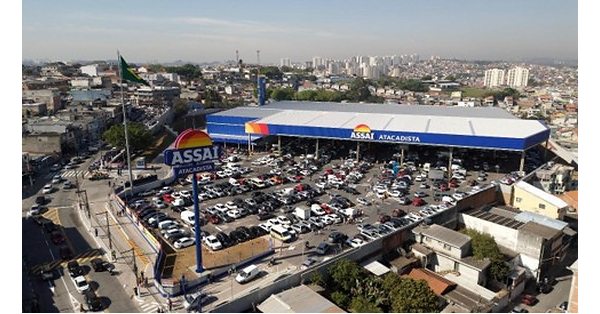
Assaí reported Q2 gross revenue of R$ 21.4B, up 2.4% YoY, as customer traffic rose 3.4% to 40M+ monthly visits and same-store market share increased 0.3pp. Cash generation was strong with operating cash generation of R$ 3.3B and 17.1% margin (+0.4pp), while free cash flow of R$ 2.7B helped cut leverage to 2.37x (down 0.8x vs. 12 months). The company also advanced its 2026 strategy (Assaí Farma rollout, 30 new private-label items, and iFood last-mile sales +237%), supporting an overall strengthening of its capital structure.
The main equity story is not the top-line print; it is the reduction in balance-sheet risk. For a Brazilian food-discount format, lower leverage can mechanically widen the equity multiple because it reduces refinancing sensitivity, lowers the probability of forced equity issuance, and gives management more freedom to defend price/traffic in a weak consumer backdrop. That tends to matter more than near-term EPS in this segment, where working-capital swings and funding costs often drive value.
Competitive spillover is likely negative for more levered peers, especially Carrefour Brasil/Atacadão and regional cash-and-carry operators that need to preserve margin to service debt. If Assaí can keep converting traffic into cash while slowing expansion, it can use price investment more aggressively without jeopardizing covenants, which is the most dangerous mix for competitors. The second-order effect is a possible share shift away from smaller wholesalers and neighborhood grocers that cannot match assortments or working-capital terms.
The market may be underestimating how defensive this growth really is: in a soft macro, trade-down can look like durable share gain for several quarters even if unit economics are only modestly improving. The risk is that some of the momentum is cyclical rather than structural, and the digital/financial-services initiatives are still optionality, not proven earnings drivers; if credit losses or receivables creep up, the story changes quickly. Falsifiers are simple: leverage stalling above ~2.5x, free cash flow normalizing materially below current levels, or same-store share gains reversing over the next 1-2 quarters.
AI-powered research, real-time alerts, and portfolio analytics for institutional investors.
Overall Sentiment
moderately positive
Sentiment Score
0.45
