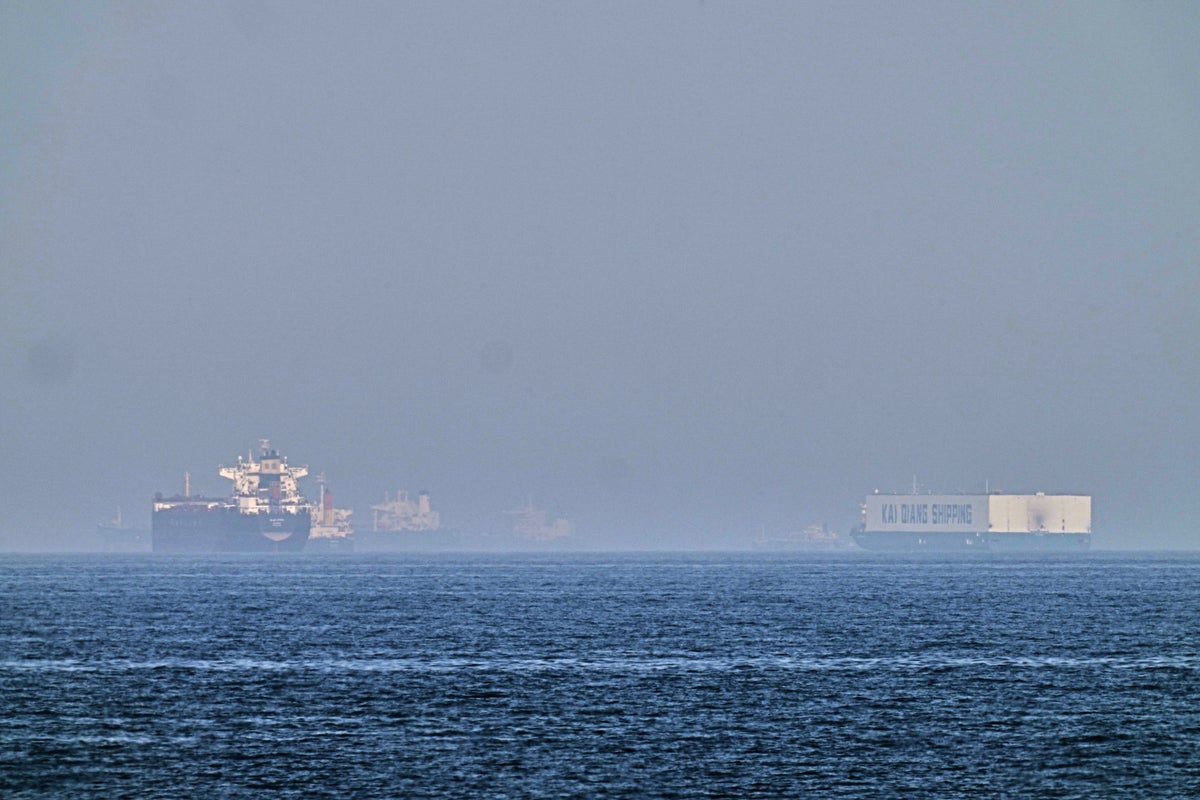
The UAE reported an active missile and drone attack as the fragile Iran-U.S. ceasefire was again challenged, while the U.S. said it intercepted attacks on three Navy ships in the Strait of Hormuz and struck Iranian military facilities. Iran’s move to formalize control over passage in the strait adds another layer of risk to a chokepoint that handles a large share of global oil and gas flows. The escalation keeps energy markets, shipping routes, and regional security under pressure despite ongoing mediator-led ceasefire talks.
The market is still pricing this as a contained geopolitical event, but the second-order risk is that a de facto toll regime at Hormuz becomes normalized. If even a fraction of tanker traffic starts paying political or “security” fees, the immediate winners are regional sovereigns and insurers with pricing power, while the losers are refiners, chemical producers, and shipping users whose input costs rise without any volume benefit. The bigger issue is that this is not a one-day headline shock; it is a rolling basis-widening event that can keep freight, marine insurance, and delivered-energy prices elevated for weeks even if the ceasefire technically holds.
Energy equities are not the cleanest expression here because integrated producers can hedge the move while downstream margins get squeezed. The more interesting setup is a dispersion trade: upstream cash generators benefit from a higher realized price floor, but airlines, trucking, and consumer discretionary should absorb the margin compression first because fuel cost pass-through is slower than the spot move. If Hormuz throughput remains impaired, the immediate pressure point is Asia’s import-dependent economies; that creates a lagged hit to global PMIs and industrial metals demand over the next 1-3 months.
The tail risk is not just a strike escalation; it is a bureaucratic weaponization of shipping permissions that makes navigation risk hard to measure and hard to hedge. That matters because market participants can tolerate one-off military exchanges, but they reprice sharply when insurance underwriters and charterers cannot model settlement risk. A diplomatic off-ramp would likely need explicit guarantees on transit rights, not just a ceasefire headline, so the downside for risk assets remains asymmetric until a formal maritime regime is clarified.
Consensus may be underestimating how sticky the shock is even if crude retraces. Once cargoes re-route, shipping contracts, inventory buffers, and refinery run plans adjust slowly, which means delivered fuel and freight inflation can outlast the news cycle. That argues for treating this as a medium-duration inflation impulse rather than a pure oil-spike trade, especially if the market front-runs a quick deal and then has to reprice logistics bottlenecks later.
AI-powered research, real-time alerts, and portfolio analytics for institutional investors.
Request DemoOverall Sentiment
strongly negative
Sentiment Score
-0.65
