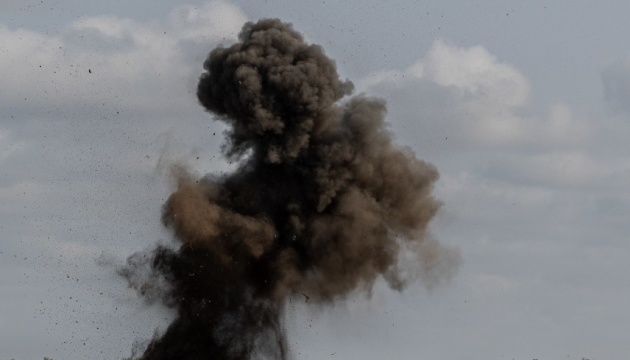
Ukraine's intelligence service said it struck two Russian Black Sea Fleet landing ships in Sevastopol Bay on April 19, putting the Yamal and Nikolai Filchenkov out of action. The operation also reportedly destroyed a Podlyot-K1 radar station valued at about $5 million, with additional claims of damage to other Russian naval assets in Crimea. The incident underscores continued escalation in the Black Sea theater and may have modest implications for regional defense risk.
This is another incremental degradation of Russia’s Black Sea logistical capacity, but the market implication is less about the destroyed hardware itself and more about the rising probability of a forced dispersal from high-value ports into lower-efficiency operating patterns. That tends to raise the effective cost of sustainment, reduce sortie tempo, and increase maintenance/repair burden over the next several weeks to months. In military terms, the marginal value of each additional successful strike increases because it compounds crew caution, route complexity, and asset idleness rather than just replacing one unit of steel.
The second-order effect is on regional air-defense and maritime denial demand: every successful hit on fixed assets increases the incentive to reallocate scarce defensive systems away from the front and toward rear-area protection. That can create a ratchet where Ukraine’s low-cost strike capability forces Russia into higher-cost perimeter defense, with diminishing returns. The biggest near-term risk for markets is not a single kinetic event but an accelerated escalation cycle that widens the theater or prompts deeper retaliatory pressure on infrastructure targets over the next 1-3 months.
For defense equities, the setup is supportive for firms exposed to maritime ISR, loitering munitions, electronic warfare, and low-cost strike interceptors, but the move is not broad beta-positive across the whole defense complex. Primes with high exposure to legacy shipbuilding or large-platform procurement see less immediate benefit than suppliers of sensors, drones, and counter-drone systems. The contrarian point: because these events are increasingly priced as persistent, the trade is no longer “war surprise” but “war duration,” so names tied to rapid replenishment cycles may outperform while headline-sensitive defense multiples stagnate.
A reversal would require either a successful countermeasure that materially reduces strike effectiveness or a diplomatic de-escalation that lowers the expected tempo of attacks. Absent that, the path of least resistance is continued attrition of Russia’s Black Sea posture, which is bullish for asymmetric warfare suppliers but bearish for any thesis built on quick conflict resolution. Time horizon matters: immediate market impact is limited, but over 2-4 quarters the procurement mix can shift meaningfully toward lower-cost, higher-velocity systems.
AI-powered research, real-time alerts, and portfolio analytics for institutional investors.
Request DemoOverall Sentiment
moderately negative
Sentiment Score
-0.40
