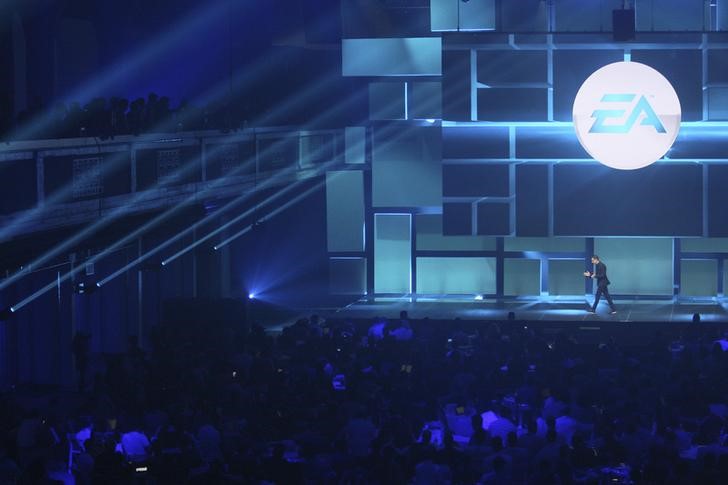
Electronic Arts CFO Eric Kelly sold 3,000 shares for about $602,495 at an average price of $200.8319, while the stock trades near its 52-week high of $204.88. The company also missed Q4 expectations with adjusted EPS of $1.81 versus $2.39 consensus and net bookings of $1.86 billion versus $1.98 billion, though full-year fiscal 2026 bookings hit a record $8.026 billion. Argus downgraded EA from Buy to Hold as the private equity buyout nears completion, with the shares still about 4% below the offer price.
EA looks less like a standalone earnings story and more like a near-transaction arb with deteriorating operating momentum. When an insider sells into a stock sitting just under a deal price and the latest quarter misses on both bookings and EPS, the market is effectively being asked to underwrite closing certainty while absorbing the risk that the sponsor can still pressure terms, delay timing, or exploit a widening spread if broader risk sentiment weakens. The overhang is not the sale itself; it is that management behavior is consistent with limited incremental upside from here.
The second-order winner is likely the capital returned to the buyer if the deal closes cleanly, not the public holder. If the transaction slips past the expected window, EA becomes vulnerable to multiple compression because the market has already paid for closing proximity and is now facing a flat-to-declining fundamental setup into a lower-growth phase. That creates a poor asymmetry: limited upside above the offer, but a non-trivial mark-down if financing, regulatory timing, or diligence issues emerge.
Contrarian view: the stock may be pricing the consortium closeout as a certainty, but the operating miss suggests the asset may be worth less to anyone else than the current headline implies. If the buyer gets even a modest concession or simply waits out the clock, the equity behaves like a decaying option on deal completion rather than a compounder. The cleaner trade is to separate deal certainty from business quality; those are not the same here.
NVDA is effectively noise in this package, but the mention of a new Windows-PC initiative matters only insofar as it reinforces the broader PC-AI refresh cycle. The second-order implication is that any incremental demand unlock in client silicon is more likely to accrue to the platform ecosystem than to one isolated OEM cycle; however, this is not yet a direct catalyst from the article and should not be chased without confirmation of pricing, design wins, and shipment timing.
AI-powered research, real-time alerts, and portfolio analytics for institutional investors.
Request DemoOverall Sentiment
mildly negative
Sentiment Score
-0.15
Ticker Sentiment
