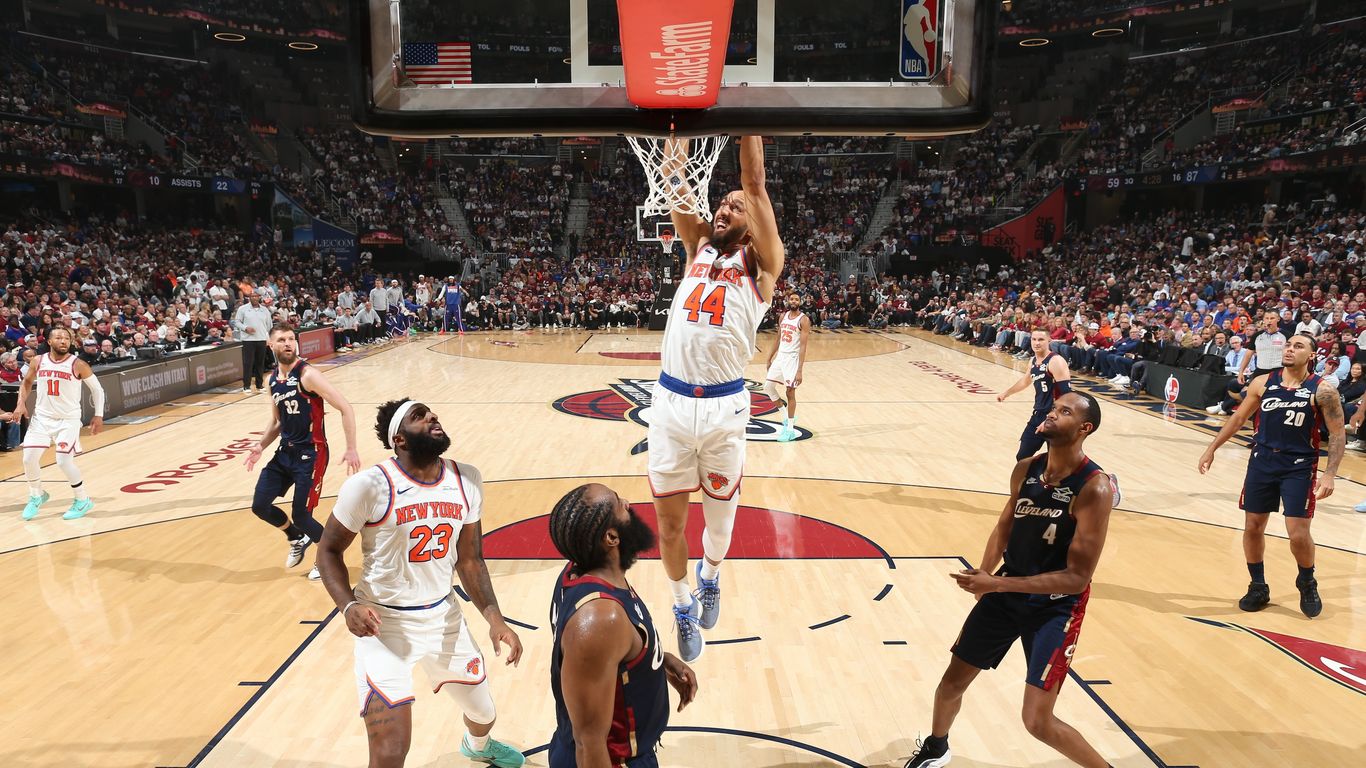
The Cavaliers were swept by the Knicks in the Eastern Conference finals, capped by a 130-93 Game 4 loss after blowing a 22-point lead in Game 1. The article highlights major offseason uncertainty for Cleveland, including potential decisions on James Harden, Kenny Atkinson, and Donovan Mitchell, plus the possibility of a LeBron James return. While emotionally negative for the franchise and its fans, the piece is mostly sports commentary and is unlikely to have meaningful market impact.
The market-relevant read-through is not the loss itself, but the shift from “growth phase” to “asset-optimization phase.” After a deep playoff run ends in a clean failure, front offices tend to become more aggressive about shortening the decision tree: either add high-variance star power or rationalize the roster around the existing core. That usually increases volatility around any names tied to star availability, veteran contracts, and cap-space narratives, because one offseason headline can reprice the entire medium-term outlook.
The second-order effect is that this kind of outcome often creates a classic overreaction window. Consensus tends to extrapolate a blowout into permanent franchise incompetence, but playoff series outcomes are noisy and the actual portfolio question is whether the team’s decision-makers now have enough signal to justify a more expensive roster fork. If the organization leans into a star-chasing path, the cost of acquisition likely crowds out depth and raises downside if the new fit disappoints; if it pivots to patience, the market may underappreciate how quickly sentiment can normalize once the offseason noise clears.
The real catalyst set is binary and time-bounded: roster decisions over the next 6-12 weeks, then any star-market rumor cycle over the next 3-9 months. The biggest tail risk is a cap-driven misallocation where the team pays up for an aging name or overpays to preserve optionality, compressing flexibility for multiple seasons. The contrarian view is that disappointment here may actually increase the probability of a more disciplined, analytically coherent offseason, which would be bullish for long-run competitiveness even if it feels negative in the moment.
AI-powered research, real-time alerts, and portfolio analytics for institutional investors.
Overall Sentiment
moderately negative
Sentiment Score
-0.30
