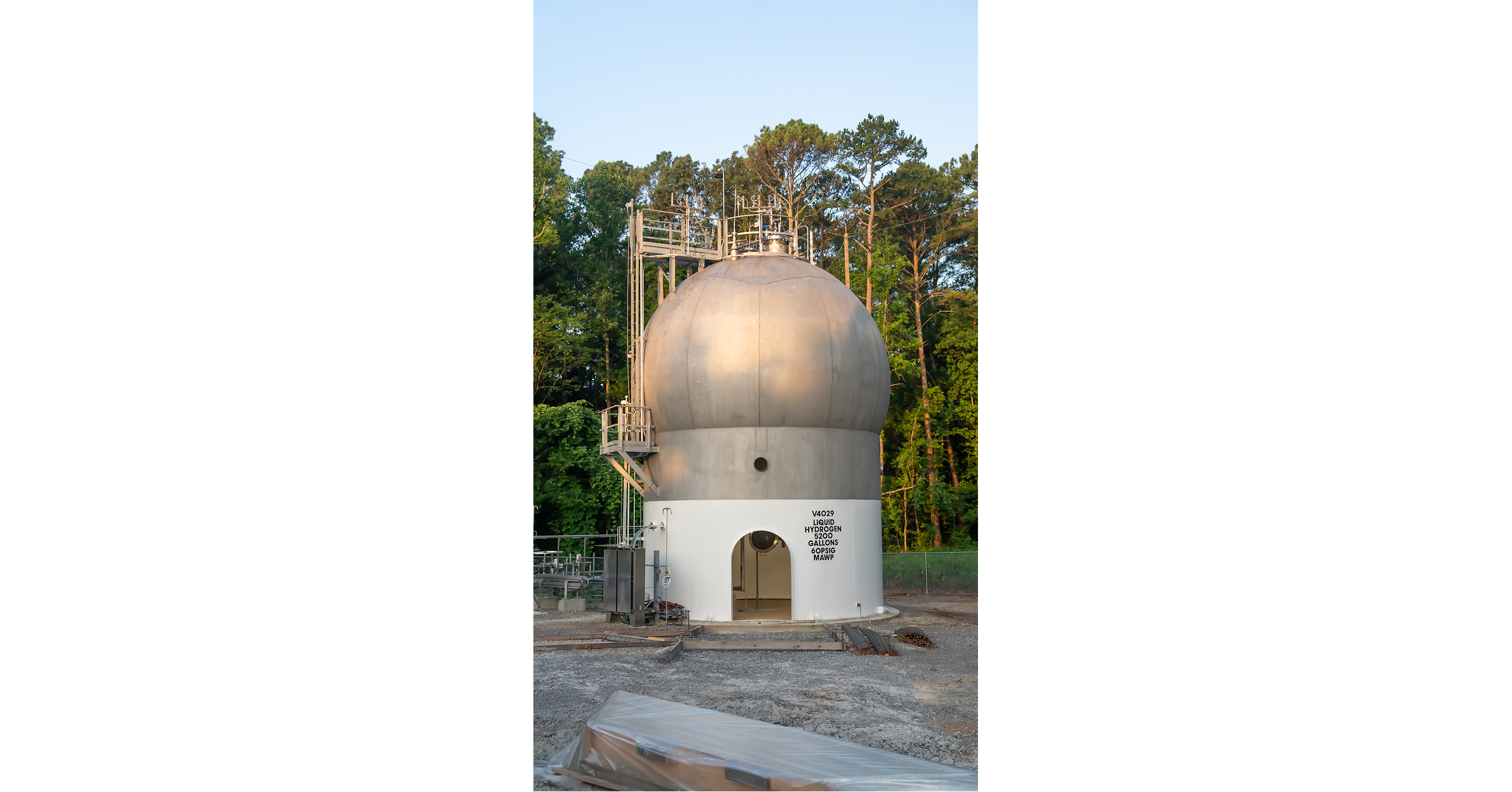
CB&I completed the first fill of a 20 m3 non-vacuum liquid hydrogen (LH2) storage demonstration tank at NASA’s Marshall Hydrogen Test Facility, tripling the site’s LH2 storage capacity. The tank is designed for frequent refills up to once per day to accelerate insulation validation via repeated thermal cycles, and NASA/CB&I/Shell will evaluate performance over coming months to support commercialization. While the release is a technical milestone rather than a financial update, it signals progress toward lower-capital-cost large-scale LH2 storage deployment.
The economic signal here is not that hydrogen suddenly became investable; it is that one of the remaining bottlenecks may be getting cheaper. For Shell, that is only relevant if it converts into project FIDs and terminal contracts, because LH2 remains a long-dated option value story relative to the company’s core upstream/LNG cash generation.
Second-order, the likely winner is the cryogenic infrastructure stack: standardized insulation can broaden the addressable market for ports, industrial gas, and aerospace test facilities while compressing margins for bespoke tank engineering if the technology becomes more modular. The biggest miss in the market’s reading is that storage is rarely the binding constraint — molecule cost, utilization, permitting, and offtake dominate delivered hydrogen economics.
Catalyst path matters more than the headline. Over the next 1-3 months, watch the performance data for boil-off, maintenance intensity, and repeat-cycle reliability; over 6-18 months, the real test is whether Shell or other industrial users commit capital beyond the demo stage. Any evidence of thermal-loss or safety problems would kill the thesis quickly; conversely, a commercial follow-on would be the first point where Shell’s optionality starts to matter.
AI-powered research, real-time alerts, and portfolio analytics for institutional investors.
Overall Sentiment
mildly positive
Sentiment Score
0.35
Ticker Sentiment
