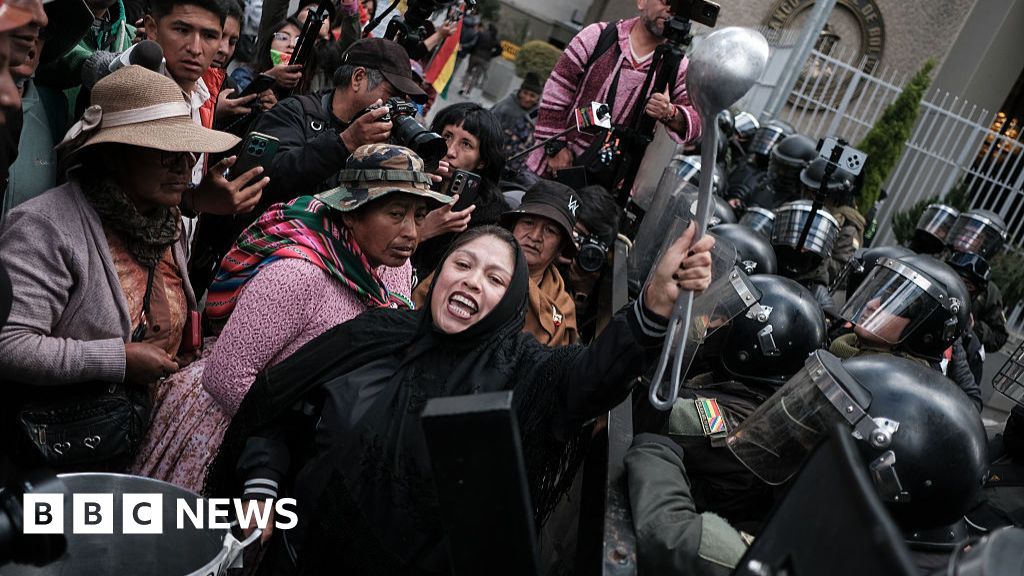
Bolivia is at a breaking point after a month of anti-government protests that have left 7 dead, hundreds arrested, and caused estimated economic losses of more than $50m per day. Roadblocks have triggered severe shortages of basic goods and worsened fuel shortages and inflation, while Congress has moved to ease emergency powers and military deployment. The unrest raises political and policy uncertainty in an already strained emerging-market economy.
This is no longer a pure political story; it is a liquidity-and-distribution shock for a commodity-importing, landlocked economy. The near-term transmission channel is not equities in isolation but working-capital stress: blocked transport raises inventory days, worsens FX scarcity, and pushes informal pricing higher, which tends to feed a self-reinforcing inflation pulse over the next 4-8 weeks. The state’s willingness to use emergency powers lowers the probability of a quick negotiated fix and raises the odds of a stop-start reopening pattern rather than a clean resolution. The second-order winner is anyone with hard-currency revenue and offshore balance-sheet insulation, because domestic purchasing power is deteriorating faster than headline policy can respond. Import-dependent retailers, local banks with weak collateral coverage, and fuel-distribution franchises face the worst margin compression as shortages widen spreads and credit quality rolls over. If blockades persist into month-end, expect a deeper hit to tax receipts and a faster widening of sovereign and quasi-sovereign risk premia, especially in shorter-dated local debt where refinancing need is immediate. The contrarian setup is that the market may be underpricing the speed with which political fatigue can break the blockade coalition. Once food and fuel shortages become visibly partisan costs for the protest base itself, the marginal incentive shifts toward a tactical settlement, even if the underlying reform dispute remains unresolved. That makes this a high-volatility, low-conviction macro short: the best expression is to fade domestic assets on rallies, but keep duration tight because a single negotiation headline can unwind the trade in days.
AI-powered research, real-time alerts, and portfolio analytics for institutional investors.
Overall Sentiment
strongly negative
Sentiment Score
-0.78
