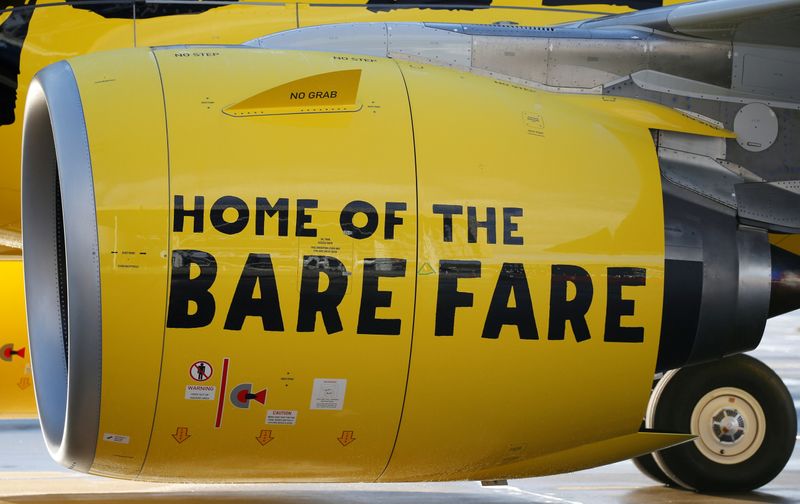
Spirit Airlines has cancelled all flights and shut down operations immediately after failing to emerge from its second bankruptcy in less than a year. The closure leaves more than 15,000 employees without jobs and comes after rising jet fuel costs linked to the war with Iran, failed White House assistance talks, and the collapse of its 2022 JetBlue sale. The event is negative for U.S. airline sentiment, particularly in the low-cost carrier segment, and may affect affected passengers and rival carriers assisting with rebooking.
Spirit’s shutdown is less important as an isolated airline failure than as a signal that the lowest-quality, most levered parts of travel are now funding-constrained just as fuel and labor costs stay sticky. The immediate winner is capacity discipline: even a modest seat reduction in U.S. domestic leisure should improve pricing power for ultra-low-cost peers and legacy carriers with stronger balance sheets, especially on short-haul routes where Spirit had been the marginal discounter. The second-order effect is on airport economics and local service frequency — secondary airports and leisure-heavy spokes lose traffic quickly, which can feed into weaker ancillary revenue for parking, concessions, and regional contractors.
Credit is the real transmission channel. A failed rescue after bankruptcy suggests private capital will demand much higher spreads for any stressed carrier with weak liquidity and fleet complexity, which should tighten refinancing windows across the sector for the next 6-12 months. The shut-in also removes an overhang on used narrowbody supply and spare parts demand, but that benefit likely accrues unevenly: lessors and higher-end operators can absorb aircraft, while residual values for older A320-family assets may stay pressured until the market proves that closures are permanent rather than temporary.
The contrarian view is that the equity impact may be overstated for the winners because airlines often pass through shocks via fares only with a lag, while demand elasticity remains uncertain if consumer travel budgets are already stretched. If gasoline and airfare inflation cools or policymakers provide any bridge support to smaller carriers, the capacity-tightening thesis could fade quickly. Over the next 30-90 days, the cleaner trade is not to buy airlines broadly, but to express relative strength in operators with strong liquidity and network scale versus those most exposed to subscale domestic leisure demand.
AI-powered research, real-time alerts, and portfolio analytics for institutional investors.
Request DemoOverall Sentiment
extremely negative
Sentiment Score
-0.95
