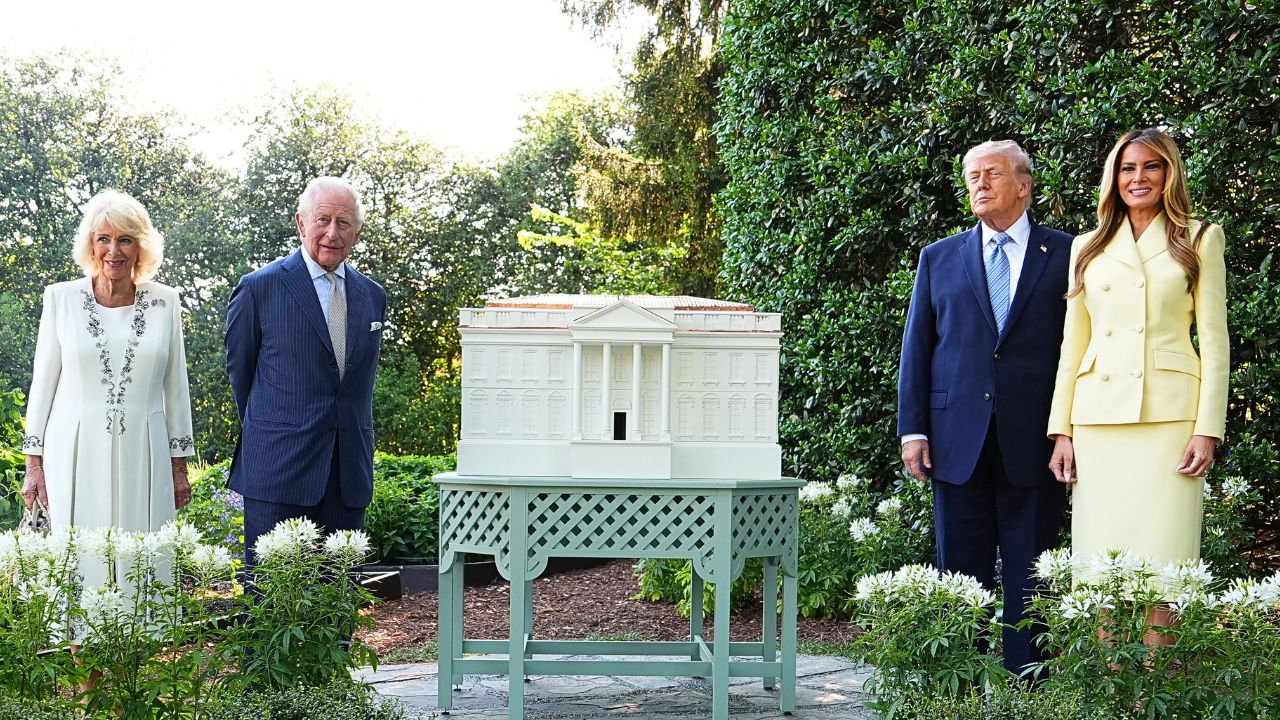
King Charles III made a historic first U.S. state visit as monarch, meeting President Trump, delivering a joint address to Congress, and participating in the first-ever White House Pass in Review. The trip centered on U.S.-U.K. relations, with references to Iran, the 9/11 memorial, and shared democratic values, while the article also noted AI demonstrations with foster children and a broad ceremonial gift exchange. The coverage is largely political and ceremonial with limited direct market implications.
The immediate market read is not on the ceremonial optics, but on how this visit functions as a low-cost de-risking mechanism for transatlantic policy drift. The most tradable second-order effect is that Washington and London are signaling tighter coordination on sanctions, defense posture, and maritime security at a moment when shipping risk premia are already elevated; that supports U.S./U.K. defense contractors and select cybersecurity names more than the headline diplomatic beneficiaries. For equities, the broader implication is that political theater is being used to soften disagreement without forcing a clean policy alignment, which tends to reduce tail-risk pricing only temporarily.
A more interesting angle is the AI and industrial symbolism around the White House events. The visibility given to large-cap tech leaders suggests the administration is still using marquee domestic-tech relationships as part of a geopolitical narrative, which can help sustain multiple expansion for firms seen as “national champions” even if fundamentals do not change. That is mildly positive for AAPL and NVDA sentiment, but the per-ticker alpha is limited unless this translates into actual procurement, export-control relief, or federal AI infrastructure spending over the next 1-2 quarters.
The main contrarian point is that the visit may overstate the durability of the “special relationship” precisely because the underlying friction points are operational, not rhetorical. If Iran, the Strait of Hormuz, or sanctions policy re-accelerate into concrete disagreements, the monarchy can slow the deterioration but not prevent it. That argues for treating any geopolitical calm as a short-duration hedge unwind rather than a structural regime change.
AI-powered research, real-time alerts, and portfolio analytics for institutional investors.
Request DemoOverall Sentiment
neutral
Sentiment Score
0.05
Ticker Sentiment
