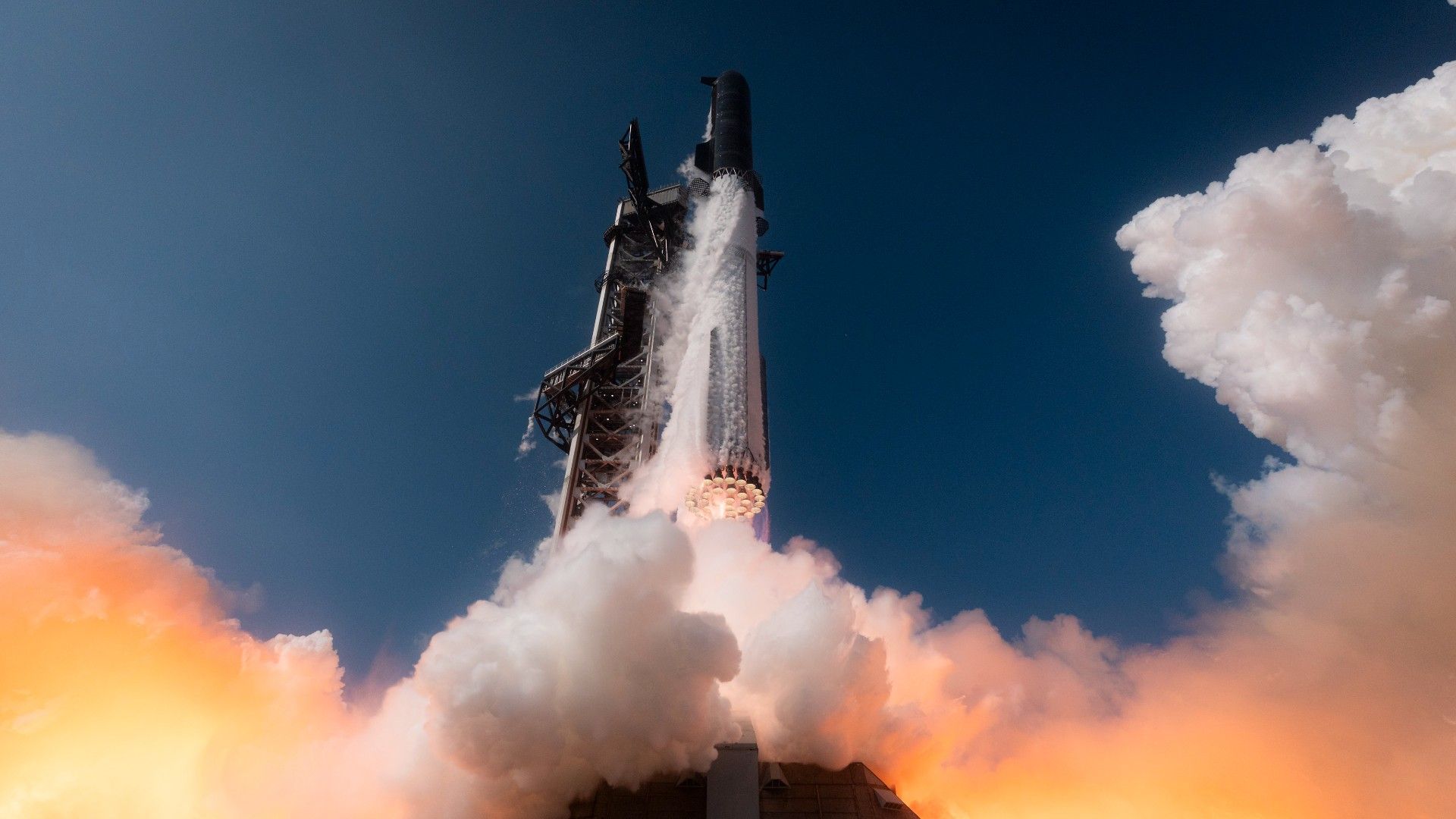
SpaceX completed Starship Flight 12 with the new 408-foot, V3 vehicle, including upgraded fuel transfer, faster satellite deployment, more powerful Raptor engines, and a reusable hot stage ring. The mission ended with splashdowns of both stages, keeping the program on track for future milestones tied to NASA's Artemis 4 lunar mission as soon as late 2028. The article is mostly a progress update on SpaceX's technical roadmap and competitive position versus Blue Origin, with limited near-term market impact.
The real signal here is not a single flight result; it is that SpaceX is compressing the engineering-to-deployment cycle on a system that only matters once it is operationally boring. That matters because the market is still treating lunar lander optionality as a binary contract award, when the more important commercial unlock is in-space refueling and reusable heavy lift, which would expand the addressable market from government missions to defense, depots, and eventually high-mass commercial payloads. If even a subset of these subsystems prove reliable, the winner is not just the prime contractor but the entire lower-tier aerospace stack that becomes embedded in a multi-launch architecture.
The competitive consequence is asymmetric for Blue Origin and any incumbent aerospace platform that depends on slower certification cycles. Blue Origin can still win on schedule if NASA prioritizes readiness over pedigree, but SpaceX’s cadence advantage means each successful incremental test raises the hurdle for rivals because they must now beat a moving target on reliability, not just specifications. A secondary effect is on suppliers tied to cryogenic systems, composite structures, avionics, and guidance software, where repeat launches can turn one-off prototype revenue into a higher-visibility production funnel over the next 12-24 months.
The key risk is that the current optimism is ahead of the true gating items, which are orbital refueling, life-support integration, and sustained reusability. Those milestones are likely months to years away, so near-term enthusiasm can reverse quickly on one failure, schedule slip, or a NASA scope change that de-risks Blue Origin relative to SpaceX. In other words, the tradeable event risk is high, but the strategic trend remains intact unless the program starts failing at the interfaces that matter for Artemis rather than at the headline launch itself.
Contrarian view: the market may be underpricing how much of this is a platform validation story rather than a moon-shot story. If SpaceX keeps improving flight cadence, the option value extends into defense logistics, sovereign launch, and on-orbit servicing, which are larger and more recurring than a single lunar contract. The implication is that any pullback on a negative test is likely to be a better entry point than chasing strength after a clean launch.
AI-powered research, real-time alerts, and portfolio analytics for institutional investors.
Request DemoOverall Sentiment
mildly positive
Sentiment Score
0.20
Ticker Sentiment
