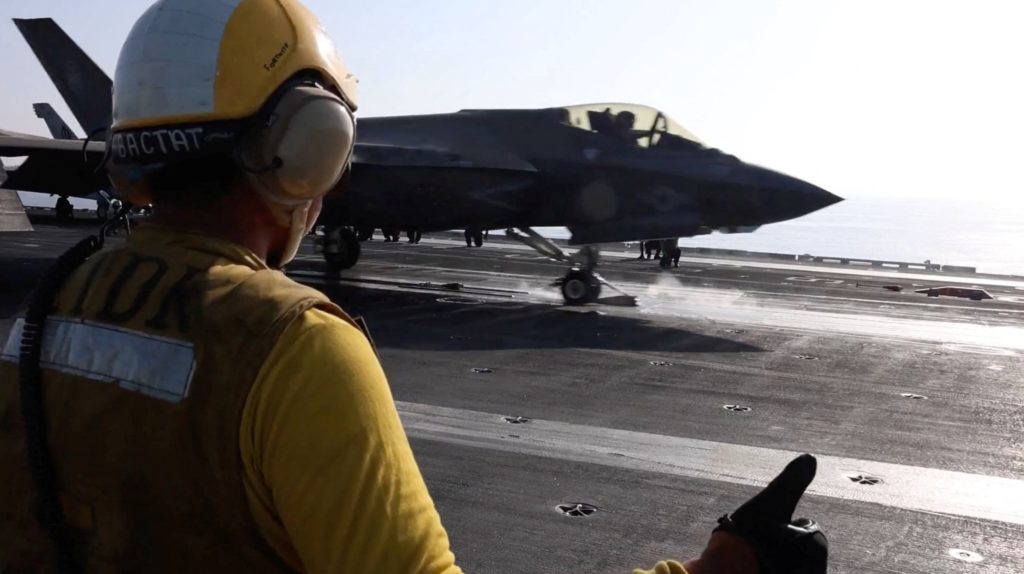
U.S. fighter jets struck two empty Iranian tankers in the Strait of Hormuz and targeted Iranian boats, launch sites, and military assets in at least three onshore locations, escalating the conflict and heightening risks to shipping. Roughly 1,600 ships are still stuck waiting for clarity on a deal, while diplomacy remains tied to a memorandum that would reopen the strait, cap Iran's nuclear program, and lift sanctions. The confrontation raises immediate geopolitical and logistics risk and could reverberate through energy and transport markets.
The market should treat this less as a one-off escalation and more as a stress test of the Strait’s operating regime. Even if the military exchange cools, the longer-lasting damage is to maritime confidence: once insurers, charterers, and crews price in intermittent interdiction, vessels don’t need to be hit to create a supply shock. That means the first-order oil move may be only half the story; the larger second-order effect is a widening of freight, insurance, and inventory premia across crude, refined products, and LNG-linked logistics.
The most important near-term winner is not necessarily upstream energy, but volatility itself. Tanker owners with non-Iran exposure can gain pricing power if traffic normalizes unevenly, while refiners outside the Gulf should see a temporary margin lift from dislocated feedstock and product spreads. Conversely, any industry dependent on just-in-time Middle East inputs — chemicals, aviation, and Asia-heavy industrials — faces an earnings risk that can show up with a 1-2 quarter lag even if headline oil retraces quickly.
The consensus trap is assuming diplomacy is the only binary. In reality, the more likely path is a messy de-escalation with periodic incidents, which sustains a risk premium without requiring a full closure. That argues for owning optionality and relative value rather than outright commodity beta: if talks fail, prices gap; if talks advance, the risk premium collapses faster than fundamentals, making front-end positions vulnerable to sharp mean reversion.
From a timing perspective, the next 48-72 hours matter for immediate market pricing, but the real catalyst window is 2-6 weeks as shipping, sanctions enforcement, and allied coordination determine whether the strait remains functionally open. A successful U.S.-Europe coordination effort would likely compress freight and oil volatility quickly; a visible increase in rerouting or insurance refusals would validate a much larger and stickier risk premium.
AI-powered research, real-time alerts, and portfolio analytics for institutional investors.
Request DemoOverall Sentiment
strongly negative
Sentiment Score
-0.62
