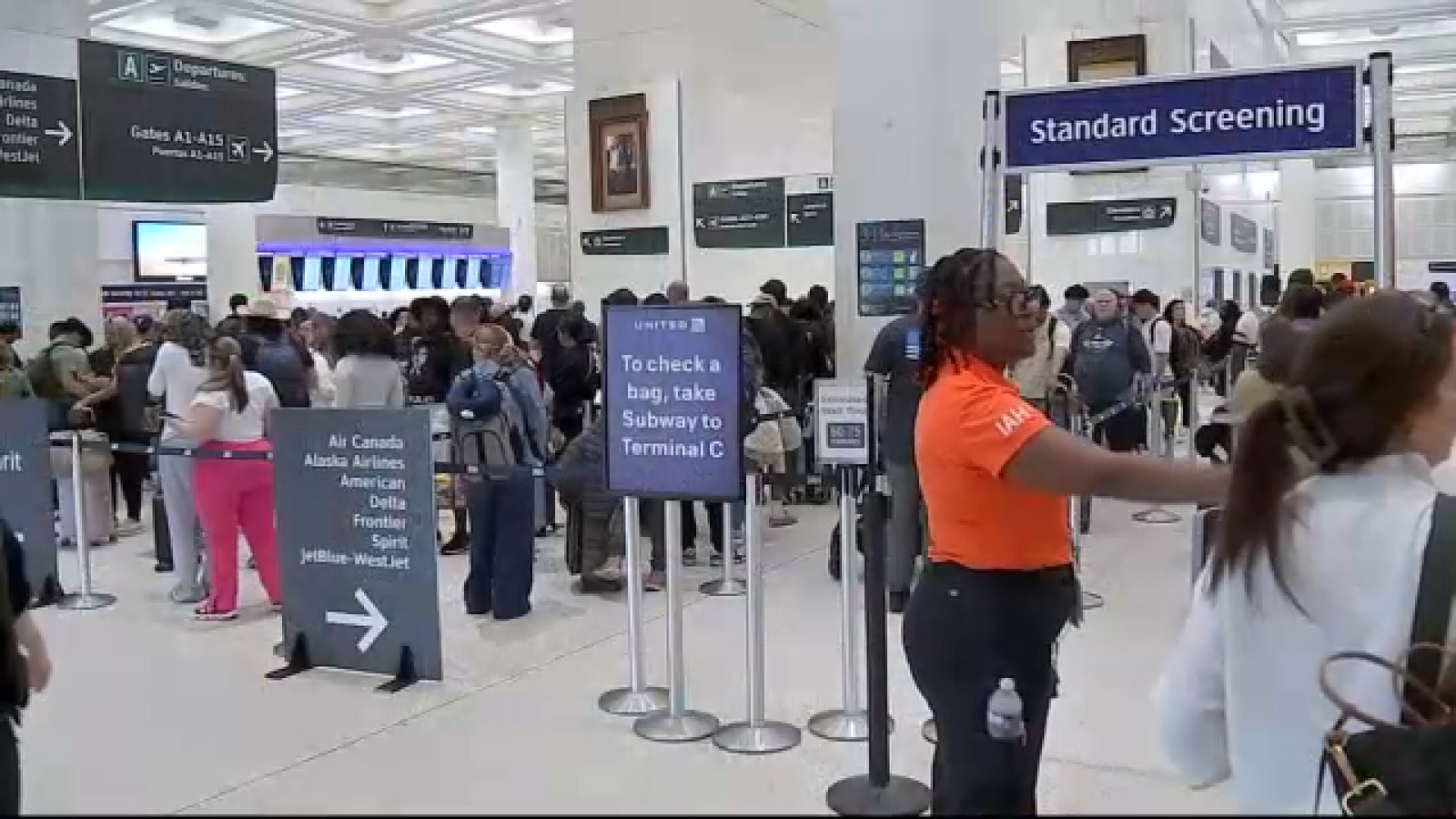
TSA workers have gone unpaid for about a month, causing checkpoint closures and security wait times as long as 90 minutes at George Bush Intercontinental Airport and backups at other U.S. airports. The disruptions stem from a congressional standoff over DHS funding and potential policy trade-offs around ICE oversight; expect localized travel delays and consumer inconvenience but limited broader market implications.
Operational friction from understaffed security creates a cascade: tighter turnaround buffers break highly optimized point-to-point schedules first, amplifying cancellations and re-accommodation costs for carriers that run with minimal slack. Historically, those irregular-operation events raise short-term unit costs by a few percent and reduce same-day aircraft utilization by low-single-digit percentages — the sort of marginality that erodes thin-margin LCCs faster than legacy carriers with hub-based schedule resilience.
Belly‑cargo capacity is the overlooked lever. Passenger flight curtailments compress belly space, tightening air freight capacity and raising spot yields for cargo specialists; UPS/FDX will feel this through improved yields on international lanes even if domestic parcel demand softens. Separately, the political resolution process sets a two-stage timeline: operational pain is immediate (days–weeks) while any meaningful capital refresh for checkpoint tech or staffing initiatives occurs on the budgetary cadence (months), creating distinct windows for event trades versus structural plays.
The market consensus will headline short-term travel pain and paint the sector broadly negative, but that ignores cross‑sectional dispersion — carriers with robust balance sheets and operational slack can monetize higher fares and absorb irregular ops, while tech/security suppliers are a near-term binary on budget resolution. Watch two catalysts closely: (1) a CR/approp stopgap that temporarily reduces absenteeism (days–weeks), and (2) a DHS funding bill that includes modernization/capex language (2–6 months) — each reverses specific parts of the current dislocation.
AI-powered research, real-time alerts, and portfolio analytics for institutional investors.
Overall Sentiment
mildly negative
Sentiment Score
-0.25
