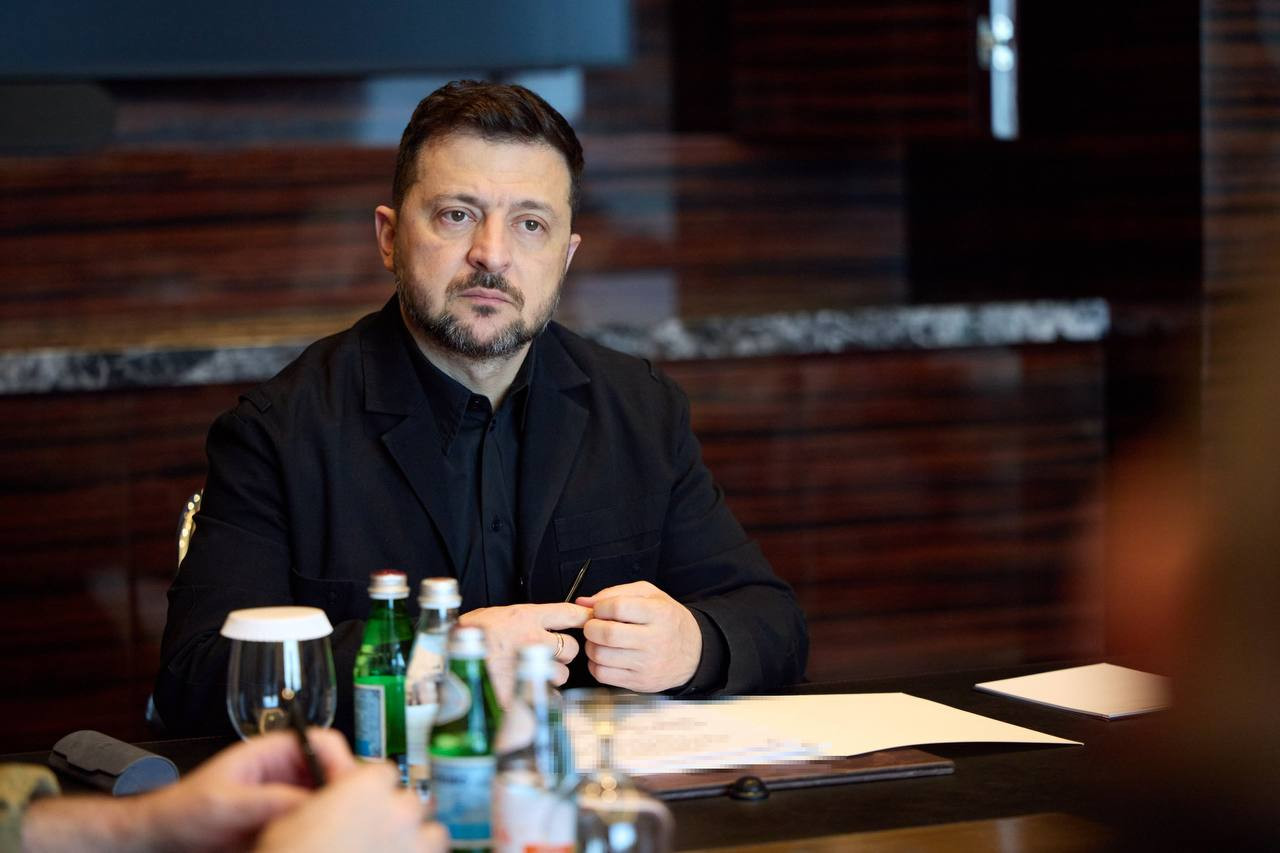
Zelensky said Russia has been losing battlefield initiative since December 2025 and that Ukraine sees a limited diplomatic window before winter. He emphasized that any переговоры depend on tighter sanctions and international pressure on Moscow, with the UK, France, Germany, Nordic countries, and Turkey potentially involved. The remarks point to continued war-related volatility, but do not signal an immediate market-moving policy shift.
The market implication is less about an imminent peace dividend and more about a tactical repricing of tail risk. A credible “diplomacy window” before winter tends to compress energy and defense risk premia only if it is paired with verifiable sanctions enforcement; absent that, the more likely outcome is a noisy, bidirectional tape where headlines create short-lived dips but no sustained regime change. For defense primes, the bigger second-order issue is not Ukraine demand itself but the probability of European procurement commitments becoming more front-loaded if leaders perceive a short negotiation window that could fail.
The most important read-through is on Russian strike behavior and infrastructure vulnerability. When battlefield initiative stalls, long-range strikes typically become a substitute signaling tool, which raises near-term risk to power grids, rail, and logistics nodes in Ukraine and nearby border corridors. That shifts the trade from purely “war duration” to “damage intensity,” meaning reconstruction and hardening beneficiaries can outperform even if ceasefire odds rise, because both truce and escalation paths justify spending on air defense, grid resilience, and munitions replenishment.
A second-order constraint is Europe’s internal politics: any negotiation track that appears to ease sanctions without tangible Russian concessions would likely fracture the coalition and reintroduce policy volatility. That makes the path-dependent catalyst not battlefield maps but whether Washington and key European states synchronize messaging over the next 2-6 weeks. The contrarian view is that markets may be too quick to price de-escalation; winter often increases leverage for the side with more depth in air-defense and energy resilience, so a tactical window can coexist with a structurally prolonged conflict.
AI-powered research, real-time alerts, and portfolio analytics for institutional investors.
Request TrialOverall Sentiment
neutral
Sentiment Score
-0.10
