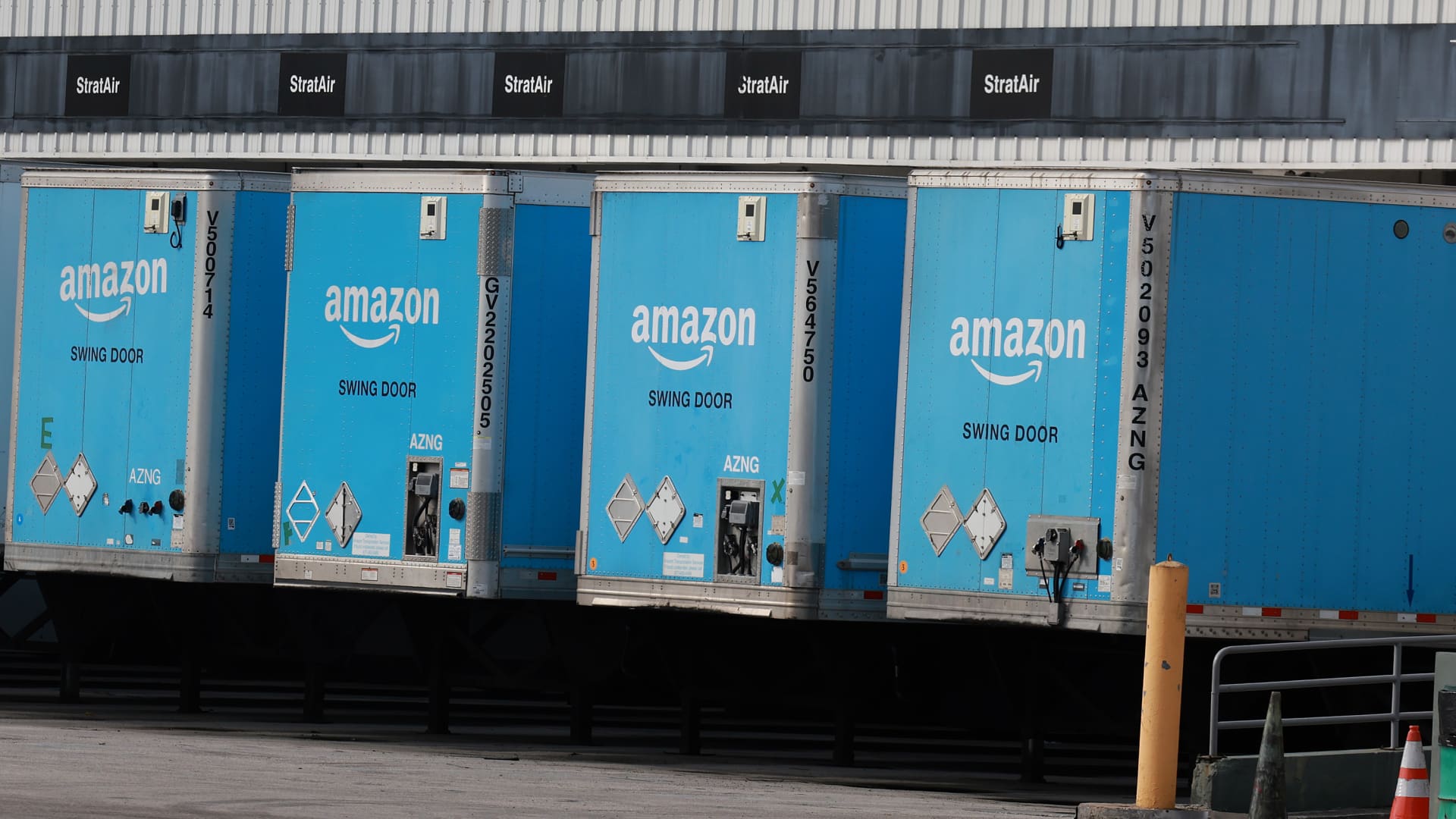
Amazon expanded its less-than-truckload shipping service to all U.S. businesses, intensifying competitive pressure on incumbent freight carriers. The announcement sent Old Dominion Freight Line down more than 6%, Saia and XPO Logistics about 5% each, ArcBest 4%, and newly spun FedEx Freight about 3%. The move underscores Amazon's growing logistics footprint and poses a broader threat to external carriers' pricing power and share.
This is less about one incremental product launch and more about Amazon turning logistics into a horizontal software layer that can sit on top of the entire freight market. The second-order effect is pricing pressure: once a high-frequency shipper can quote, tender, and track LTL in a unified workflow, incumbents lose the ability to charge for service opacity, not just linehaul. That threatens the best-margin part of carrier economics first, because LTL is where network density, yield management, and visibility matter most.
The near-term market reaction likely overstates the revenue risk for the large publics, but it is directionally right on valuation risk. In the next 1-2 quarters, the damage is mostly sentiment and bid discipline rather than immediate volume loss; however, over 12-24 months, Amazon can force a re-rating by compressing contractual pricing at renewal and capturing the small- and mid-market freight broker layer. The most vulnerable names are those with the highest premium multiple and the most investor-owned narrative around service differentiation; if shipper adoption broadens, EBITDA margins could face a 100-200 bps headwind from mix and pricing before volume inflects.
A less obvious winner is Amazon itself, not because freight is a standalone profit pool, but because it increases switching costs for its broader commerce ecosystem and gives it a data advantage on lane economics. The competitive pressure also extends to brokers, digital freight platforms, and regional carriers that rely on third-party visibility tools; Amazon can subsidize share capture using adjacent cash flows, making the duration of the threat longer than the headline suggests. The contrarian view is that the selloff may be too sharp for the next day or two because broad national service expansion does not instantly create dense linehaul networks; execution risk is real and carrier trust is still earned lane by lane.
The key catalyst to watch is whether Amazon signs meaningful non-Amazon-origin shippers over the next 1-2 quarters and starts advertising rate-card breadth rather than just availability. If uptake is modest, the move in ODFL/SAIA/XPO may retrace quickly; if large shippers trial it and renew, the story shifts from product launch to structural capacity overhang. In that case, expect multiple compression to lead fundamentals by several quarters.
AI-powered research, real-time alerts, and portfolio analytics for institutional investors.
Request DemoOverall Sentiment
moderately negative
Sentiment Score
-0.48
Ticker Sentiment
