
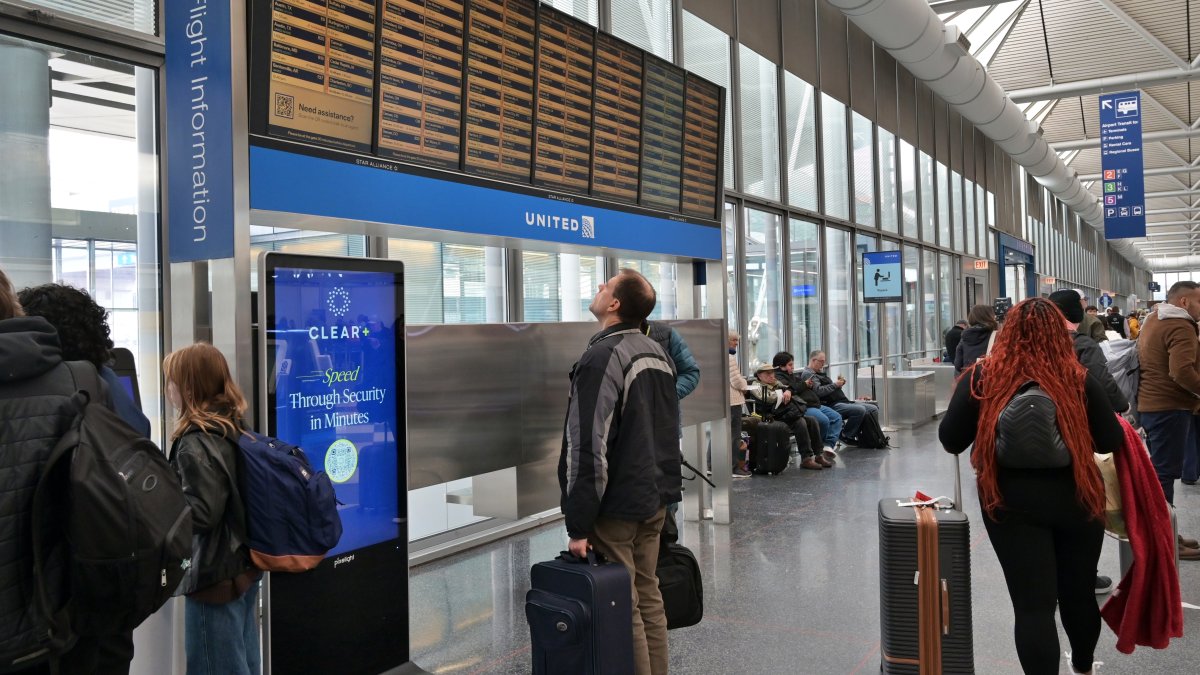
Federal officials capped O’Hare at 2,708 flights per day this summer, more than 300 below the 3,080 originally planned, from May 17 to October 24. The FAA cited poor on-time performance, gate-allocation disputes between United and American, and ongoing terminal construction as reasons for the reduction. The move should improve reliability and reduce delays for travelers, but it is a moderate operational headwind for airport activity and carriers serving the hub.
This is less about one airport and more about a regulator explicitly capping network complexity where two hub carriers are already forced to share scarce peak-hour capacity. The immediate winner is the airline with the stronger ability to re-time banks and absorb a small absolute reduction in departures without destroying connect flows; the loser is the carrier whose hub economics depend more on frequency density than pure local origin demand. In practice, this tends to favor the carrier with the more disciplined schedule and better domestic feed optimization, while pressuring regional partners and the lower-balance-sheet operator that needs every marginal slot to support unit revenue.
The second-order effect is that the market is underestimating the value of operational reliability relative to raw capacity. A 300-flight haircut over a five-month window is small enough that analysts may dismiss it, but the real impact is on connection integrity: fewer schedule permutations reduce misconnects, reaccommodation costs, and crew-rotation strain, which can improve PRASM and reduce irregular-ops expense even if top-line ASMs are slightly lower. That said, if terminal construction or gate negotiations worsen, the cap could become a template for additional operational throttles at other constrained hubs, turning a local fix into a network-wide precedent.
The contrarian view is that the headline looks negative for the airline sector, but the near-term earnings risk may be overstated because airlines were already selling unrealistic summer capacity. If the cap forces better schedule discipline, the result could be modestly bullish for the industry by lowering delay compensation, reducing crew mispositioning, and lifting completion factors. The true downside risk is political: if airlines push back and the FAA tightens further, or if weather/ATC issues persist, the summer could still see elevated disruption despite fewer flights, which would pressure customer satisfaction and summer yield assumptions into the fall.
AI-powered research, real-time alerts, and portfolio analytics for institutional investors.
Request TrialOverall Sentiment
neutral
Sentiment Score
-0.12
Ticker Sentiment
