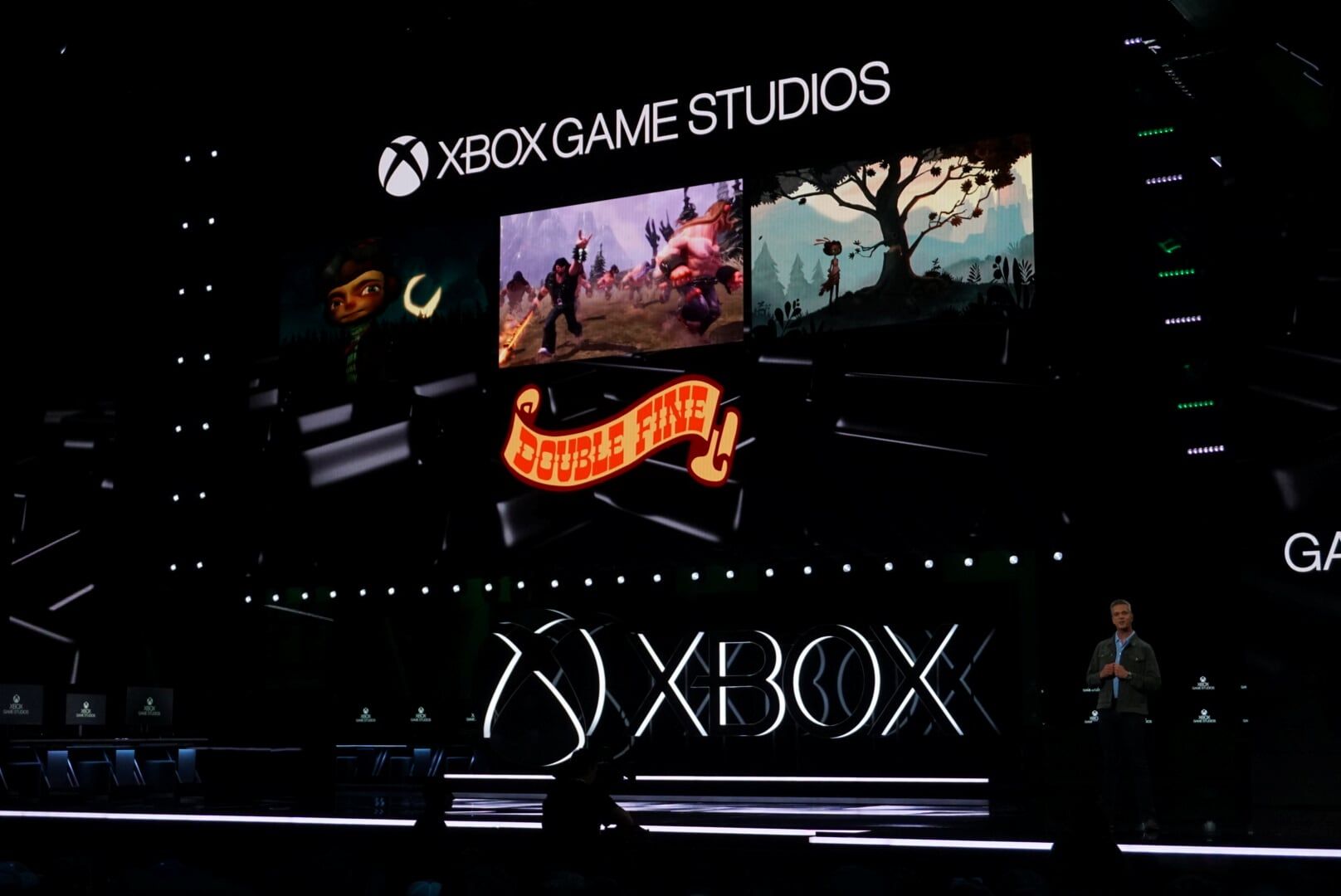
Double Fine workers filed an NLRB petition on May 7, 2026 to unionize with the Communications Workers of America, covering all part-time and full-time employees. Microsoft said it supports employees’ right to choose representation and will remain neutral, reducing immediate labor risk. The move is positive for worker governance but is unlikely to have a material near-term impact on Microsoft shares or the broader Xbox ecosystem.
This is less a headline risk to MSFT earnings than a signal that labor normalization is creeping into a category investors still treat as highly optional. The direct P&L drag from one studio is immaterial, but the second-order effect is governance: once a flagship first-party studio organizes cleanly, peer studios inside the gaming portfolio gain a template for bargaining on staffing, schedule intensity, and release cadence. That matters because content delays and quality-control friction can be more economically damaging than wage inflation in a business where a single slipped launch can push monetization by 2-4 quarters.
The key issue for Microsoft is not cost; it is managerial flexibility. A neutral stance lowers near-term confrontation risk, but it also implies Microsoft is choosing process over speed, which can quietly extend decision cycles across the gaming segment. Over the next 6-18 months, the most probable impact is higher operating discipline and somewhat lower attrition at the studio level, but the tail risk is broader union contagion if employees view voluntary recognition as a low-cost path to leverage.
For competitors, the signal is mixed. Publicly, organized labor can improve retention and output stability, which may help Double Fine preserve creative talent and reduce project churn. Privately, any increase in labor coordination inside Xbox studios could advantage publishers with more centralized outsourcing or leaner fixed-cost structures, especially those able to ship via smaller teams or external co-development. The market is likely underpricing the possibility that this becomes a governance overhang rather than a headline-only event, particularly if the organizing effort extends into other Microsoft-owned creative teams.
Contrarian view: the consensus may be too focused on labor costs and not enough on execution quality. If unionization improves retention and predictability, it could actually reduce expensive restart risk and crunch-related turnover, making the long-run economics mildly positive for MSFT’s content pipeline. The stock-level reaction should be muted unless this spreads beyond one studio or begins to affect release timing; the real catalyst would be evidence of broader labor normalization across Xbox over the next two quarters.
AI-powered research, real-time alerts, and portfolio analytics for institutional investors.
Request DemoOverall Sentiment
neutral
Sentiment Score
0.15
Ticker Sentiment
