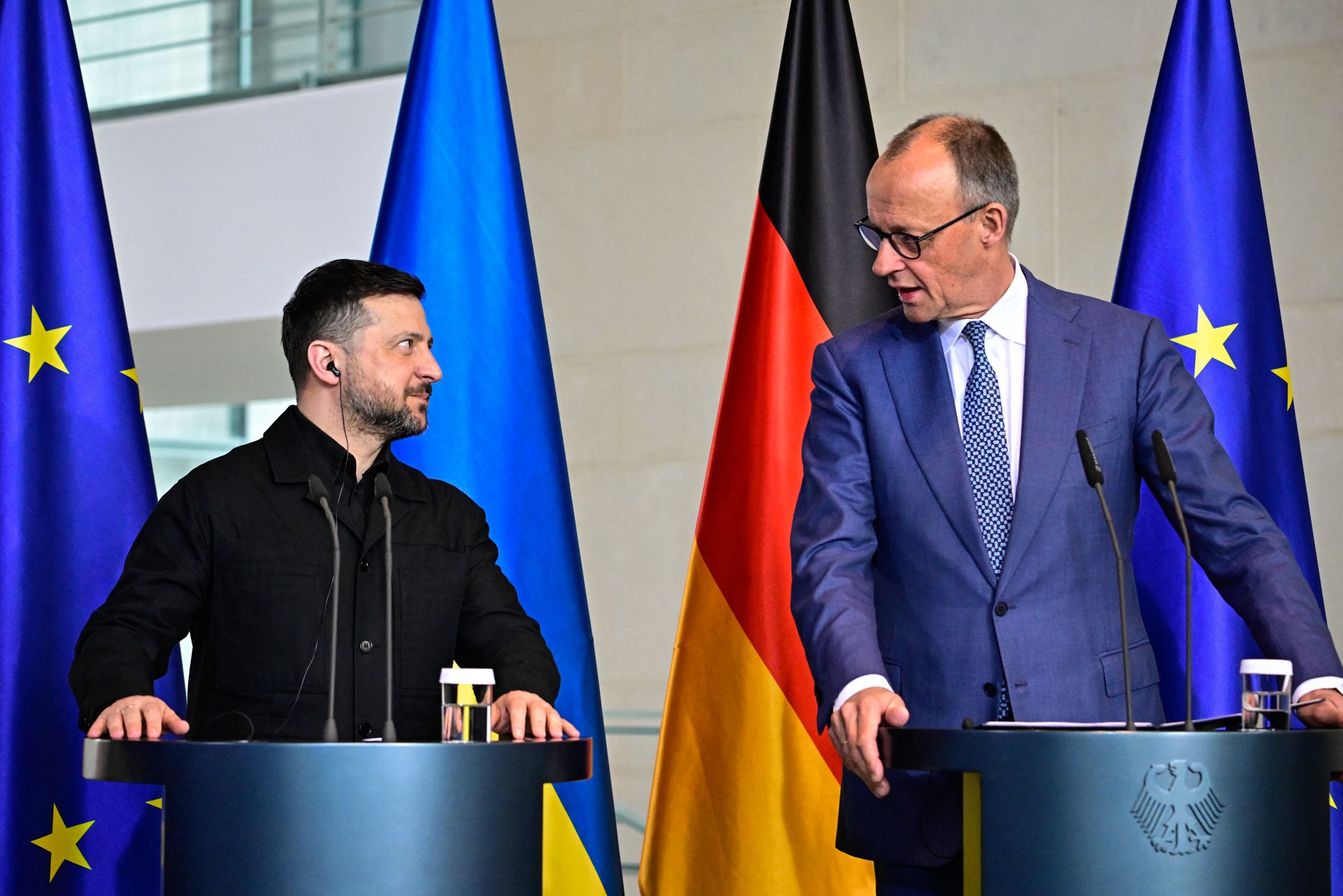
Germany signaled support for accelerating Ukraine's EU path, but Chancellor Friedrich Merz ruled out 'immediate' membership and proposed interim participation in EU meetings without voting rights. Ukraine remains blocked from opening all six accession clusters by Hungary, with momentum dependent on the next Hungarian government and the Cyprus EU presidency. The article is policy-relevant but unlikely to trigger major immediate market moves.
The market implication is less about Ukraine itself and more about the sequencing of EU institutional risk. A “phased” accession path would effectively create a long-dated political option on Ukrainian integration while deferring the hardest economic costs—budget contributions, CAP reallocations, and cohesion transfers—until after the next electoral cycle in several member states. That is constructive for European sovereign spreads at the margin if it lowers headline confrontation, but it also prolongs uncertainty around the fiscal end-state, which should cap enthusiasm for any broad Ukraine-related risk premium compression.
The near-term swing factor is Hungary’s transition. If Budapest’s veto breaks in the next 4-8 weeks, the first-order reaction will be a relief rally in EU-facing assets tied to reconstruction and frontier-capital inflows; the second-order effect is more important: markets may start pricing a slower but real path toward structural EU funding for Ukraine, which supports industrials, transport, and defense-adjacent names in Central Europe. If the veto persists, the trade becomes a patience trade rather than a thesis break—most of the economic value is tied to accession credibility, not the symbolism of attendance at meetings.
The contrarian angle is that the market may be overestimating the relevance of a single Hungarian political transition. Even with a friendlier government, full accession requires multi-year harmonization and unanimous steps that can be re-litigated by other capitals; the process is vulnerable to broader enlargement fatigue once fiscal costs become explicit. That suggests the right positioning is not to chase a binary Ukraine headline, but to own beneficiaries of incremental EU integration while fading any move that assumes a near-term accession date or rapid rerating of Ukrainian sovereign risk.
AI-powered research, real-time alerts, and portfolio analytics for institutional investors.
Request TrialOverall Sentiment
neutral
Sentiment Score
-0.05
