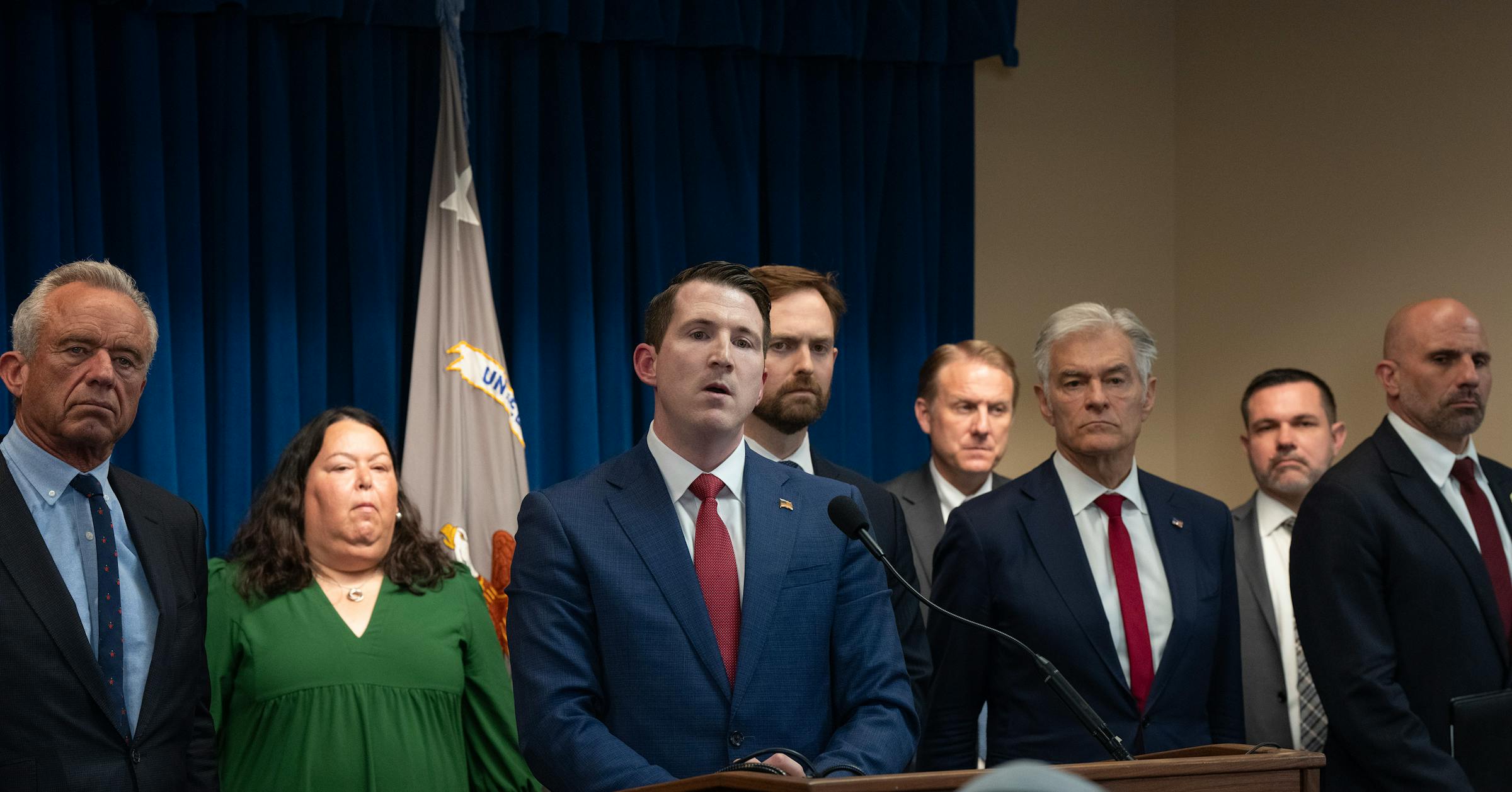
Federal prosecutors announced criminal charges against 15 Minnesota defendants in schemes that allegedly targeted more than $90 million in taxpayer funds from seven state-managed Medicaid programs. Separately, Aimee Bock, the convicted ringleader of the Feeding Our Future fraud scheme, was sentenced to more than 41 years in prison. The case underscores major fraud and governance failures, but it is primarily a legal/policy story with limited direct market impact.
The immediate market implication is not about a single agency action; it is that the federal government is signaling a multi-year clean-up campaign aimed at Medicaid and pandemic-era benefit leakage. That raises expected compliance costs across the broader care-adjacent ecosystem—billing vendors, staffing intermediaries, home health, behavioral health, telehealth, and nonprofit subcontractors—because the easy money era is ending and payment scrutiny will tighten. The second-order effect is a lower tolerance for aggressive revenue recognition and faster recoupment risk, which can compress multiples for smaller, fraud-prone operators even if they were not involved.
The bigger near-term winner is audit, fraud analytics, and revenue-cycle tooling: states will need automated anomaly detection, identity verification, claims matching, and document validation to defend budgets. This should incrementally support vendors with exposure to Medicaid program integrity, especially those selling into state agencies on multi-year contracts, as this type of crackdown typically converts into new appropriations after a lag of 2-4 quarters. On the flip side, any public or private company with meaningful exposure to government-funded care delivery and weak internal controls now faces a higher probability of probe-driven headwinds, delayed reimbursements, and legal overhang.
The contrarian view is that headline risk may overstate broad sector contamination: most legitimate providers will not see direct earnings damage, and some could benefit if bad actors are removed from the competitive set. But the consensus may be underestimating how long this lasts; once prosecutors establish a template, state AGs and MFCU units tend to widen the net, meaning this is a months-to-years enforcement cycle, not a one-off event. The real tail risk is that repayment clawbacks and benefit redesign push states to temporarily slow claims processing, creating working-capital stress for smaller providers and suppliers dependent on rapid Medicaid cash conversion.
AI-powered research, real-time alerts, and portfolio analytics for institutional investors.
Request DemoOverall Sentiment
strongly negative
Sentiment Score
-0.75
