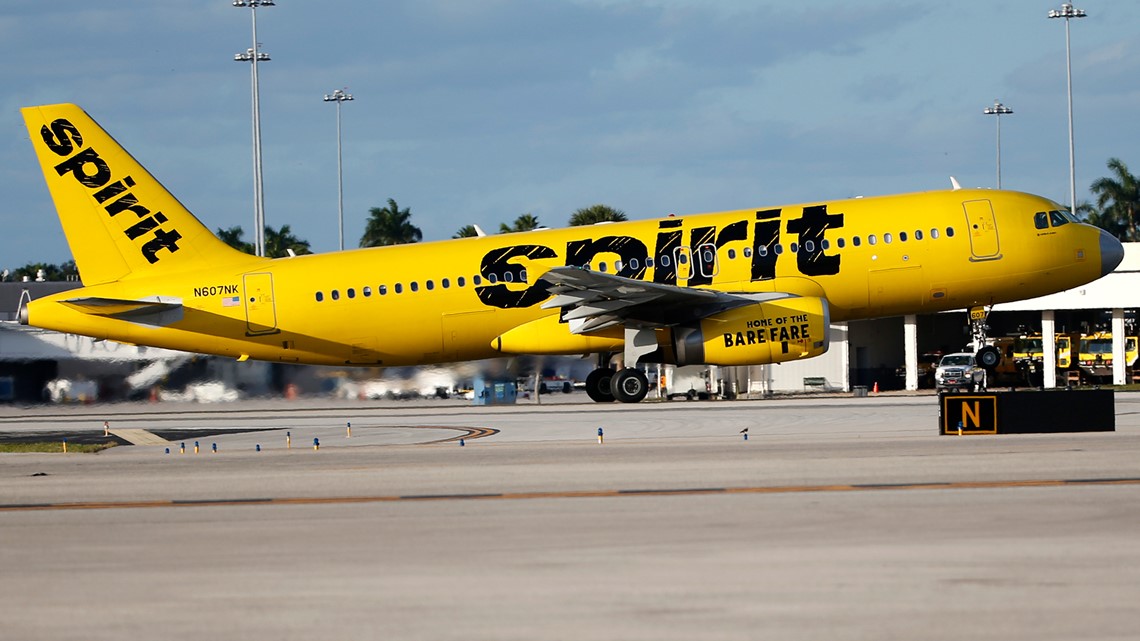
Spirit Airlines is reportedly preparing to cease operations, with CBS News saying the carrier could close as early as Saturday absent last-minute intervention. The airline filed for Chapter 11 protection in November 2024 and again in August 2005, and creditors recently raised doubts about its viability amid higher jet fuel costs. The White House has also floated a taxpayer takeover or rescue effort, but the company said it is still operating as usual.
This is less a standalone airline headline than a liquidation-overhang event for the entire domestic leisure basket. If Spirit goes into a disorderly wind-down, capacity does not disappear cleanly; it re-routes through ultra-low-cost rivals, legacy carriers, and slot buyers, creating a short-term fare reset that helps incumbents more than it helps the failed carrier’s creditors. The market should think in two stages: first, a days-to-weeks spike in pricing power for carriers with dense Florida, Caribbean, and Las Vegas exposure; second, a months-long redistribution of aircraft, gates, and slots that could pressure margins again once capacity is absorbed.
The bigger second-order issue is that Spirit’s assets are more valuable than its operating franchise, which raises the odds of a messy auction rather than a going-concern rescue. That matters for JBLU because any renewed attempt to capture Spirit capacity via acquisition is now less about growth and more about opportunistic asset harvesting; the regulatory path is likely easier for piecemeal asset purchases than for a full merger, but the synergies are also materially lower. In other words, the upside to JBLU from Spirit’s distress is capped by antitrust constraints, while the downside from another failed integration/strategy pivot remains real.
Near term, the cleanest expression is not a direct long on any one airline, but a relative-value long in carriers with domestic leisure exposure and stronger balance sheets versus shorts in the weakest balance-sheet airlines with similar route exposure. The key catalyst window is immediate: if there is no credible rescue within days, the market will start pricing reallocation of Spirit demand and aircraft within the next earnings cycle. Contrarianly, the consensus may be underestimating how fast capacity would be backfilled; that argues against chasing a simple industry-wide long beyond the first squeeze, because the pricing benefit could prove transient if competitors flood routes with replacement seats.
AI-powered research, real-time alerts, and portfolio analytics for institutional investors.
Request DemoOverall Sentiment
extremely negative
Sentiment Score
-0.95
Ticker Sentiment
