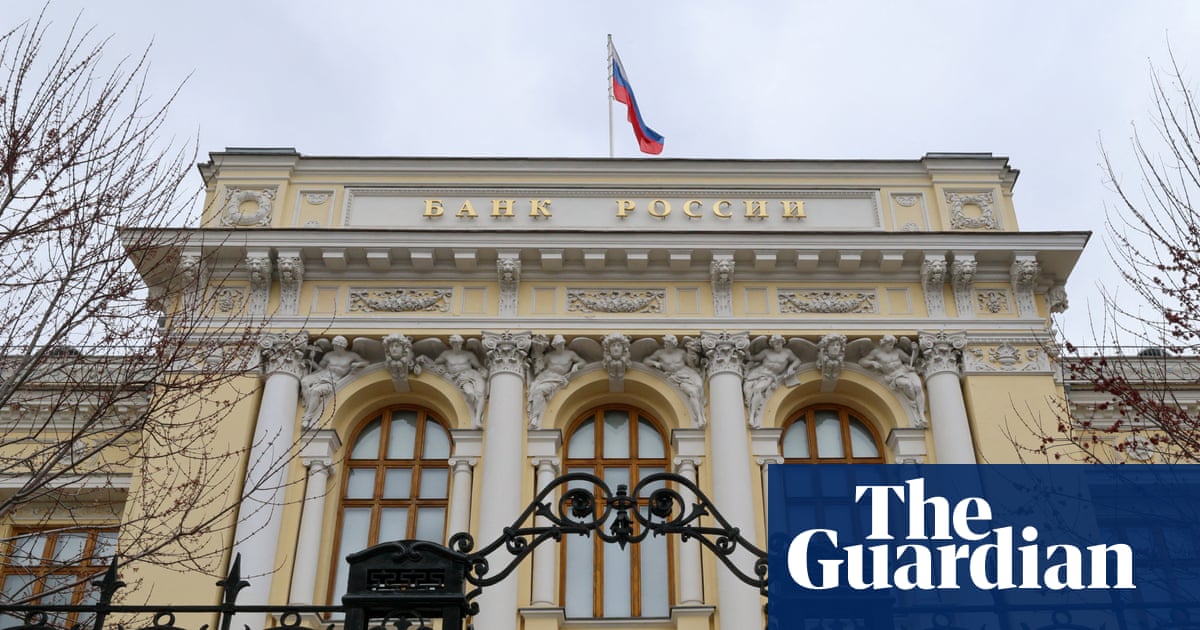
Russia has ordered major banks, including Sberbank and its central bank system, to help defend themselves against Ukrainian drones under a new law that lets them operate defense systems and bear the costs directly. The article also highlights intensified geopolitical risk, including Russia’s warnings of "systematic" strikes on Kyiv and nearly 50 countries condemning Russian threats to diplomatic missions. Separately, the Czech ammunition initiative said it has secured nearly €1bn in funding and contracts for about 1 million rounds in 2026, underscoring continued military support for Ukraine.
This is a clear signal that the war is migrating from a front-line attrition story to a domestic critical-infrastructure stress test. The incremental burden is no longer just on the state budget; it is being pushed onto private balance sheets, which effectively taxes the most systemically important institutions and raises the probability of capex diversion away from credit growth, dividends, and buybacks. The second-order effect is tighter financial conditions in Russia even if headline policy rates do not move, because banks will need to reserve for security spending, equipment replacement, and operational disruption.
The more important market implication is that air-defense saturation is creating a widening asymmetry between offensive drone economics and defensive spend. If low-cost drones can force expensive point-defense deployment around banks, refineries, and logistics nodes, the defender’s cost curve deteriorates faster than the attacker’s, which increases the odds of repeated hits on energy and industrial assets over the next 3-12 months. That raises downtime risk for Russian export-linked cash flows and increases volatility in any commodity or shipping exposure with indirect Russian sensitivity, even absent formal sanctions changes.
For Europe, the Czech ammunition pipeline is a quiet but meaningful support for sustained war intensity into 2026, which reduces the probability of a near-term negotiated freeze. That is supportive for defense procurement, EW, sensor, and ammo names, but also keeps the market in a regime where every escalation creates a renewed demand pulse for interceptor systems and industrial resupply. The contrarian angle is that investors may be underpricing how much this shifts procurement from discretionary to quasi-mandatory spending, making defense demand less cyclical and more utility-like over the next several years.
The main reversal risk is political: a ceasefire, a funding interruption, or allied fatigue could quickly compress the urgency premium in defense names and relieve pressure on European fiscal outlays. But absent that, the path of least resistance is continued spend displacement from civilian to security uses, with banks in Russia and defense suppliers in Europe both absorbing the consequences of a longer war of systems rather than a shorter war of maneuver.
AI-powered research, real-time alerts, and portfolio analytics for institutional investors.
Request DemoOverall Sentiment
moderately negative
Sentiment Score
-0.45
