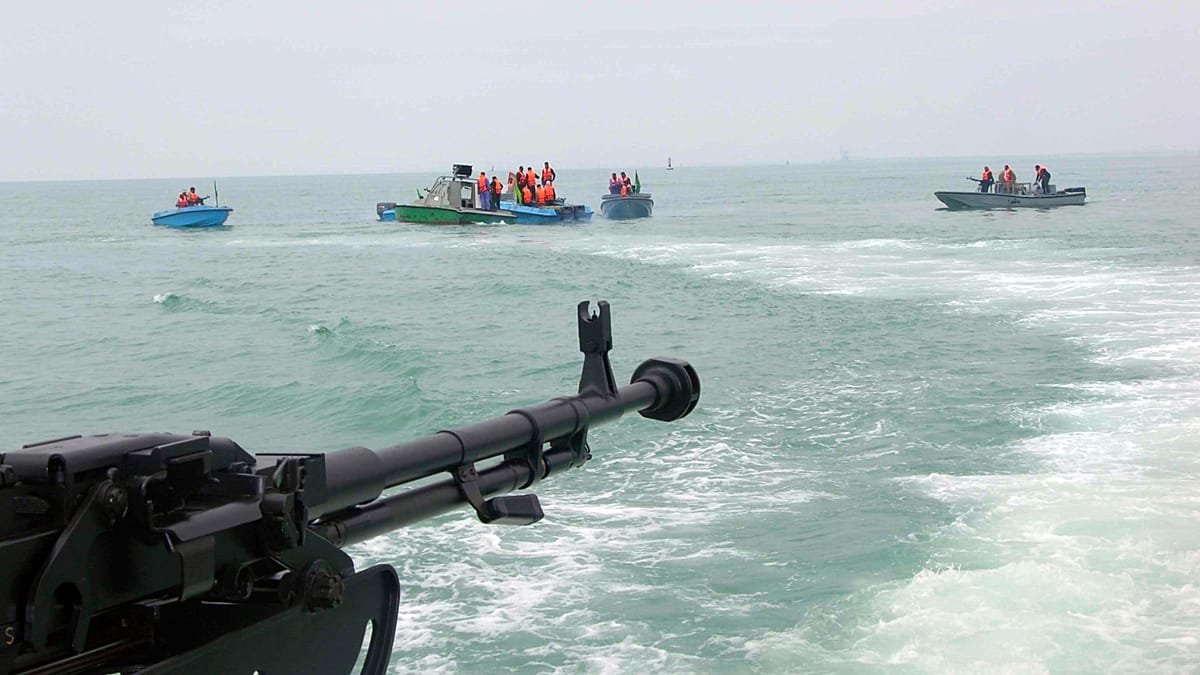
IRGC-linked media are proposing fees and monitoring on submarine cables through the Strait of Hormuz, with potential revenues cited as high as $15 billion and implications for global internet and financial messaging traffic. The article highlights a weak legal basis, likely international resistance, and the possibility of broader escalation in a chokepoint that carries roughly one-fifth of global oil and LNG flows. The proposals add to already fragile regional conditions and could increase risk premia across energy, shipping, and digital infrastructure.
This is less about an immediate revenue grab than a signal that Tehran is broadening its coercion toolkit from physical chokepoints to digital chokepoints. Even if fees are never collected, the rhetoric alone raises the probability of preemptive routing, redundancy, and security spending by hyperscalers and carriers; that is structurally bearish for margin expansion in cloud infrastructure and subsea network operators, while modestly supportive for firms selling route optimization, encryption, and resiliency software.
The second-order risk is not a clean shutdown of global data flow, but intermittent uncertainty: forced latency, rerouting costs, and compliance ambiguity can be enough to affect financial messaging, cloud failover economics, and Gulf enterprise connectivity. That tends to hit the same cohort unevenly — the largest platforms can absorb the cost, but regional digital ecosystems, ad-tech delivery, and cross-border enterprise SaaS in the Gulf are more exposed to service degradation and customer churn. Over weeks to months, the market is likely to price a geopolitical risk premium into Middle East-linked infrastructure projects and into any company with meaningful exposure to Gulf data center expansion.
For META, MSFT, and AMZN, the direct earnings hit is probably immaterial, but the option value of uninterrupted global connectivity is getting repriced lower. The bigger implication is that governments now have a playbook for “digital toll booths” at strategic maritime nodes, which increases the discount rate on long-duration infrastructure projects and may modestly compress multiples for capital-intensive cloud and network businesses. The headline risk is binary — actual interference would trigger sanctions escalation and rapid military/diplomatic response — but the more durable market effect is a higher baseline of regulatory and geopolitical friction.
AI-powered research, real-time alerts, and portfolio analytics for institutional investors.
Request DemoOverall Sentiment
strongly negative
Sentiment Score
-0.55
Ticker Sentiment
