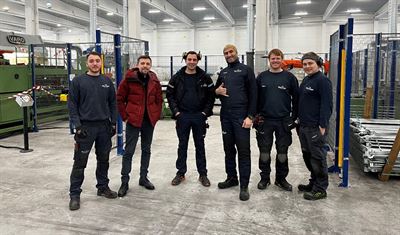
Troax has relocated warehouse product manufacturing from Poland to its Värnamo, Sweden facility in a six‑month move involving 48 trucks and 69 employees, consolidating production to pursue automation, digital integration and economies of scale. Management expects approximately €5 million in annual savings and positions Värnamo as a future hub for advanced automated manufacturing; the company cites reduced geopolitical and energy risks and ESG benefits from Sweden’s cleaner energy mix. The transition reportedly had no significant customer disruption and 95% of the Polish workforce secured new employment; Troax reported sales of €279m in 2024 and will officially open the relocated lines in March.
Market structure: Troax’s reshoring signals a structural tilt from low-wage arbitrage to automation-led competitiveness. Direct winners are industrial automation and robotics suppliers (ABB, Siemens, KUKA, Rockwell) and Swedish capital goods names (Atlas Copco, Sandvik), while low-margin Eastern European contract assemblers and basic logistics operators face margin pressure. Troax cites €5m in annual savings on €279m sales (~1.8% of revenue) implying potential +150–250bps EBITDA margin tailwinds for comparable firms that automate. Risk assessment: Key tail risks include an energy-price spike in Sweden, a failed factory integration or union disruption at Värnamo, and tighter EU trade/regulatory moves that raise local costs; each could reverse expected savings. Time horizons: immediate (days) — negligible market shock; short-term (3–9 months) — measurable uplift in automation capex orders; long-term (1–3 years) — durable reallocation of European supply chains and higher fixed costs. Hidden dependency: concentration risk in single-site hubs and skilled labor scarcity could cap upside. Trade implications: Expect incremental demand for industrial robots, PLCs, and automation services; pricing power for tier-1 automation vendors should improve, benefiting equities and tightening credit spreads of high-quality Swedish industrials versus EM peers. FX: modest SEK appreciation vs PLN/EUR if reshoring becomes broad-based; commodities effect is small but positive for specialty steel and copper demand. Options/volatility: automation names should see higher implied vol during earnings/capex seasons — use defined‑risk option spreads to capture directional view. Contrarian angles: Consensus may underweight short-term capex intensity and overrate immediate payroll savings — reshoring often frontloads capex and raises break-even volumes. Historical parallels (post-2018 reshoring wave) show winners were automation enablers, not low-end manufacturers; unintended consequences include local wage inflation, tighter industrial real estate, and politically exposed supply chains that can compress margins if overbuilt.
AI-powered research, real-time alerts, and portfolio analytics for institutional investors.
Request DemoOverall Sentiment
moderately positive
Sentiment Score
0.45
