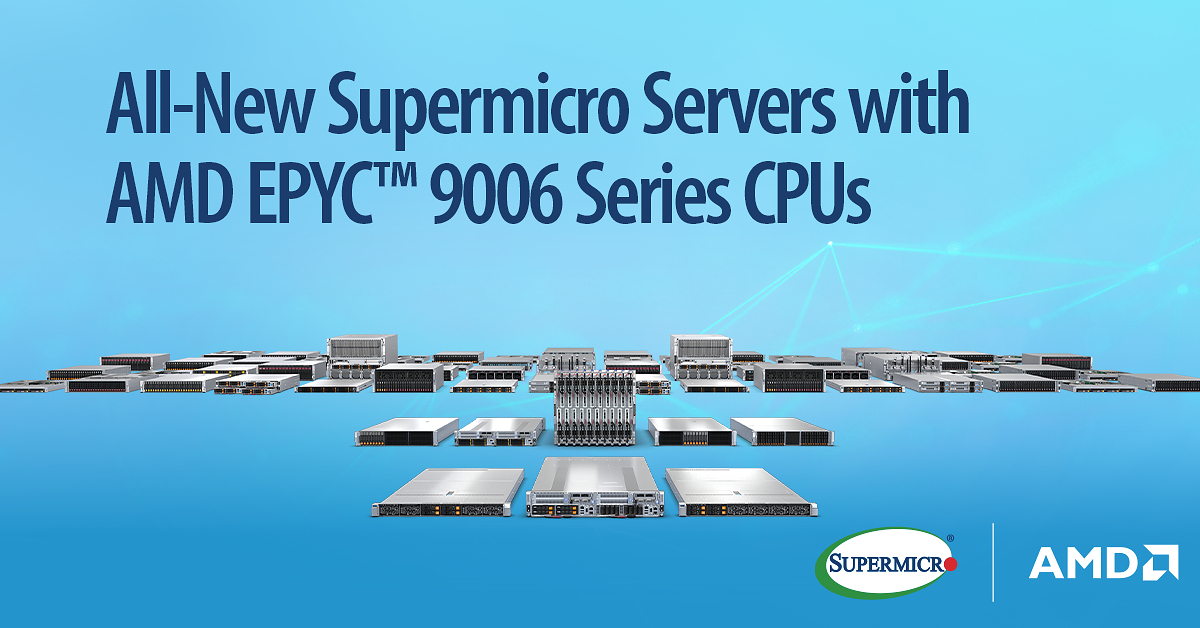
Supermicro (SMCI) launched its next-generation H15 server portfolio built on 6th Gen AMD EPYC 9006 CPUs and AMD Instinct GPUs, touting 1.7x generational CPU performance improvement (up to 256 cores/512 threads), 2x PCIe bandwidth, and 2.6x memory bandwidth for AI/cloud/HPC workloads. The rollout expands GPU infrastructure with new PCIe GPU servers (up to 10 GPUs using AMD Instinct MI350P) and a 72-GPU rack-scale AMD Helios platform for large-scale AI training and high-throughput inference. Overall, the announcement is positioned as higher performance and efficiency within existing power envelopes, but it is a product/roadmap update rather than an earnings or demand inflection event.
This is more meaningful for AMD than for SMCI. In AI infrastructure, the silicon vendor usually captures the durable economics while the integrator captures a burst of revenue and a lot of execution risk; that makes the market’s first reaction to SMCI prone to overstate the earnings impact unless order conversion and mix improvement show up in the next two quarters. The open-architecture angle matters because it nudges customers toward replaceable, standards-based stacks, which can take small but persistent share from proprietary enterprise/server incumbents and modestly cap Nvidia-centric platform pricing at the inference edge.
The near-term catalyst path is mostly sentiment, not fundamentals: 1-3 months for analyst model changes, 1-2 quarters for evidence in datacenter revenue, backlog, and gross margin. For SMCI, the key question is whether this drives higher-value rack-scale attach or just more low-margin box assembly; if margins don’t improve, the launch is noise. For AMD, the upside is broader ecosystem validation and a deeper enterprise foothold, but the thesis breaks if ROCm/software adoption and customer repeat orders do not follow the hardware announcement.
Contrarian view: the market may be underestimating how slowly “alternative AI stack” adoption scales outside hyperscalers, especially when software, support, and power delivery are the actual bottlenecks. That argues against chasing SMCI on a press-release basis. If anything, the better expression is relative value: own the platform owner, not the assembler, and wait for proof that the launch changes run-rate demand rather than just expanding the brochure.
AI-powered research, real-time alerts, and portfolio analytics for institutional investors.
Request DemoOverall Sentiment
mildly positive
Sentiment Score
0.35
Ticker Sentiment
