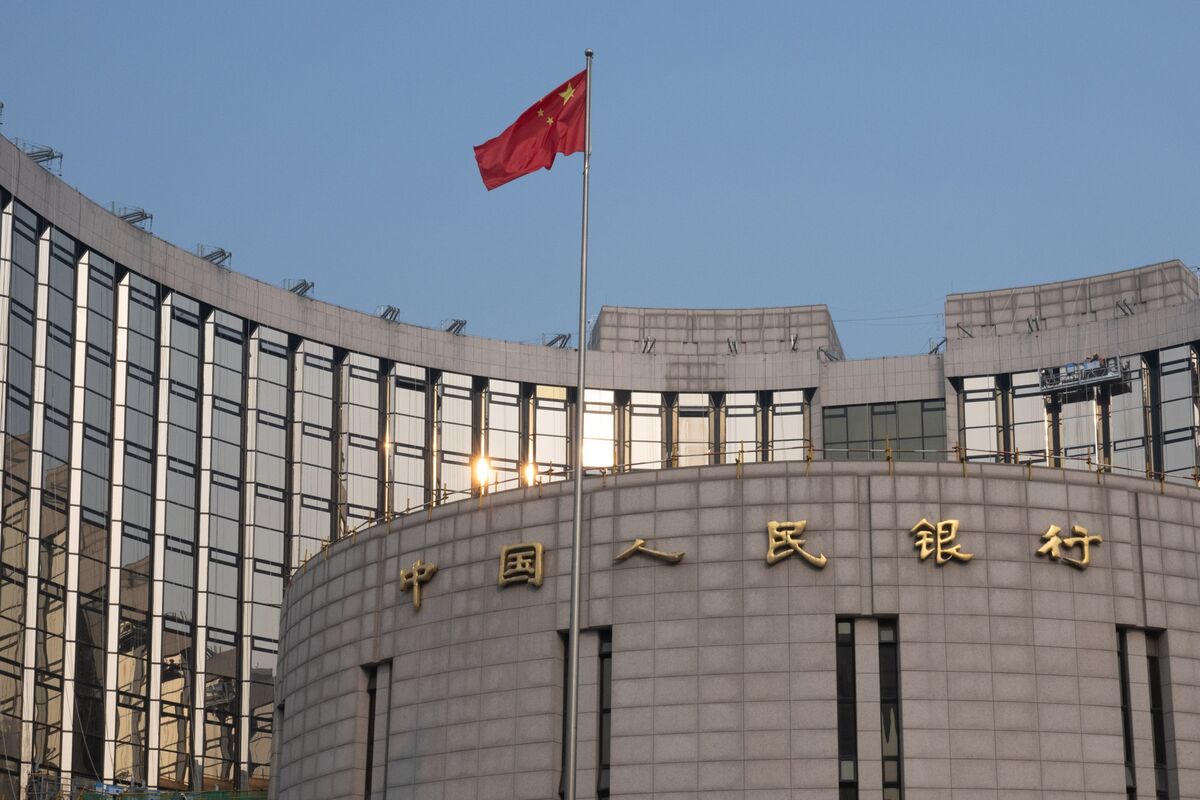
China's bond financing accounted for 30% of outstanding credit stock in May, the highest on record, and new bond issuance exceeded loans for the first time in 2025 by about 500 billion yuan ($74 billion). The shift expands the PBOC's ability to ease financial conditions through broader bond-market channels rather than relying only on bank lending. Economists expect the gap between bond and loan financing to widen further this year.
The key second-order effect is not just cheaper funding; it is a structural reallocation of credit intermediation away from bank balance sheets and toward market-based term funding. That is mildly negative for bank NIMs and loan growth momentum over the next 2-4 quarters, while improving transmission speed for policy easing because rate cuts can now compress a larger share of marginal financing costs. In other words, the PBOC can loosen without needing to force a bigger deposit-rate response from banks, which reduces near-term stress on the banking system but increases duration sensitivity across the broader economy.
The most direct beneficiaries are high-quality onshore sovereign and quasi-sovereign issuers, then investment-grade corporates that can refinance through bonds rather than bank loans. The losers are weaker private borrowers and smaller banks that depend on relationship lending, because market access will continue to discriminate harder by credit quality, especially if policy is used to support broad spreads rather than targeted credit. Over 6-12 months, this tends to widen the gap between state-linked borrowers and cyclical SMEs, with the latter facing more persistent funding pressure even in an easier rate environment.
The contrarian miss is that a larger bond market can be both a liquidity valve and a fragility amplifier. If new issuance keeps outpacing loans, duration supply rises and the system becomes more exposed to mark-to-market volatility if growth re-accelerates or fiscal issuance surges; that can steepen hedging demand and push long-end yields higher even as policy eases. The tradeable setup is a tactical bull flattening bias, but only until the market starts pricing a heavier supply calendar or a weaker yuan, which would force the PBOC to choose between FX stability and domestic easing.
For the next few months, the main catalyst is whether policy communication explicitly leans on bond-market transmission as a substitute for bank-led easing. If yes, expect lower front-end yields and tighter sovereign spreads; if no, this is just a gradual structural shift with limited immediate price impact. The reversal risk is a growth rebound or renewed credit impulse from local governments, which would pull funding back toward bank channels and reduce the relative importance of bonds as the policy valve.
AI-powered research, real-time alerts, and portfolio analytics for institutional investors.
Request DemoOverall Sentiment
neutral
Sentiment Score
0.10
