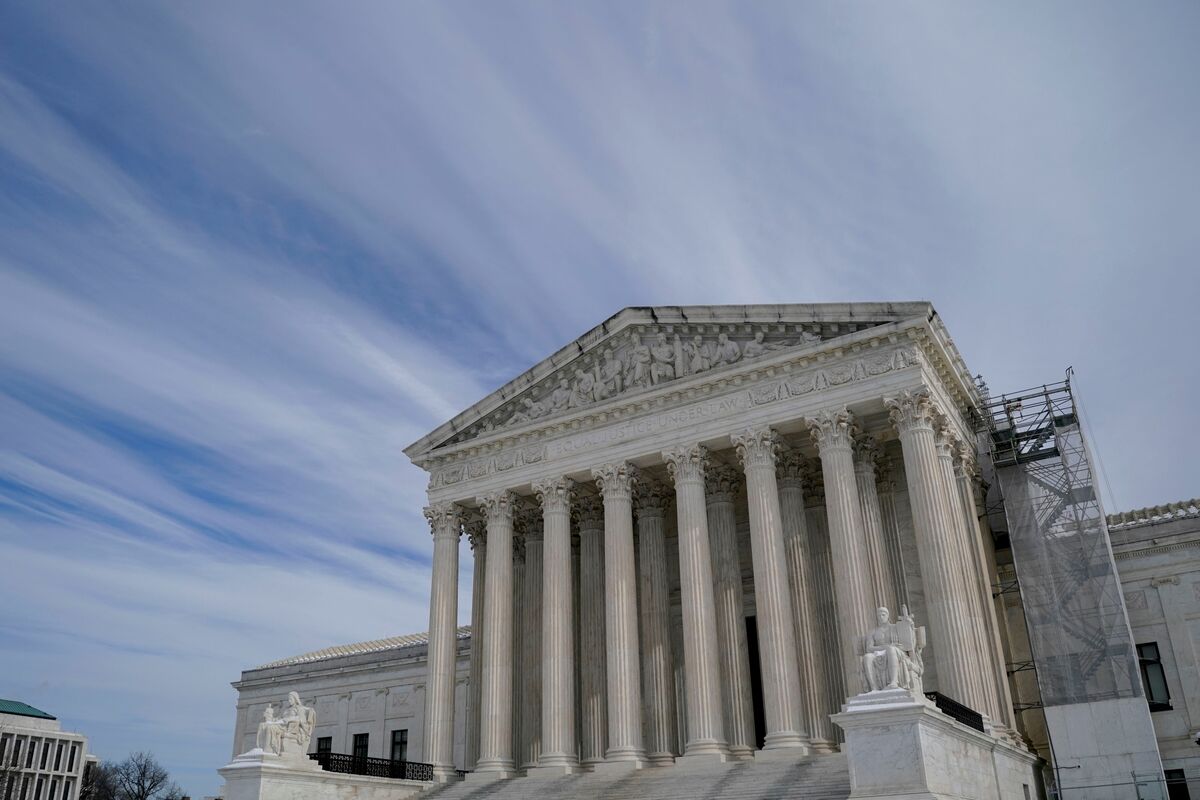
The U.S. Justice Department announced it may appeal to the Supreme Court as early as Friday if a federal appeals court does not immediately suspend a ruling that deemed most of President Trump's tariffs illegal. The Justice Department argues that the Court of International Trade's decision undermines the government's diplomatic efforts and infringes on the President's authority over foreign affairs, seeking a stay while pursuing a formal appeal.
The Trump administration has indicated its intent to petition the US Supreme Court, potentially as early as Friday, if the US Court of Appeals for the Federal Circuit does not immediately stay a US Court of International Trade ruling from the previous day that deemed most of President Trump's tariffs illegal. In a Thursday court filing, the Justice Department contended that this ruling adversely affects US diplomatic initiatives and encroaches upon the President's exclusive authority in conducting foreign affairs. This legal confrontation introduces substantial uncertainty surrounding US tariff policy, which aligns with the observed moderately negative sentiment (score -0.35) and uncertain market tone. The developments, categorized under themes including Tax & Tariffs, Trade Policy & Supply Chain, and Legal & Litigation, carry a moderate potential market impact (score 0.55) and could significantly influence sectors reliant on international trade and stable supply chains.
AI-powered research, real-time alerts, and portfolio analytics for institutional investors.
Request DemoOverall Sentiment
moderately negative
Sentiment Score
-0.35
