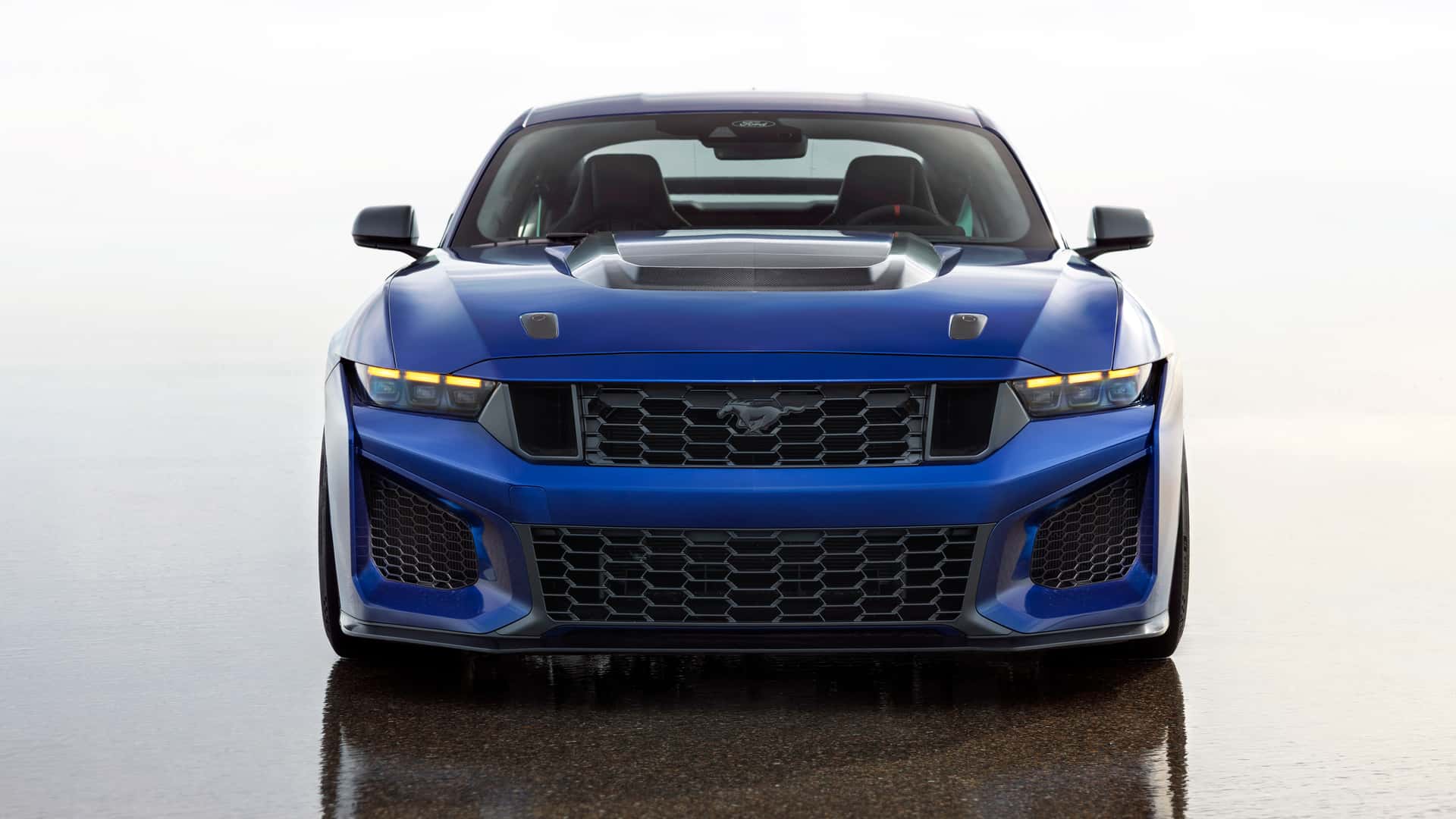
Ford priced the new 2026 Mustang Dark Horse SC at $103,490 for the base model, $139,990 for the Track Pack, and $170,970 for the Track Pack Special Edition (all before taxes/fees). The car pairs those prices with a supercharged 5.2L V8 (~815 hp) and a Tremec 7-speed dual-clutch transmission, positioning it competitively versus the Corvette Z06 ($122,795) and high-end Porsche 911 variants. Pricing elevates Mustang into a higher premium/performance bracket, likely supporting Ford’s halo/product positioning but with limited near-term impact on broader markets or Ford’s fundamentals.
Ford’s decision to push a halo, high-ASP Mustang variant is a deliberate margin-first move rather than a volume play — the math is simple: every incremental $40k of ASP on 10k cars converts to roughly $400m in revenue and, even with conservative 15-20% incremental operating margin, $60–80m of additional operating profit in year-one. That level of profit is immaterial to Ford’s total revenue but big for quarterly EPS and for funding performance R&D without touching core pickup/EV programs.
Second-order winners include franchised dealers and the used-car ecosystem: high-ticket new sales lift F&I income, trade-in quality, and wholesale auction realizations (supporting dealer balance sheets and reducing floorplan stress). Niche suppliers and aftermarket players that service carbon-ceramic brakes, high-performance tires, and bespoke interiors will see order volatility but higher ASPs per unit, creating short-duration revenue bumps rather than durable topline growth.
Key risks are demand elasticity and reputational/regulatory feedback loops — a macro hiccup or media focus on fuel-guzzler fees/ESG could compress order cadence quickly because these trims are discretionary; conversely, limited production or sell-through could create a durable collector premium, supporting residuals. Monitor dealer inventory days, incentivization patterns, and early order cancelation rates over the next 3 months as leading indicators of sustainable demand.
AI-powered research, real-time alerts, and portfolio analytics for institutional investors.
Request DemoOverall Sentiment
mildly positive
Sentiment Score
0.15
Ticker Sentiment
