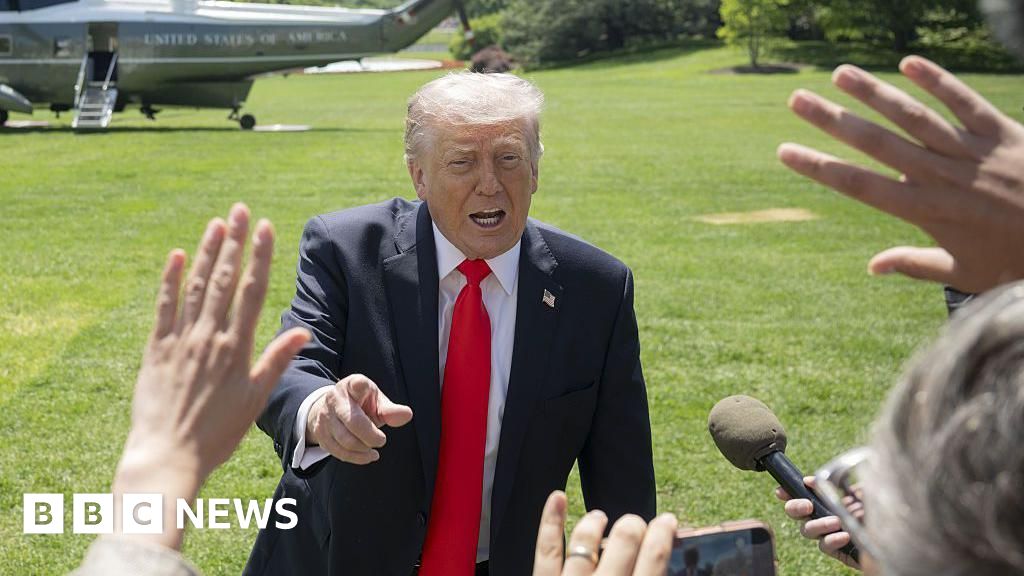
Trump said US hostilities with Iran had "terminated" under an ongoing ceasefire, arguing he no longer needs congressional authorization as the 60-day War Powers deadline hits. The article highlights an unresolved legal and political dispute over the War Powers Resolution, while ceasefire talks remain incomplete and no longer-term deal has been reached. The situation remains geopolitically significant and could affect defense, energy, and broader risk sentiment.
The key market implication is not the legal argument itself, but the signal that the administration is trying to convert a kinetic risk into a managed, low-probability tail. That matters because once a ceasefire is framed as “terminated hostilities,” the market tends to reprice the event from an oil/shipping shock to a policy/process risk, which usually compresses the geopolitical risk premium faster than fundamentals would justify. The second-order effect is that defense and cyber names can still hold a bid even if headlines fade, because appropriations and replenishment cycles lag the de-escalation narrative by quarters.
The more interesting setup is in energy and transport: the near-term upside in crude-related equities is likely smaller than the downside convexity if the ceasefire hardens into negotiations. A stable ceasefire would reduce the odds of disruption-driven spikes in Brent, weaken implied volatility across energy, and compress margins for tanker and LNG-linked assets that were priced for escalation. Conversely, if Congress forces a vote or the ceasefire breaks, the market will likely react with a one-day repricing rather than a multi-week trend, so timing matters more than direction.
The contrarian read is that the administration may be buying time, not peace. If talks stall, the market could face a higher base rate of intermittent strikes, which is worse for risk assets than a clean conflict/no-conflict binary because it sustains a rolling risk premium in oil, shipping insurance, and regional defense logistics. That favors owning convexity rather than outright directional exposure: you want instruments that monetize a spike in headline risk, while avoiding names that are only helped by a sustained war premium.
Watch for two catalysts over the next 1-4 weeks: congressional signaling on War Powers and any concrete channel for negotiations. A quick legislative pushback would raise the probability of a renewed escalation headline, while a credible diplomatic track would unwind the premium much faster than consensus expects. In both cases, the market’s biggest error is likely to be underestimating how quickly a ceasefire can flip from stabilizer to merely a pause in volatility.
AI-powered research, real-time alerts, and portfolio analytics for institutional investors.
Request DemoOverall Sentiment
neutral
Sentiment Score
-0.05
